DOJ Finds Yale Medical School Used Racial Proxies to Discriminate in Admissions
"Internal documents show Yale Medical School continued race-based admissions despite Supreme Court ban, with Black applicants 29 times more likely to receive interviews than equally qualified Asian candidates, DOJ investigation reveals.
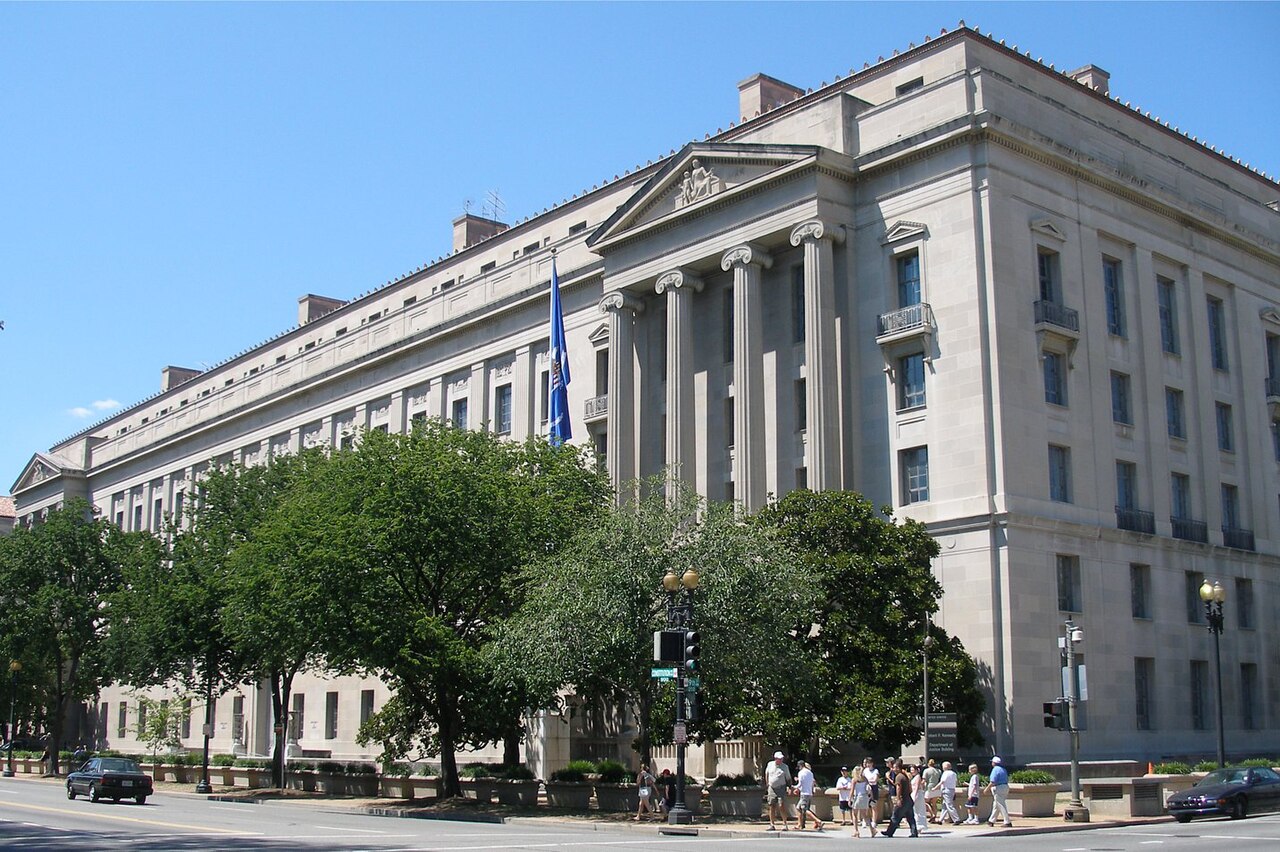
Internal documents show Yale's medical school admissions office used "racial proxies" to discriminate against White and Asian applicants after the Supreme Court banned affirmative action. The Justice Department's yearlong investigation found the school intentionally selected applicants based on race in clear violation of federal civil rights laws.
The findings expose how diversity programs claiming equality can become exclusionary in practice. Elite institutions have used progressive rhetoric to mask systematic bias against certain groups.
The Trump administration's enforcement action against Yale School of Medicine echoes a similar May 6 finding against UCLA's medical school. Both cases reveal a pattern of race-based admissions that defies the Supreme Court's 2023 ruling.
A Black applicant stood 29 times more likely than an equally qualified Asian candidate to receive an interview invitation, according to statistics cited by the Justice Department. Assistant Attorney General Harmeet K. Dhillon said the disparity shows how Yale "continued its race-based admissions program despite the Supreme Court and the public's clear mandate for reform."
The DOJ's statistical analysis reveals stark academic differences between admitted racial groups. Black students in Yale's Class of 2025 entered with median GPAs of 3.88 and MCAT scores in the 95th percentile. Hispanic students scored in the 94th percentile. White and Asian students entered with median GPAs of 3.97 to 3.98 and MCAT scores in the 100th percentile.
Yale's own documents prove the discrimination was intentional. The DOJ reviewed internal materials showing leadership "studied how to use racial proxies to circumvent the Supreme Court's prohibition on using race to select students." A 2024 admissions presentation contained a slide titled "Admissions post-SCOTUS." Redacted guidance dated August 2025 indicated continued race-conscious practices.
The school's Supreme Court brief reveals its own admissions philosophy. Yale submitted an amicus brief in the Students for Fair Admissions case stating it "would not be able to maintain diverse classes without explicit consideration of race." The DOJ argues that Yale's maintenance of similar racial composition after the ruling proves continued discrimination.
Yale's announcement follows the DOJ's May 6 findings against UCLA's David Geffen School of Medicine, where investigators discovered parallel patterns. First Assistant U.S. Attorney Bill Essayli said regarding UCLA that "federal law and the Supreme Court precedent are clear: Race discrimination has no place in our nation's institutions of higher learning."
Yale officials responded with confidence in their admissions process. "The students admitted to Yale School of Medicine demonstrate exceptional academic achievement and personal commitment," said Karen Peart, Yale associate vice president for communications. "Yale School of Medicine is confident in the rigorous admissions process we follow."
The DOJ's action against Yale represents part of the Trump administration's broader campaign against DEI programs in medical education. The administration has issued executive orders targeting accreditation standards and pressured the Liaison Committee on Medical Education to remove structural competency requirements from its 2027-2028 standards.
The Justice Department seeks a voluntary resolution agreement with Yale to bring admissions practices into legal compliance. If Yale refuses, the department can take the school to court under Title VI of the Civil Rights Act, which prohibits race discrimination in federally funded programs.
Medical school diversity has declined since the Supreme Court's ruling, according to a Yale/NYU study published in JAMA Network Open. Enrollment of underrepresented minority students dropped from 24.4 percent before the ruling to 20.8 percent after, concentrated in states without pre-existing affirmative action bans.
The DOJ has opened investigations into three additional medical schools: Stanford, Ohio State and UC San Diego. Stanford already removed DEI language from its website, renaming its Office of Diversity in Medical Education to the Office of Community Health and Engagement.
This enforcement action marks the second time the Justice Department has targeted Yale for race discrimination. In 2020, during Trump's first administration, the DOJ sued Yale for discriminating against White and Asian undergraduate applicants. The case was dropped weeks after President Biden's inauguration.
The current investigation examined admissions for incoming classes of 2023, 2024 and 2025. Yale's medical school student body for 2023-2024 included 175 White students, 157 Asian students, 44 Black students and 26 Hispanic students, according to Association of American Medical Colleges data.
The DOJ's findings against elite medical schools expose the fundamental contradiction within diversity initiatives that claim to promote equality while systematically penalizing certain racial groups. As the administration continues to enforce colorblind civil rights laws, medical schools face a reckoning over whether their admissions practices serve genuine merit or progressive ideology.