Federal Judge Blocks Key Provisions of Texas Immigration Law
A federal judge blocked four key provisions of Texas SB 4 on Thursday, halting state deportation powers while the legal battle over state sovereignty and immigration enforcement continues in court.
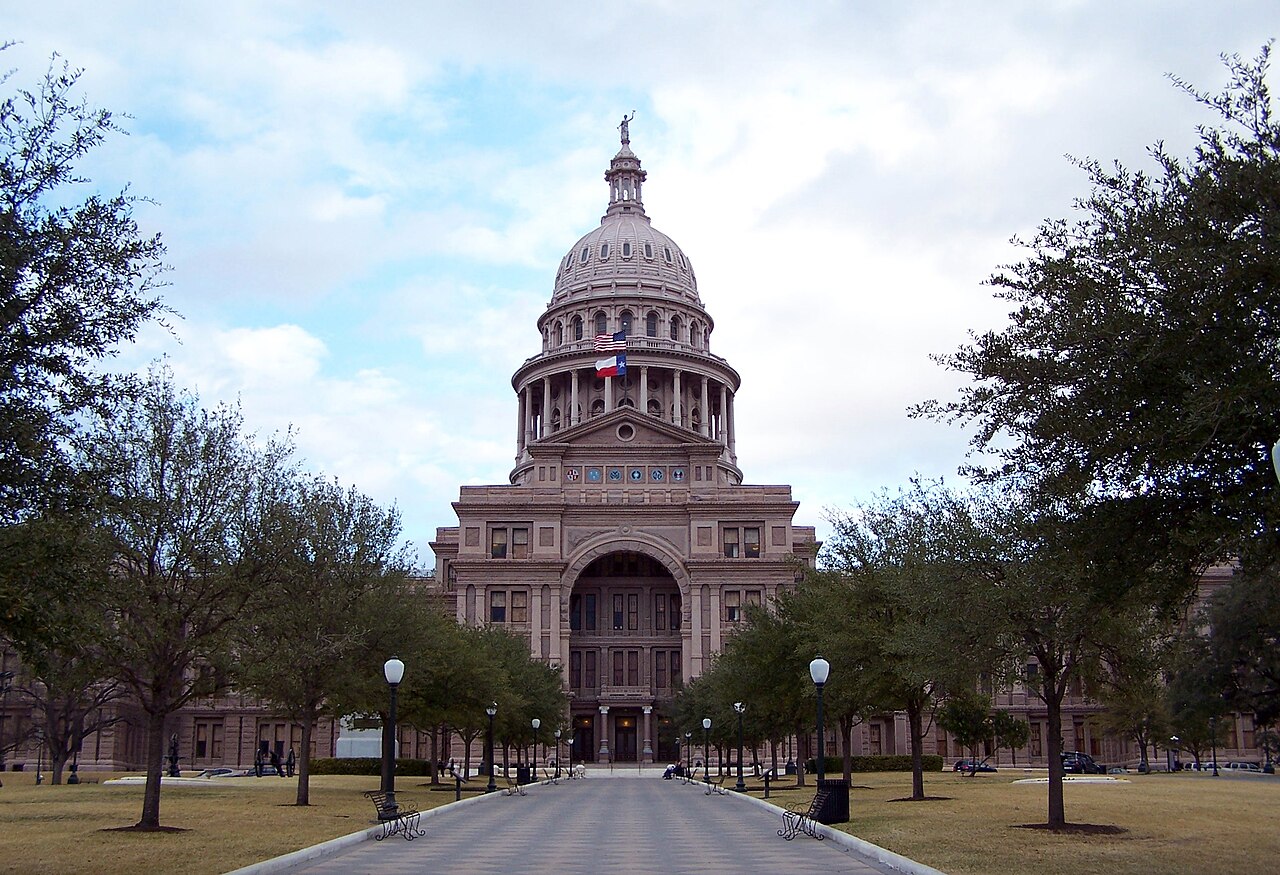
A federal judge halted four key provisions of Texas' immigration enforcement law Thursday, blocking state officials from carrying out deportation orders while the legal battle over border authority continues. The decision underscores the tension between state sovereignty and federal jurisdiction as Texas attempts to enforce its own immigration policy.
U.S. District Judge David Alan Ezra issued a 78-page order May 14 granting a preliminary injunction against the most consequential elements of Senate Bill 4. The ruling prevents Texas from enforcing the reentry crime, the offense of failing to comply with state removal orders, magistrates' authority to issue deportation orders, and the requirement that magistrates continue prosecutions despite pending federal immigration cases.
The injunction arrived one day before the reentry provision was set to take effect May 15. This represents the latest chapter in a legal fight that has spanned years, multiple courts, and shifting political alliances. The Trump administration's Department of Justice plans to file a brief supporting Texas, while civil rights groups continue challenging the law in federal court. The state is expected to appeal, meaning the question of whether states can exercise immigration enforcement powers will likely reach the Supreme Court.
The blocked reentry crime section would have made it a state offense for anyone who reentered Texas after being denied admission, deported, or removed. That Class A misdemeanor was elevatable to a felony carrying penalties of up to 20 years. The removal order compliance crime would have criminalized refusing to obey a magistrate's deportation order as a second-degree felony with 2 to 20 years in prison.
The provision criminalizing illegal entry into Texas remains unchallenged in this lawsuit and takes effect May 15. It creates a Class B misdemeanor punishable by up to $2,000 and 180 days imprisonment for a first offense. The ACLU stated that "S.B.4 is not only unconstitutional, but a vile law that uses our Texas resources to harm communities across our state," though the entry crime provision is not part of the current suit.
Judge Ezra called the challenged provisions the "shame" of the law and "superfluous" during a May 13 hearing. "It just doesn't make any sense to me unless one ignores the Constitution," he stated. "The state of Texas is not its own country." In his order, he wrote that "SB 4 threatens the fundamental notion that the United States must regulate immigration with one voice" and "could open the door to each state passing its own version of immigration laws."
The political landscape shows unusual alignment in this case. The ACLU of Texas, the ACLU, and the Texas Civil Rights Project filed the lawsuit. The Trump administration's Department of Justice plans to file a brief in support of Texas, reversing course from the Biden-era DOJ, which originally sued to challenge SB 4 before the Trump DOJ terminated its participation.
The lawsuit was filed May 4 by advocates on behalf of two Honduran immigrants living in Austin. One plaintiff is a 56-year-old lawful permanent resident who entered the United States for the first time in 1997 and was deported, then re-entered without inspection in 2006. The other is a 29-year-old Honduran citizen who entered without inspection as a minor in 2014 and re-entered in 2021.
DPS Director Steven McCraw testified in 2023 that SB 4 could result in an estimated 72,000 arrests per year. DPS currently has approximately 400 state police officers operating under 287(g) cooperation agreements with ICE.
Border crossings have fallen dramatically from nearly 2.5 million arrests along the southern border in fiscal year 2023 to 63,732 so far in fiscal year 2026, with 50,000-plus in Texas. Charley Wilkison, former leader of Texas's largest police union, warned that "if you have an agenda, if you've been salivating and waiting on this opportunity, you're going to have a license to do so now."
Texas Attorney General Ken Paxton declared on April 24, 2026, after the Fifth Circuit en banc ruling, "Texas's right to arrest illegals, protect our citizens, and enforce immigration law is fundamental. This is a major victory for public safety and law and order."
The state is expected to appeal to the Fifth Circuit, and the battle may ultimately reach the Supreme Court. The Trump administration's forthcoming brief in support of Texas could shape the appellate trajectory. Governor Greg Abbott described SB 4 as "an unprecedented law" that "empower[s] state officials to arrest and deport," and noted it was drafted "to be consistent with the dissent" in Arizona v. United States.
Despite reduced border crossings, advocates argue the law remains dangerous. "SB 4 is not only unconstitutional, but a vile law that uses our Texas resources to harm communities across our state," said Kate Gibson Kumar, staff attorney with the Texas Civil Rights Project. "The Texas Civil Rights Project will keep fighting to protect Texas communities from the wrath of SB 4."
The legal battle over SB 4 has been ongoing since early 2024, with multiple court rulings and reversals. The Fifth Circuit upheld a district court injunction blocking the law, then allowed it to proceed on April 24, 2026, before the current injunction was issued by the same district court judge. Each ruling has focused on different legal questions, with the underlying constitutional issue remaining unresolved.
The entry crime taking effect May 15 creates a partial enforcement scenario where Texas can criminalize illegal entry but lacks the mechanisms to enforce deportation. This incomplete framework may undermine Texas' ability to achieve its stated border security objectives.
State Rep. Vince Perez, a Democrat from El Paso, criticized the law's expansion of state government. "SB 4 creates a de facto state-based deportation system — and one of the largest expansions of state government in our lifetimes," Perez said. "A parallel immigration bureaucracy, paid for by Texas taxpayers."
Judge Ezra concluded in his order that "Texas is unlikely to succeed on the merits." He wrote that "SB 4 could open the door to each state passing its own version of immigration laws" and that "the effect would moot the uniform regulation of immigration throughout the country."
The injunction is provisional and does not constitute a final ruling on the law's constitutionality. However, Judge Ezra's reasoning suggests deep skepticism about Texas' legal position. "Indeed, it is implausible to imagine each of the fifty United States having their own state immigration policy superseding the powers inherent in the United States as a Nation," he wrote.
As the legal fight continues, Texas authorities face the challenge of enforcing the entry crime without the complementary provisions that would create a comprehensive enforcement system. The outcome will have significant implications for state sovereignty and immigration enforcement nationwide.