Jackson's 'Local Allegiance' Theory Would Grant Citizenship to Tourists' Children
Supreme Court Justice Ketanji Brown Jackson argued that foreign tourists owe 'local allegiance' to the United States, a theory that would extend birthright citizenship to children born to temporary visitors and challenge Trump's executive order.
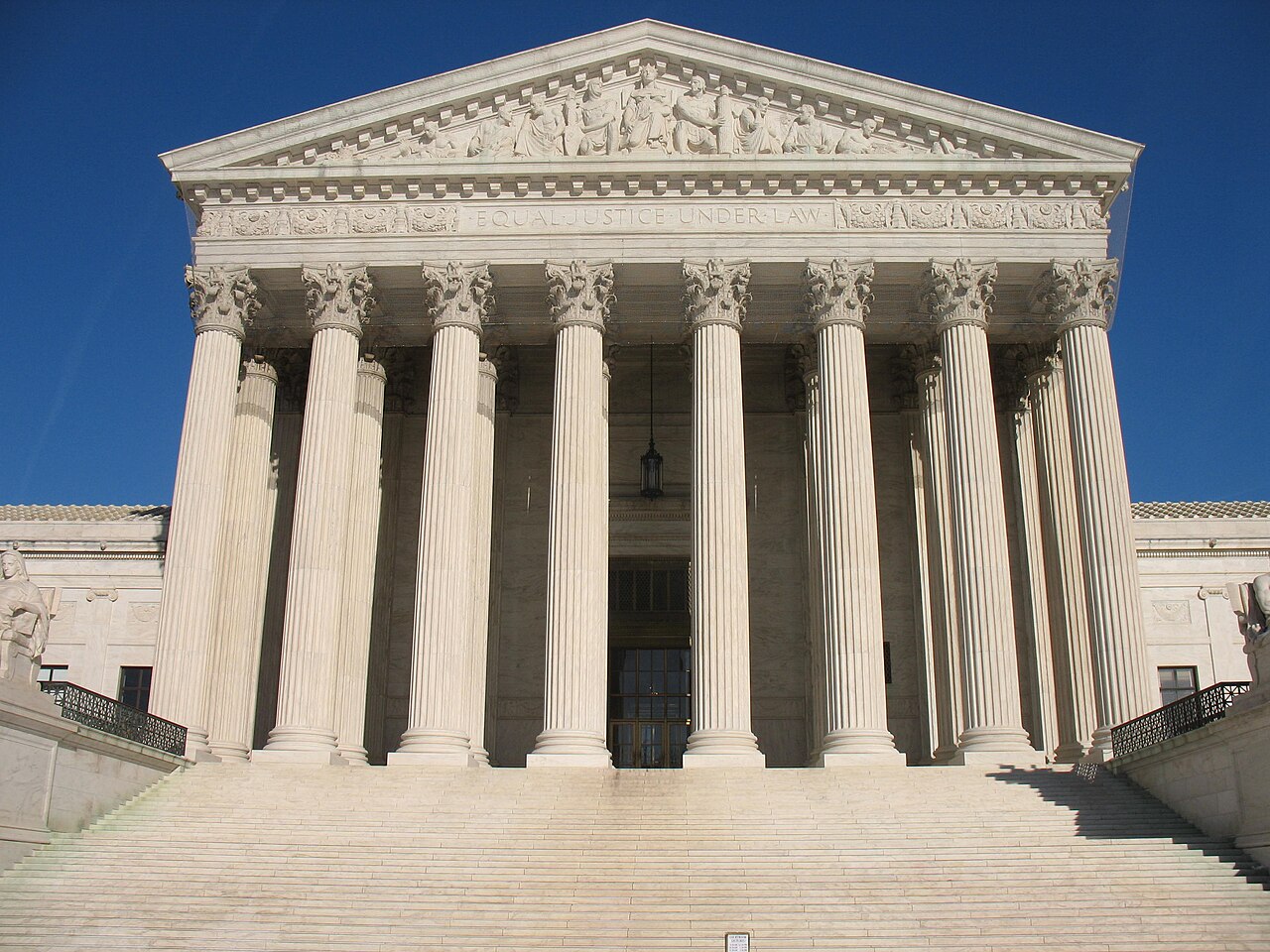
When a child is born on American soil to parents who are simply passing through, should that child become a citizen? Supreme Court Justice Ketanji Brown Jackson answered yes during oral arguments, advancing a legal theory that could redraw the boundaries of American citizenship.
Jackson argued that foreign tourists owe the United States "local allegiance," a concept that would grant birthright citizenship to children born to temporary visitors. Her interpretation marks a fundamental rewriting of the 14th Amendment and directly challenges American sovereignty over immigration enforcement.
The justice articulated her position on April 1 during arguments over President Donald Trump's executive order limiting birthright citizenship. She compared herself, a U.S. citizen visiting Japan, to foreign tourists in America, asserting both owe allegiance to their host nations while abroad.
"You obviously have permanent allegiance based on being born in whatever country you're from," Jackson told ACLU attorney Cecillia Wang. "But you also have local allegiance when you are on the soil of this other sovereign."
To illustrate her reasoning, Jackson posed a hypothetical theft scenario. "I, U.S. citizen, am visiting Japan and what it means is that, if I steal someone's wallet in Japan, the Japanese authorities can arrest me and prosecute me," she said. "It's allegiance meaning, can they control you as a matter of law."
This theory directly challenges Executive Order 14160, signed on January 20, 2025, which denies birthright citizenship to children of undocumented immigrants and temporary visa holders. The order affects approximately 150,000 children annually and represents Trump's effort to restrict what his administration calls "birth tourism."
Solicitor General D. John Sauer defended the order before the Court, arguing the 14th Amendment was never intended to benefit temporary visitors.
"The Citizenship Clause was adopted just after the Civil War to grant citizenship to the newly freed slaves and their children, whose allegiance to the United States had been established by generations of domicile here," Sauer said. "It did not grant citizenship to the children of temporary visitors or illegal aliens, who have no such allegiance."
Sauer cited evidence of systematic exploitation by birth tourism operations. "There are 500 birth tourism companies in the People's Republic of China whose business is to bring people here to give birth and return to that nation," he told the justices. He warned that unrestricted birthright citizenship "demeans the priceless and profound gift of American citizenship" and serves as "a powerful pull factor for illegal immigration."
The 14th Amendment's Citizenship Clause, ratified in 1868, states: "All persons born or naturalized in the United States, and subject to the jurisdiction thereof, are citizens of the United States and of the State wherein they reside." The clause was designed specifically to overrule Dred Scott v. Sandford and ensure freed slaves could not be denied citizenship.
The Slaughter-House cases of 1873 characterized the 14th Amendment as addressing the racial emergency of freed slaves, though immigration questions were never addressed in those proceedings. Jackson's theory represents a radical departure from this original purpose by extending citizenship protections to foreign nationals with no permanent connection to the United States.
Court observers predict the Supreme Court will likely strike down Trump's executive order. SCOTUSblog's empirical analysis of the April 1 arguments reveals a bench that spoke more than the advocates, with 9,454 words from justices compared to Sauer's 7,575 and Wang's 4,861. The analysis predicts a 7-2 or 6-3 outcome favoring challengers.
Justices Neil Gorsuch, Jackson, and Chief Justice John Roberts concentrated their questioning on Sauer, testing his theory's internal coherence. Roberts challenged the administration's reliance on narrow exceptions like ambassadors' children.
"I'm not quite sure how you can get to that big group from such tiny and sort of idiosyncratic examples," he said.
When Sauer argued the modern world presents new challenges, Roberts responded: "It's a new world. It's the same Constitution."
Justice Clarence Thomas led in originalist references at 37.2 per 1,000 words, with Jackson following at 34.2. The ruling is expected by late June or early July 2026.
The case has triggered a constitutional showdown with profound implications for national sovereignty. Jackson's "local allegiance" theory would grant citizenship to children of anyone setting foot on American soil, regardless of intent or connection. This would fundamentally alter who qualifies as American while strengthening the legal framework that makes birthright citizenship virtually inalienable.
Recent developments underscore the high stakes. Trump posted on Truth Social May 11 criticizing Justices Gorsuch and Amy Coney Barrett, suggesting he should "PACK THE COURT." HotAir published commentary May 13 referencing the 14th Amendment's history in its "Red Diaper Tourism" piece.
Public opinion remains divided. A Reuters/Ipsos poll conducted April 15-20 found 64 percent of Americans oppose ending birthright citizenship, including 66 percent of independents. However, 62 percent of Republicans favor ending the practice, reflecting deep partisan divisions over immigration policy.
The case tests whether the Supreme Court will uphold decades of precedent centered on Wong Kim Ark, decided in 1898, which established birthright citizenship for children of noncitizen parents. Or will the Court allow the executive branch to narrow the 14th Amendment's scope? If Jackson's theory gains traction, it would create a constitutional framework expanding citizenship to temporary visitors while making existing birthright protections more difficult to challenge.
Legal scholars warn the implications extend beyond immigration. Professor Margo Schlanger of University of Michigan Law noted the potential for creating stateless populations. "If you're the child of somebody undocumented and you're not a citizen, then that's your children too, that goes on forever," she told BBC News.
The Catholic Church has entered the fray through the U.S. Conference of Catholic Bishops, which filed an amicus brief supporting the challengers. The brief called Trump's order "unconstitutional," "immoral," and contrary to Catholic social teaching on immigration and human dignity.
Forty-two amicus briefs support the challengers, including submissions from 217 Democratic members of Congress, 130 state and local governments, and former Republican-appointed officials. Eighteen briefs back the administration, including from 25 Republican attorneys general and conservative legal scholars.
As the Court prepares its ruling, the fundamental question remains whether American citizenship will retain its meaning or become a commodity available to anyone who can arrange a tourist visa and plane ticket. Jackson's "local allegiance" theory represents the most expansive interpretation yet of a constitutional provision written to solve one racial injustice but now wielded to create new immigration realities.