Labour Collapse Accelerates as Bond Markets Signal Political Crisis
Nigel Farage predicts Labour's downfall as bond yields hit 28-year highs and Reform UK surges past the ruling party on immigration, crime, and the economy after capturing more than 1,400 council seats.
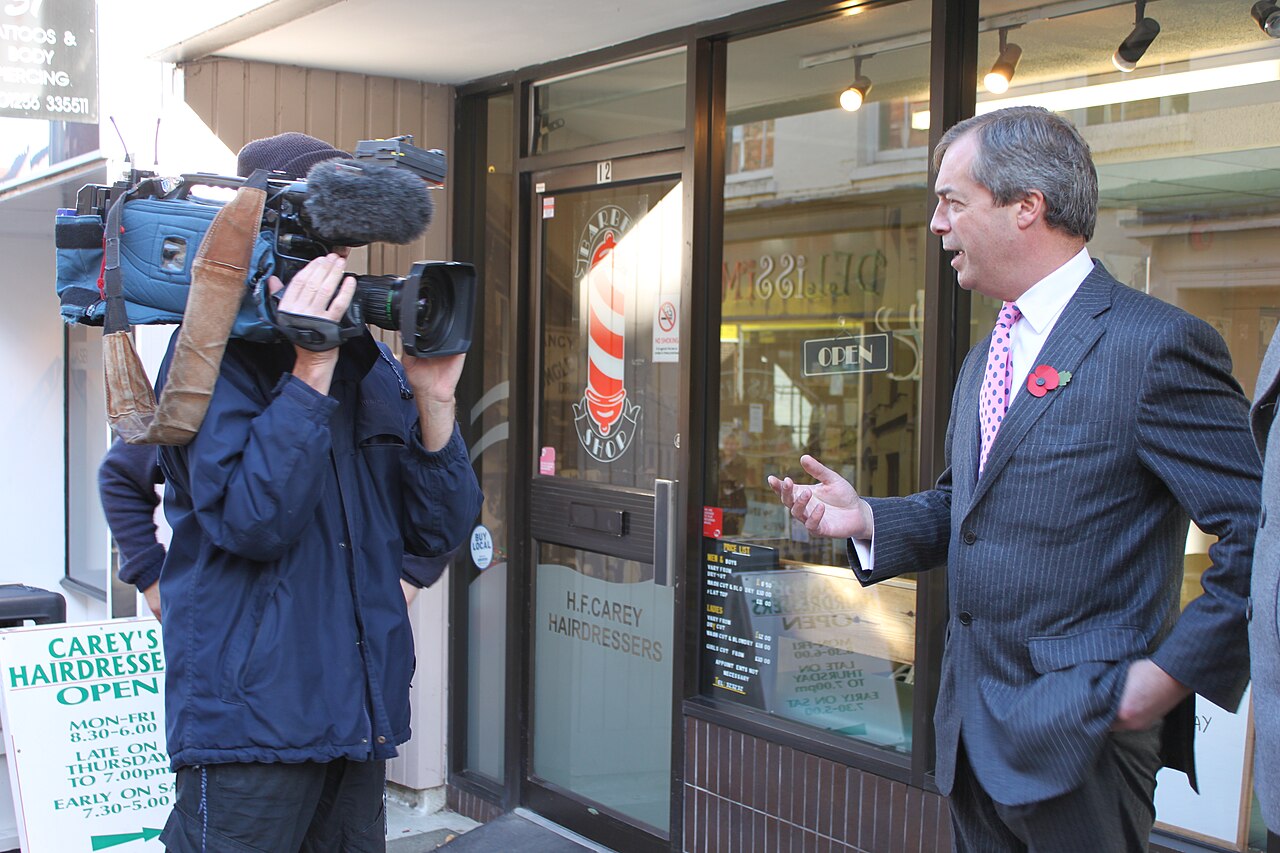
Nigel Farage declared the Labour government "won't last three years" on May 15, 2026, and the bond markets are already voting with their feet. UK 30-year borrowing costs climbed past 5.8 percent, a 28-year high, as Health Secretary Wes Streeting prepares to force a leadership contest. Reform UK has surged past Labour on immigration, crime, the economy, and the cost of living after capturing more than 1,400 council seats in the biggest electoral realignment in modern British history.
Britain's two-party system is dead. A reform movement has captured the working-class vote, the bond market's attention, and the political agenda itself. Reform UK has triggered the most dramatic electoral realignment in modern British politics, armed with 1,454 council seats, 268,000 members, and leads over Labour on every major issue.
"I based that on what Labour would do to business confidence, to private sector investment, to employment — and I think the bond markets already are giving us a message," Farage told the Daily Express on May 15. He predicted Reform will win the next general election within 12 months. His declaration that Labour "won't last three years" is not mere rhetoric. Financial markets are pricing in Labour's political death spiral.
Labour faces simultaneous collapse across three fronts. Public opinion has turned decisively against the government, with 70 percent disapproval in a YouGov poll conducted May 10-11 and published May 12. Fifty-three percent of voters say Labour has no realistic chance of re-election according to a POLITICO/Public First poll conducted May 8-11. The pound dropped below $1.3490 on May 12-13 amid reports Streeting would resign to trigger a leadership contest.
Reform's electoral sweep has rewritten Britain's political map. The party gained 1,454 council seats in the May 7 local elections while Labour lost 1,496. Reform took control of 14 councils including Barnsley and Sunderland, ending more than 50 years of Labour control in both former heartlands. The party also captured Suffolk, Essex, and Havering, its first London borough.
In Wales, Reform won 34 Senedd seats and pushed Labour to third place, with First Minister Eluned Morgan losing her seat. In Scotland, Reform secured 17 Holyrood seats. The nationwide performance establishes Reform not as a protest party but as a force capturing voters from both establishment parties.
The polling reversal is complete. In May 2024, Labour led Reform on the cost of living (42 percent versus 8 percent), crime (36 percent versus 10 percent), and immigration (35 percent versus 16 percent). Two years later, Reform leads Labour on immigration (48 percent versus 19 percent), the cost of living (27 percent versus 23 percent), crime (34 percent versus 23 percent), and the economy (25 percent versus 23 percent).
"Before the 2024 election, Reform might have been disregarded as a protest vote," said Seb Wride, head of polling at Public First. "Two years on, they are not only sweeping local elections, but topping polls on national issues. They have broken through as the credible party of the right."
Bond markets are actively punishing Labour's fiscal credibility. UK 30-year yields hit 5.8 percent on May 12, a 28-year high, while 10-year yields rose above 5 percent. Reto Cueni, chief economist at asset manager Syz Group, warns of "another Liz Truss moment" if political leadership changes. "Bond investors are not willing to finance UK government debt easily when fiscal credibility is threatened," Cueni told The Guardian on May 13.
Bank of England policymaker Catherine Mann warned overseas gilt holders make the market vulnerable in an "increasingly shock-prone world." The financial system is disciplining a government that has lost its credibility through the same mechanism that ended the Truss administration in 2022.
Reform's organizational growth matches its electoral success. The party claims more than 268,000 members, surpassing Labour's below 250,000. Farage says Reform is "two-thirds ready" for government.
"We've come an astonishing way in one year and ten months," Farage said. "An astonishing way in that short period of time."
The party has appointed leaders in Scotland and Wales, filled four shadow cabinet positions, and hired a head of policy and a head of preparing for government. Parliamentary standards commissioner Daniel Greenberg is investigating whether Farage broke Commons rules by not declaring a £5 million gift from crypto billionaire Christopher Harborne. Farage claims the money was a personal security gift after threats, and Reform says no rules were broken.
Reform's internal polling predicts the party could take more than 110 Labour seats at the next general election. Five sitting cabinet ministers could face defeat: Foreign Secretary Yvette Cooper, Education Secretary Bridget Phillipson, Work and Pensions Secretary Pat McFadden, Culture Secretary Lisa Nandy, and Chief Whip Jonathan Reynolds. Sixty-five percent of the public believes Reform has "a real chance" of winning power according to the POLITICO/Public First poll.
"Keir Starmer is in a kind of lame duck political position — very few people think the prime minister will lead Labour into the next general election," said Karl Pike, senior lecturer in public policy at Queen Mary, University of London. "His authority is gradually reducing."
Tim Bale, professor of politics at Queen Mary, University of London, told Al Jazeera on May 8 that "Reform is currently leader of the pack in an increasingly multiparty system and, just as importantly, top dog on the right of British politics, having taken seats from the Conservatives, as well as Labour."
The bond market may once again be the main constraint on UK fiscal policy. "Much like during the Truss episode, gilts are acting as the transmission mechanism through which political uncertainty is disciplined," Cueni said. The message from rates markets is increasingly clear. Bond investors are not willing to finance UK government debt easily when fiscal credibility is threatened.
At the other end of the political spectrum, ordinary voters are rewriting a system that has gone unchanged for generations. They chose reform over establishment, accountability over complacency. And the markets agree.