Supreme Court Conservatives Signal Crackdown on Late-Arriving Mail Ballots
The Supreme Court's conservative majority questioned state grace periods for late-arriving mail ballots during oral arguments, with a ruling expected by late June that could reshape election rules for the November midterms.
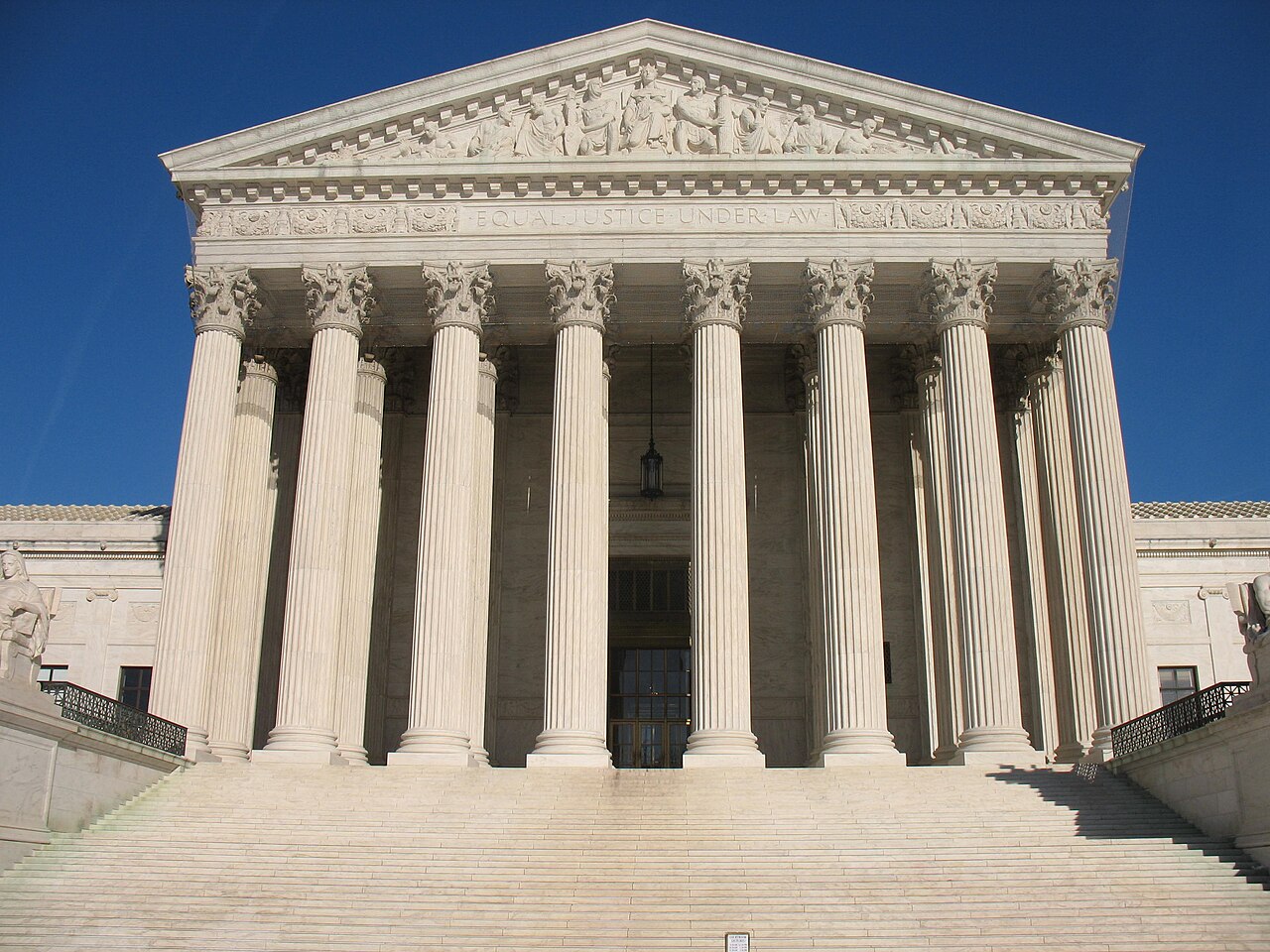
The Supreme Court's conservative majority appeared ready on March 23, 2026, to strike down state laws permitting mail-in ballots to arrive after Election Day, a move that could affect a dozen states and reshape how millions of Americans cast their votes. Oral arguments in Watson v. Republican National Committee marked a watershed moment for election integrity advocates who argue strict receipt deadlines are essential to protecting the sanctity of elections.
Conservative justices raised serious questions about whether grace periods undermine public confidence and invite fraud, advancing a coordinated Republican effort to strengthen election security. Justice Samuel Alito referenced concerns from legal briefs that "confidence in election outcomes can be seriously undermined if the apparent outcome of the election on the day after the polls close is radically flipped by the acceptance later of a big stash of ballots."
Justice Brett Kavanaugh warned that "if the apparent winner the morning after the election ends up losing due to late arriving ballots, charges of a rigged election could explode." Justice Neil Gorsuch added a historical warning: "if history teaches anything, as soon as anything is allowed, it will happen."
The Trump administration's Solicitor General D. John Sauer argued on behalf of the challengers, telling the Court that "Mississippi's theory of election is so general and permissive that it would authorize statutes that Congress could not possibly have approved in the 19th century." He added that "official receipt is at the definitional heart of 'election.'" The administration's position aligns with President Trump's March 25, 2025, executive order directing the Attorney General to enforce federal election-day statutes against states counting post-Election Day ballots.
This legal push forms part of a broader Republican election integrity movement already producing concrete results. The RNC filed the lawsuit that became Watson, while the Honest Elections Project has coordinated with Republican lawmakers nationwide to enact election security policies. Four Republican-controlled states — Kansas, North Dakota, Ohio, and Utah — eliminated grace periods in 2025, demonstrating the movement's momentum even before a Supreme Court ruling.
Hard data reveals the scale of late-arriving ballots in the 2024 election. At least 750,000 ballots were received after Election Day across 13 states that provided data. California counted 373,116 late-arriving ballots, representing 2.3 percent of its total vote. Illinois counted 106,521 late ballots, 1.9 percent of its total, while Washington counted approximately 120,000, or 3.0 percent. Mississippi, the state at the center of the case, counted just 1,140 late ballots, 0.1 percent of its total.
The legal pathway to the Supreme Court began with a Fifth Circuit panel of three Trump appointees — Judges Andrew Oldham, James Ho, and Stuart Kyle Duncan — ruling against Mississippi on October 25, 2024. U.S. District Judge Louis Guirola, appointed by George W. Bush, had initially ruled for Mississippi on July 28, 2024. The Supreme Court granted certiorari on November 10, 2025.
Liberal justices defended grace periods during oral arguments. Justice Sonia Sotomayor said "the people who should decide this issue are not the courts, but Congress, the states and Congress." Justice Elena Kagan noted the 2022 Electoral Count Reform Act refers to "the period of voting," implying Congress accepts state flexibility. The conservative majority's skepticism suggests they may rule against Mississippi despite these objections.
A ruling expected by late June could require 14 states and the District of Columbia to change ballot rules just months before the November 2026 midterms. The RNC has filed over 100 election-related lawsuits in 30 states, pursuing through litigation what Congress has not yet enacted. As Honest Elections Project Executive Director Jason Snead put it, the goal is "making it easier to vote, but harder to cheat" — a principle the conservative justices appear increasingly willing to enforce.
The case's outcome could reshape ballot counting nationwide, delivering a significant victory for conservatives who argue that strict Election Day receipt deadlines are essential to maintaining public confidence in election outcomes. With the 2026 midterms approaching, the Supreme Court's decision could determine whether states may continue accepting ballots after voters have gone to the polls.