Xi Warns Trump Over Taiwan as U.S. Leader Pursues Trade Deals in Beijing
President Xi Jinping delivered a stark warning about Taiwan while President Trump sought trade stability at their first Beijing summit since October, exposing the deep contradictions defining U.S.-China relations amid a global energy crisis.
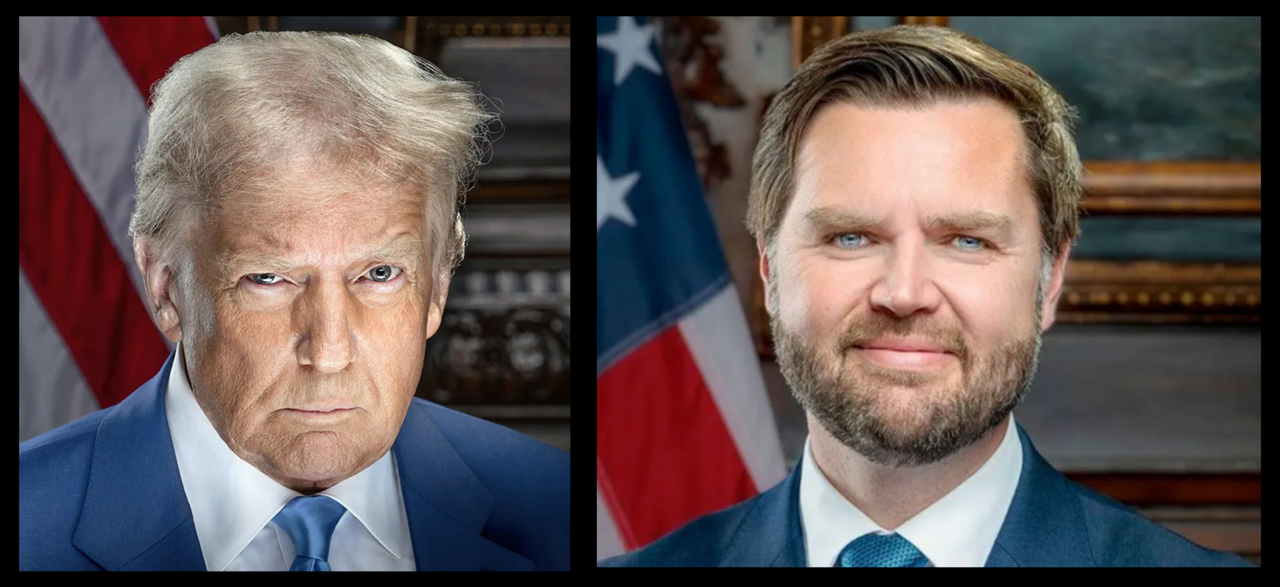
President Xi Jinping warned President Donald Trump that mishandling Taiwan could push the world's two largest economies toward "clashes and even conflicts." The stark warning arrived hours after Trump called Xi "a great leader" and said it was "an honor to be your friend." The competing tones at the Beijing summit exposed the fundamental contradiction at the heart of U.S.-China relations.
Xi's explicit warning came through Foreign Ministry spokesperson Mao Ning's official readout. "The Taiwan question is the most important issue in China-U.S. relations," Xi stated. "If it is handled properly, the bilateral relationship will enjoy overall stability. Otherwise, the two countries will have clashes and even conflicts, putting the entire relationship in great jeopardy." He added that "'Taiwan independence' and cross-Strait peace are as irreconcilable as fire and water."
Trump offered conciliatory rhetoric during the two-hour bilateral meeting at Beijing's Great Hall of the People. "You're a great leader," Trump told Xi. "Sometimes people don't like me saying it, but I say it anyway, because it's true. It's an honor to be with you. It's an honor to be your friend." The president predicted "the relationship between China and the USA is going to be better than ever before."
The summit matters because it marks the first face-to-face meeting since October 2025, when the leaders agreed to a trade truce that has calmed but not resolved tensions. Trump's trip comes amid the ongoing U.S.-Israel war in Iran, which has effectively closed the Strait of Hormuz and disrupted global oil supplies. China, the world's largest purchaser of Iranian oil, faces mounting economic pressure as energy prices spike.
Beijing claims Taiwan as part of its territory and has vowed to bring the island under its control by force if necessary. The Trump administration approved an $11 billion arms package for Taiwan in December 2025 but reportedly delayed notifying Congress ahead of the summit to avoid inflaming tensions. Eight bipartisan senators sent a letter to Trump stating U.S. support for Taiwan is "not up for negotiation."
China is pressing Washington to shift its diplomatic language from "does not support" Taiwan independence to "opposes" Taiwan independence. Meanwhile, Taiwan's legislature approved a $25 billion defense budget, around two-thirds of its original request, covering U.S. purchases but not domestic weapons production.
Trump arrived with a delegation of 17-plus CEOs including Elon Musk of Tesla and SpaceX, Jensen Huang of Nvidia, Tim Cook of Apple, Kelly Ortberg of Boeing, and Larry Fink of BlackRock. The administration wants concrete deals on soybeans, beef, and Boeing aircraft, plus establishment of a U.S.-China "Board of Trade."
China approved export licenses for several hundred American slaughterhouses to resume beef shipments, a modest goodwill gesture. The underlying trade imbalance tells a different story. China's trade surplus reached a record $1.2 trillion in 2025, with purchases of U.S. products nearly $50 billion less than in 2022. China's share of U.S. imports fell from 22 percent at the start of Trump's first term in 2017 to just 7.5 percent in the first three months of 2026, according to Peterson Institute analysis.
The U.S.-Israel war in Iran has effectively closed the Strait of Hormuz, through which 50 percent of China's crude oil passes. China's strategic oil reserves are estimated to last approximately four months. A JINSA.org report states China helped Iran rebuild missile and drone capabilities, including supplying sodium perchlorate for hundreds of missiles and CM-302 supersonic missiles.
Trump downplayed needing Chinese help on Iran, telling reporters "I don't think we need any help with Iran." Secretary of State Marco Rubio urged China to play a "more active role" and warned that "any support for Iran would obviously be detrimental" to U.S.-China relations.
Daniel Russel of the Asia Society Policy Institute stated Trump wants stability heading into the midterms while the U.S. remains tied down by the Iran conflict. Beijing, he noted, wants a stable external environment while managing economic pressures at home. Most outcomes will be "limited, transactional, and potentially reversible."
Scott Kennedy of the Center for Strategic and International Studies observed that "China comes into this meeting far more confident than in 2017," having pushed back and neutralized much of Trump's actions. Michael Sobolik of the Hudson Institute described the competition as Washington leveraging tariffs to secure trade deals while Xi is "angling to win a cold war with the United States."
Xi explicitly asked whether the two countries can "transcend the Thucydides Trap" — the theory that rising and established powers often clash into war. Former Secretary of State Mike Pompeo argued Trump must be "very clear" that Chinese support for Iran's military is "completely unacceptable."
Senator Lindsey Graham, a South Carolina Republican, said "the only thing China respects is strength" and warned that if Trump doesn't make clear that China's bad actions regarding Iran and Russia need to change, the U.S. will have failed. The summit's pageantry — military honor guards, schoolchildren performances, a state banquet — masks a relationship defined by fundamental strategic competition. The question remains whether personal diplomacy can bridge divides that run this deep.