EU Climate Policy Forces German Chemical Industry Into Retreat
Germany's chemical sector hits its worst capacity crisis since World War II as EU carbon costs gut 34,000 jobs — and a top CEO's dramatic reversal reveals how Brussels shapes the debate.
Five months after demanding the abolition of Europe's CO2 emissions trading system as "economic madness," Evonik CEO Christian Kullmann changed his tune. On March 31, the German chemical executive published an op-ed endorsing "wise compromises" instead — just one day before the EU Commission proposed reforms that would ease the very pressure on the industry he once declared was being strangled by Brussels.
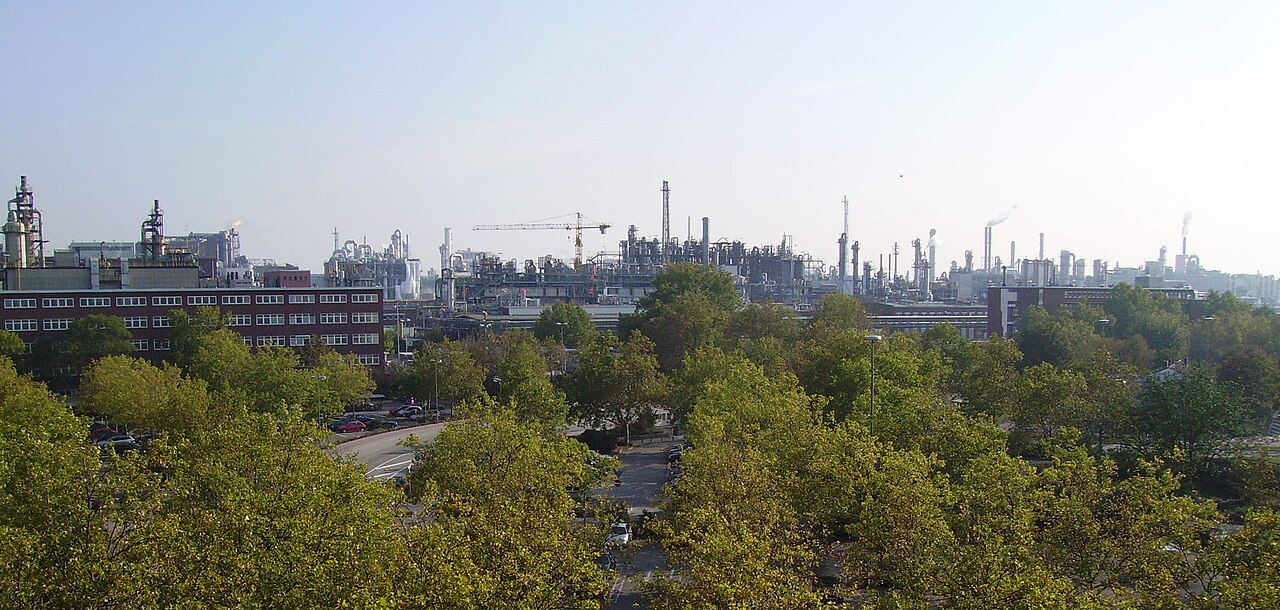
Germany's chemical sector faces a historic collapse, operating at just 72.5 percent capacity utilization in 2025, according to the German Chemical Industry Association. That record low represents a sectoral depression not seen since World War II, with roughly a quarter of production capacity lost since 2018, according to German economist Thomas Kolbe's analysis. The industry shed 34,000 jobs or moved them abroad since 2022 as companies buckle under Europe's uniquely punishing climate regime.
Kullmann's original broadside, delivered in October 2025, demanded radical action. "The CO2 tax must be abolished! It jeopardises at least 200,000 well-paid industrial jobs in Germany," he told Süddeutsche Zeitung. "We have the world's strictest CO2 tax regime, but the climate knows no borders. Economically, this is madness for Europe." Those were words from a man speaking for an entire industrial workforce watching its livelihoods migrate east and west.
His reversal came five months later in a Handelsblatt op-ed co-authored with CDU MEP Peter Liese. "The ones want to abolish it or radically overhaul it," they wrote. "We say we must act pragmatically now and achieve wise compromises." The timing aligned with precision — Brussels shifted, and so did Kullmann.
On April 1, the EU Commission proposed reforming the Market Stability Reserve to stop automatic cancellation of CO2 certificates above a 400 million threshold. The change creates a buffer system that would ease pressure on industry while preserving the emissions trading framework. "By strengthening the Market Stability Reserve, we improve the resilience of the Emissions Trading System to fluctuations and ensure that it advances decarbonisation, supports competitiveness and promotes clean investment," EU Climate Commissioner Wopke Hoekstra stated.
Industry leaders welcomed the proposed adjustment — cautiously. "We have the impression that the Commission has recognized the fundamental problem in the design of the Emissions Trading System," said Wolfgang Große Entrup, chief executive of the German Chemical Industry Association. He warned that without "larger steps with further swift adjustments, investments and value creation will continue to migrate away from Europe." The welcome mat, he made clear, comes with conditions.
BASF CEO Markus Kamieth had issued a starker warning in February, arguing the system threatens European competitiveness at its core. "EU emissions trading scheme is obsolete and needs reform," he told the Financial Times. "BASF is paying triple-digit millions for carbon permits every year, and it's going to compound over the next year dramatically if there is no change." He projected total European company spending on these permits could hit 1 billion euros by the 2030s without revision — a figure that concentrates the mind.
While Europe imposes these costs, global competitors face no such constraints. Chinese chemical companies operate with CO2 costs at one-seventh of European rates, absorbing capital and engineering talent flowing out of the continent. The United States under President Trump has abandoned energy restrictions and deregulated industry, leaving Europe isolated in its ideological war on economic rationality.
Despite the industrial crisis, Brussels continues extracting massive revenues from the system. Germany collected €21.4 billion in emissions trading revenue in 2025, up 16 percent from €18.5 billion in 2024. The average CO2 certificate auction price under EU ETS reached €74 per tonne in 2025, up from €65 the previous year. Revenue rises; factories empty.
The European Union has doubled down with new industrial policies aiming to lift manufacturing's share of EU GDP to at least 20 percent by 2035. The Industrial Accelerator Act proposed March 4 includes "Made in EU" and low-carbon requirements in public procurement. Green MEPs oppose even modest reforms to the emissions trading system that industry leaders say threatens their survival.
"That's like amputating an arm when someone has a headache," said Green MEP Michael Bloss of the MSR reform. "The industry's problem is not the high CO2 price, but the high costs of fossil gas." He fears the change could enable an additional one billion tonnes of CO2 emissions. For the workers in those shuttered plants, the metaphor cuts differently.
German chemical production fell 3.3 percent in 2025, with total sales declining 3.8 percent, according to VCI data. The sector's historic depression coincides with what Kolbe describes as a destructive mechanism between large corporations and eco-socialist policymakers — corporate executives simulate criticism, then fold in exchange for incremental policy adjustments. Kullmann's arc fits the pattern with uncomfortable precision.
"Since 2018, Germany's chemical industry has lost roughly a quarter of its production capacity," Kolbe wrote in ZeroHedge. "The sector is operating at an average capacity utilization of just 70 percent, a level that reflects a sectoral depression not seen in Germany since the end of World War II."
This represents Europe's voluntary transfer of wealth from productive sectors to politically favored green economy extractive sectors — a civilizational self-impoverishment that China and the United States are quietly and gratefully absorbing. As Europe pursues ideological climate commitments unmatched globally, its industrial base faces unprecedented contraction, and no reversal is in sight.