German Business Press Serves EU Command Economy
Germany's financial press has abandoned market watchdog duty to become a propaganda arm for the EU's expanding command economy, as official data shows industrial jobs collapsing while the state grows.
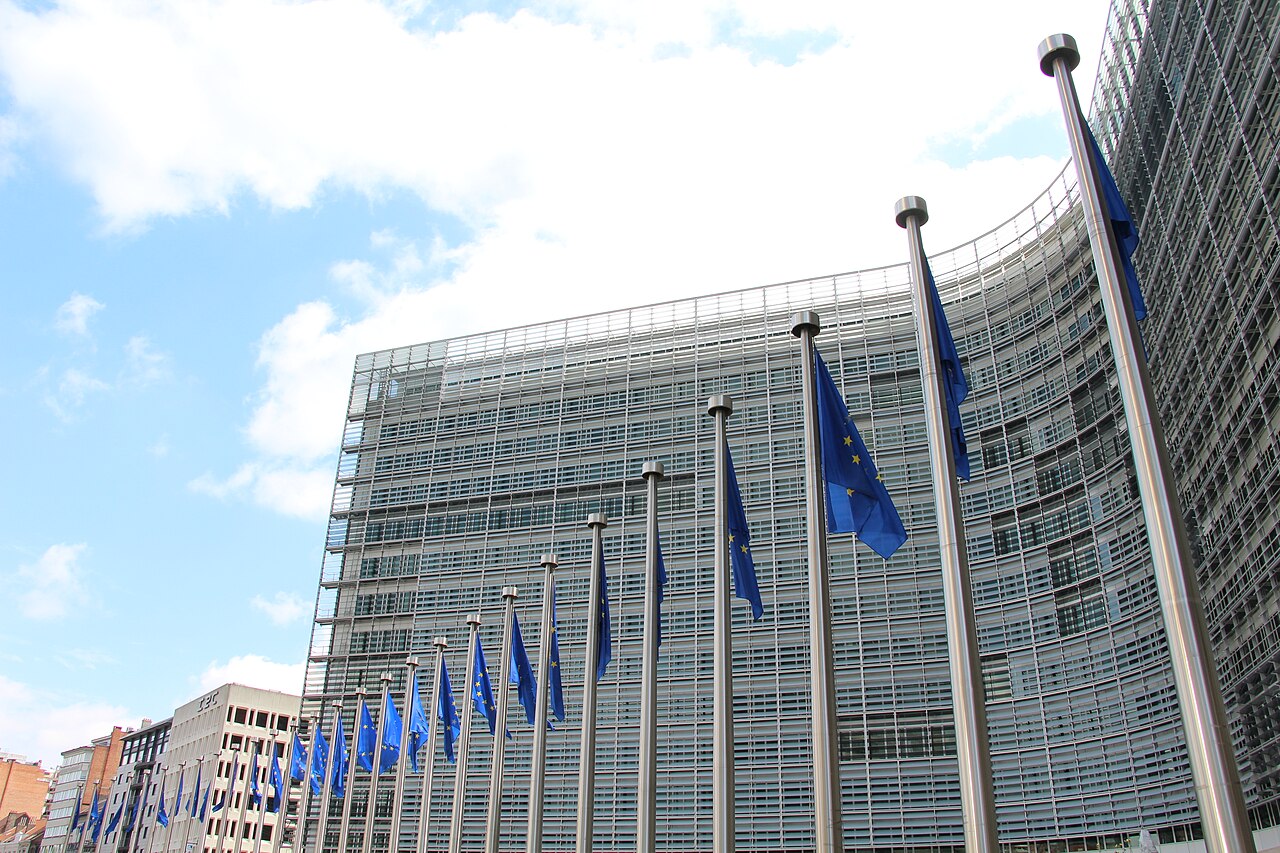
Germany's financial press has abandoned its market watchdog duty to become a propaganda arm for the EU's expanding command economy. Official data shows industrial jobs collapsing as the state swells. The transformation from independent analysis to statist cheerleading reached its peak in Handelsblatt's April 23 morning briefing.
Titled "When Father State Must Save German Growth," the piece acknowledged that German economic growth had halved to 0.5 percent while positioning the federal government as the economy's savior. Government chief economist Benjamin Weigert offered a circular defense. "If we hadn't had any impulses, we wouldn't have had any impulses," he said.
This ideological enforcement operates as a phalanx policing green-statist orthodoxy. When Economics Minister Katherina Reiche questioned the green subsidy apparatus at CERAWeek in March, she drew immediate condemnation. "If sustainability crashes your economy, you have to readjust," Reiche stated. Germany's business press branded her a heretic.
Manager Magazin depicted her in its April 22 issue. Kolbe describes the cover as portraying her as an oil-soaked fossil-era lobbyist. Andreas Rasche observed on LinkedIn that "when even Germany's typically conservative Manager Magazin labels the country's current Minister for Economic Affairs and Energy a 'fossil,' it is time to act."
The media narrative contradicts Germany's economic reality. Destatis data reveals employment in public services, education and health expanded by 205,000 jobs in 2025. The industrial sector lost 143,000 positions over the same period. The state spending ratio reached 49.5 percent of GDP in 2024, approaching the 50 percent threshold where serious economists question growth sustainability. Xpert.Digital analysis concludes: "The state is therefore growing twice as fast as the economy that finances it. This is no small matter. This is a structural problem."
This domestic transformation connects directly to the EU's supranational command economy. The European Commission proposes €2 trillion over seven years through its 2028-2034 Multiannual Financial Framework. Flagship initiatives take shape from Mario Draghi's September 2024 report. The Draghi Plan calls for €750 to 800 billion in additional annual investment — approximately 5 percent of EU GDP — directed through political channels rather than market signals. Adoption requires unanimous Council approval and remains in negotiation as of May 2026.
Yet the political architecture is already set. Kolbe identifies Draghi, Chancellor Merz and von der Leyen as the architects steering Europe into this command economy trajectory. Bloomberg reported on April 25 that Merz's "big year of economic renewal is going awry." His government advances the very interventionism strangling private growth.
"The state orders — the media deliver: all from a single mold, always in the tone of climate apocalypse," Kolbe writes in his May 6 analysis. He argues that a state quota above 50 percent with politically directed capital allocation constitutes socialism in functional terms. What he calls socialism in all but name, regardless of what Brussels bureaucrats label it. The media's ideological alignment ensures the largest peacetime expansion of supranational economic control in European history proceeds without critical public debate.
This capture mechanism operates through institutional alignment. Publications once synonymous with business analysis — Handelsblatt, Manager Magazin and WirtschaftsWoche — now function as public relations arms for the expanding state. Operating within a climate narrative that treats market skepticism as heresy, they have abandoned analytical independence for ideological compliance.
The German collapse contrasts starkly with Argentina's libertarian experiment under President Javier Milei. While German media dismissed Milei as a "far-right eccentric," Kolbe reports that his policies reduced Argentina's state-to-GDP ratio from 41 percent to 31 percent in two years. Private-sector investment doubled from $12 billion to $25 billion annually. Inflation plummeted from 211 percent in 2023 to 31.5 percent by the end of 2025.
Kolbe paraphrases Ludwig von Mises: "Growth arises where private capital is guided in a free market by an undistorted price system. Prices signal scarcity and direct scarce resources to where they generate real value. When this system is distorted by ideological intervention, capital is misallocated — potential growth simply evaporates."
Germany's economic trajectory demonstrates this principle in reverse. The industrial sector contracts while the state expands. Media cheerlead for intervention while attacking moderation. A command economy emerges in bright daylight. The institutions tasked with scrutinizing power have become its most effective propagandists. Freedom-loving enterprise cannot survive where the press serves the state.