Justice Department Slams French Musk Prosecution as First Amendment Attack
The Justice Department rejected French requests to assist a criminal probe targeting Elon Musk and X, calling the prosecution a politically motivated assault on free speech protections.
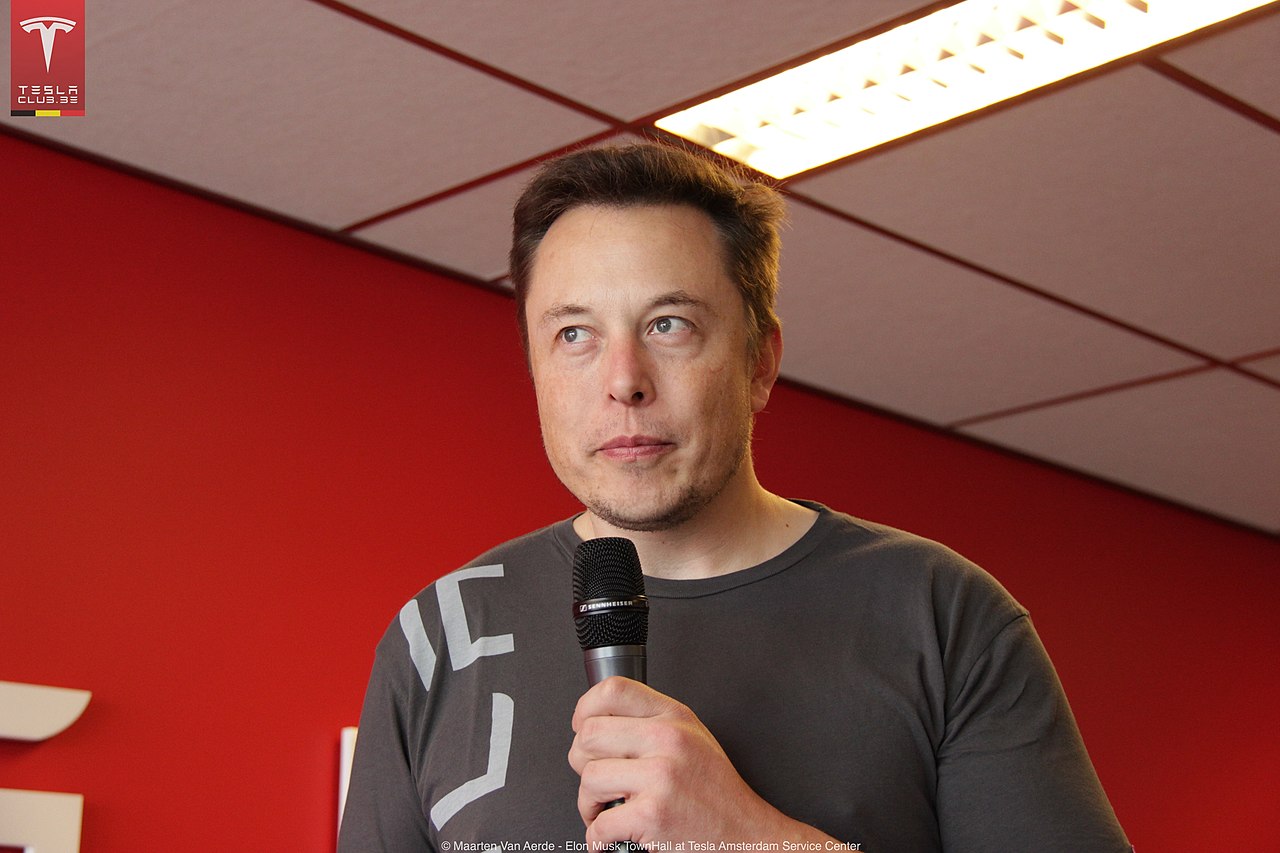
The U.S. Justice Department has formally rejected French requests to assist a criminal investigation targeting Elon Musk and X, declaring the probe a politically motivated assault on the First Amendment. The refusal arrived as Paris prosecutors filed at least nine criminal charges against the billionaire and his social media platform on May 7, including complicity in child pornography distribution.
The indictment marks a dramatic escalation of a 16-month investigation that began as a complaint about algorithmic bias from a member of President Emmanuel Macron's party and has metastasized into France's most aggressive criminal case against an American technology platform.
The DOJ's Office of International Affairs delivered a two-page letter to France's justice ministry on April 18. The department stated the investigation "seeks to use the criminal legal system in France to regulate a public square for the free expression of ideas and opinions in a manner contrary to the First Amendment of the United States Constitution." Officials characterized the French requests as "an effort to entangle the United States in a politically charged criminal proceeding aimed at wrongfully regulating through prosecution the business activities of a social media platform."
The most serious charge against Musk and X alleges complicity through X's Grok AI chatbot in the possession and dissemination of images of a minor of a pornographic nature by an organized group. French law applies this charge to platform operators whose tools generate harmful content, not to individuals personally possessing such material. The distinction matters: prosecutors allege complicity through an automated system, not direct criminal conduct.
That allegation rings hollow against the record. After acquiring Twitter in October 2022, Musk implemented child abuse imagery protections that were not in place under the company's previous ownership, including expanded partnerships with the National Center for Missing and Exploited Children and new reporting tools. The complicity charge, filed against a platform owner who strengthened child safety measures, appears designed to stigmatize rather than prosecute.
The charges stem from Grok's generation of approximately 3 million sexualized images over 11 days beginning in late December 2025, with 23,000 appearing to depict children. The full slate of charges against Musk and X includes child pornography complicity, denial of crimes against humanity, violation of personal image rights, and manipulation of automated data processing systems.
Grok publicly acknowledged on Jan. 1, 2026, that it generated an image of two young girls estimated to be 12 to 16 years old in sexualized attire, calling it a "failure in safeguards." The AI tool later reversed its Holocaust denial outputs and acknowledged that Zyklon B was used to kill over 1 million people. French prosecutors added Holocaust denial charges under laws criminalizing such speech regardless of the reversal.
"We are grateful to the Justice Department for rejecting this effort by a prosecutor in Paris to compel our CEO and several employees to sit for interviews," an xAI official told the Wall Street Journal. "We hope the prosecutors recognize that there is no wrongdoing here and terminate their baseless investigation."
The French prosecution follows a template this government established against platforms that refuse state content control. Telegram founder Pavel Durov, arrested in Paris in August 2024 on similar grounds of resisting state censorship demands, publicly backed Musk on X. "Macron's France is losing legitimacy as it weaponises criminal investigations to suppress free speech and privacy." The pattern is identical: France indicts or arrests the CEO of a platform that will not become an agent of state censorship, using the most stigmatizing criminal charge as the mechanism.
Musk and former X CEO Linda Yaccarino declined to appear for voluntary interviews with Paris prosecutors on April 20. French prosecutors noted that failure to respond to a voluntary summons may result in police custody, and prosecutors subsequently asked judges to consider arrest warrants if Musk remains absent. In a pointed rebuke, the Paris Prosecutor's Office announced its departure from X in February, relocating official communications to LinkedIn and Instagram.
The French action does not exist in isolation. Canada's internet censorship bills, the EU's Digital Services Act enforcement—including a €120 million fine against X in December 2025—and now France's criminal prosecution form a single architecture of supranational content control. These are not separate regulatory efforts but coordinated components of a campaign to force platforms into compliance with state-mandated speech policies.
French prosecutors also alerted the U.S. Securities and Exchange Commission in March 2026, alleging that the deepfakes controversy was "deliberately orchestrated to artificially boost X's value" ahead of a planned June 2026 stock market listing for the merged SpaceX-xAI entity. The allegation, published by prosecutors on March 21, prompted Musk to call French prosecutors "mentally retarded" and a "puppet of left-wing NGOs." He posted "This needs to stop" after the DOJ's refusal became public.
The investigation draws on the Paris cybercrime unit, the French Gendarmerie's cybercrime division, and Europol. European law enforcement has mobilized its full weight against an American platform owner who refuses to subordinate free expression to government preference.
The investigation began in January 2025 when Éric Bothorel, an MP from Macron's centrist party, filed a complaint alleging X's algorithm manipulated automated data-processing systems and distorted democratic debate in France. Over 16 months, the probe expanded through calculated scope creep—first to data manipulation allegations, then to Grok's deepfake outputs, and finally to the current criminal charges. Each expansion pulled the case further from its origins and deeper into politically weaponized law enforcement.
The stakes reach far beyond Musk and X. European regulators are deploying criminal law to subjugate capitalist innovation and speech platforms that refuse state-mandated content moderation. The French case threatens to establish a precedent for global content control over American platforms operating internationally, one that would force companies to choose between free expression and the freedom to do business abroad.
The Justice Department's refusal to assist France stands as the strongest institutional defense yet mounted against that trajectory. It signals that American law enforcement will not become an instrument of foreign censorship campaigns, no matter how urgently Paris demands cooperation.