Crockett Admits Trump Won't Cancel Midterms; Democrats Engineer Own Electoral Advantage
Rep. Jasmine Crockett's admission that Trump won't cancel midterms exposes Democratic contradictions as her party pushes Virginia redistricting to secure electoral advantage.
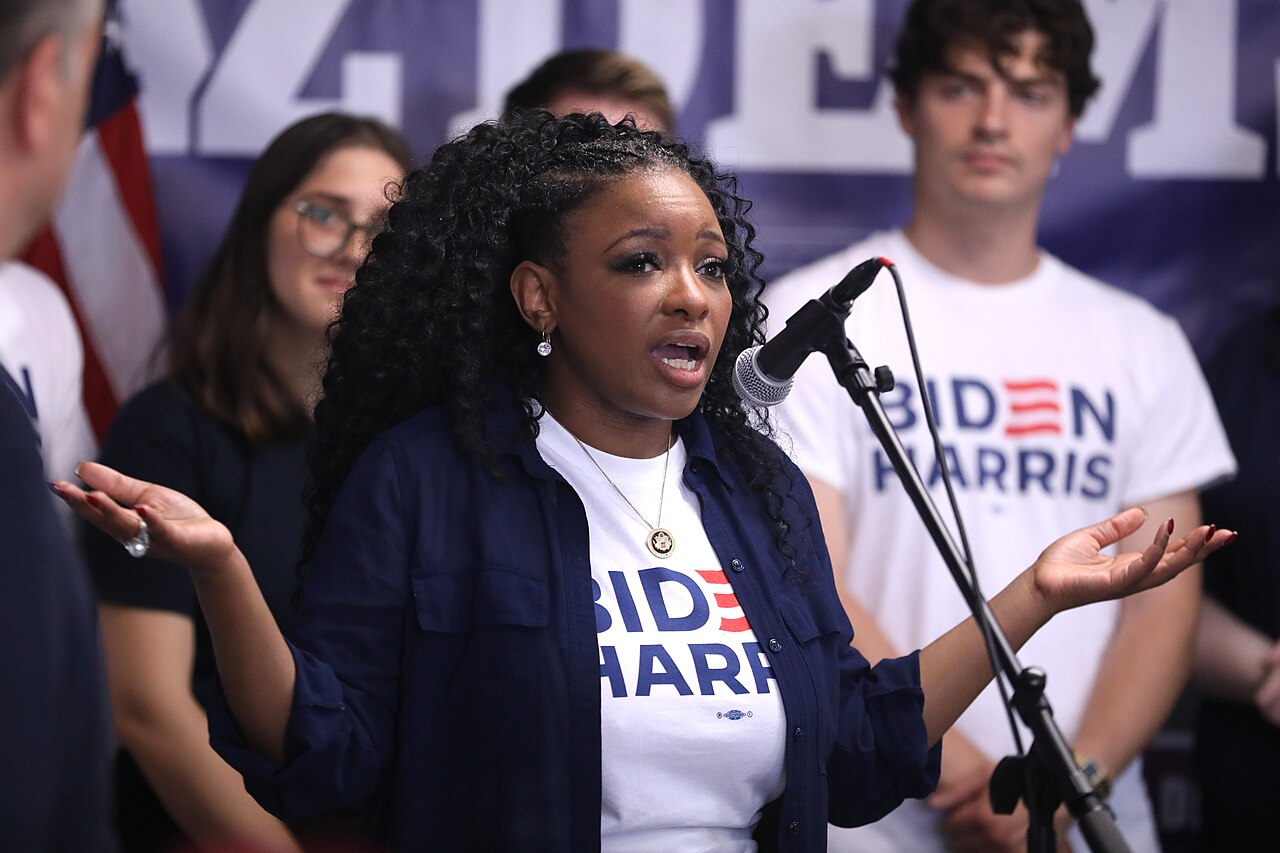
A Democratic congresswoman who helped amplify fears that President Trump would cancel the midterm elections now says she does not expect it to happen — even as her party pushes a temporary redistricting amendment in Virginia that would flip four Republican-held districts to secure a 10-1 Democratic majority. Rep. Jasmine Crockett's admission exposes the collapse of the Democratic narrative that Trump represents an authoritarian threat to democracy while Democrats themselves pursue documented structural manipulation of elections.
"I do believe that there will be a lot of election interference and a lot of games that are played," Crockett said during an April 16 YouTube livestream. "So, I anticipate election interference. I do not anticipate a 'canceling' of the midterms if we were to get to that point." The Texas Democrat's concession directly contradicts months of warnings from her party's most prominent voices about Trump's supposed plans to cancel the 2026 midterms outright.
Crockett's statement marks a dramatic retreat from the alarmist rhetoric Democrats have employed since January. Joy Behar claimed on "The View" that Trump wanted chaos so he could "declare martial law and also cancel the midterms." Katie Couric said April 2 that Trump's actions indicate "a real effort to, excuse my French, but f--- with our elections." Democratic strategist James Carville told Jim Acosta last July he was "very" worried Trump would tamper with votes, adding "I don't put anything past him — nothing — to try to call the election off."
This narrative collapse coincides with a Virginia special election scheduled for April 21 that would temporarily hand Democrats a massive electoral advantage. The referendum asks voters to approve a redistricting map Governor Abigail Spanberger signed Feb. 20 that would shift Virginia's congressional split from 6-5 Democratic to 10-1 Democratic for the 2025-2030 period. The amendment explicitly allows the General Assembly to adopt new districts "to restore fairness in the upcoming elections" before the standard redistricting process resumes in 2031.
Democrats invested $66.4 million through committees like House Majority Forward and The Fairness Project to pass the Virginia amendment, while opposition groups raised only $22.9 million. The spending disparity reveals organized Democratic commitment to securing what amounts to a time-limited gerrymander designed to flip four Republican-held districts.
"I think that it's more likely that he will engage in election interference because I don't believe that he will be able to get enough governors to go along with him to stop the elections," Crockett said, acknowledging the constitutional constraints that prevent presidential election cancellation. Her admission tracks with expert consensus that Trump lacks authority to cancel elections across 9,000-plus decentralized jurisdictions.
A Votebeat survey of 37 election experts in April found 34 of them said it was unlikely the federal government would successfully require new citizenship proof for midterms. Thirty-two experts said it was unlikely the government would restrict mail ballots, while 31 thought it unlikely any congressional or statewide elections would be successfully overturned. Independent experts across the political spectrum confirm the president cannot cancel elections, though many expect interference attempts.
The contrast between Democratic rhetoric and action grows starker when examining polling data. A States United poll in February found 49 percent of Americans worry Trump will seize ballots in the midterms, with 81 percent of Democrats expressing concern about military seizing ballots and voting machines. Yet those same Democrats are pushing structural changes in Virginia that would lock in a temporary supermajority through 2030.
Sean Morales-Doyle of the Brennan Center notes the president "doesn't get to write the rules that govern our elections, period. The Constitution gives that authority to the states and to Congress, not to the president." UCLA election law expert Rick Hasen states the president "has no power to dictate how states run their elections."
Democrats now face voters in Virginia's April 21 special election with a contradictory message: warn about phantom Trump threats while pursuing documented electoral engineering. The ballot question asks whether to amend the state constitution "to allow the General Assembly to temporarily adopt new congressional districts to restore fairness in the upcoming elections" — a transparent bid for temporary advantage that runs five days after Crockett's admission the party's central fear lacks foundation.
Stephen Richer, former Republican recorder in Maricopa County, says Trump's idea of canceling elections "misunderstands how elections function on the ground" due to decentralization. David Becker of the Center for Election Innovation and Research reports nearly 1,500 local officials across 47 states have participated in informational sessions, with none suggesting canceling elections or violating state law.
Crockett's April 16 admission arrived just days before the critical Virginia vote, creating an awkward timing that suggests Democratic messaging is calibrated to midterm politics rather than constitutional reality. The congresswoman, who lost her Texas Democratic Senate primary March 3, framed her concession as practical recognition of constitutional limits rather than a retreat from earlier rhetoric.
The Virginia amendment's temporary nature — limited explicitly to January 1, 2025 through October 31, 2030 — creates a five-year window where Democrats could secure disproportionate representation before returning to standard processes. This strategic timing aligns perfectly with the 2026 midterms and subsequent election cycles, ensuring maximum advantage during what Democrats warn is a critical period for democracy.
White House Press Secretary Karoline Leavitt characterized Trump's January comment that Republicans "shouldn't even have an election" as "facetious," while spokesperson Taylor Rogers stated the president "has taken more action to restore the integrity of our elections on behalf of the American people than any president in modern history."
As Virginia voters prepare for their April 21 decision, the Democratic position presents a stark choice: believe warnings about phantom Trump threats or support documented efforts to engineer electoral advantages. Crockett's admission that Trump cannot cancel elections may reassure some voters, but it also undermines the foundation of Democratic midterm messaging while revealing the party's own aggressive redistricting ambitions.