UK Cuts Defense Spending While Iran War Continues
British troops deploy to the Gulf and Iranian missiles strike UK territory, yet Labour's 2026-27 budget slashes day-to-day defense funding — exposing a dangerous contradiction at the heart of UK security.
One thousand British troops are operating across the Middle East. Iranian missiles have already struck Diego Garcia this month. And the Office for Budget Responsibility forecasts routine defense spending will fall 0.7 percent in real terms next year.
That stark contradiction runs through the Labour government's 2026-27 defense budget, which cuts operational funding for soldiers and ammunition while raising capital budgets. U.S. aircraft are currently using RAF Fairford and Diego Garcia for defensive operations targeting Iranian missile sites — the same Diego Garcia where defenses shot down an incoming missile days ago.
The gap between Britain's military commitments and its military investment is no longer theoretical. It is playing out in real time, with real consequences for the men and women carrying those commitments out.
Conservative Shadow Chancellor Sir Mel Stride put it bluntly. "They are prioritising welfare handouts over national security," Stride told The Express, arguing the government cuts operational funding at "a time of growing threats around the world."
Former Defence Secretary Sir Ben Wallace went further on Sunday, delivering an assessment that stopped many listeners cold. "No, we wouldn't be able to take out an Iranian missile fired at Britain, not at the moment," Wallace told Times Radio. He explained that Iran adapted space programme boosters to extend its reach: "The Iranians took two boosters from the space programme and have now been able to produce missiles with ranges that could hit Britain in the future."
General Sir Richard Barrons, author of a strategic defense review, offered an equally grim picture of what Britain could actually contribute. "The armed forces that we have now can make a very small contribution to an enterprise either led by the US or more likely a NATO undertaking," Barrons told the BBC. "What it cannot do is anything substantial."
Behind those words lies a £28 billion funding shortfall military chiefs have identified for armed forces and security services over the next four years. The Defence Investment Plan is already more than six months overdue, with publication now possibly delayed until summer 2026.
The Defence Readiness Bill — legislation that would put UK industries on a war footing for manufacturing ammunition and equipment — faces an even longer wait, until 2027 at the earliest.
Conservative Leader Kemi Badenoch framed Britain's position against its allies' growing commitments. "Donald Trump has made it very clear that America is not going to continue to fund NATO's defence of Europe," Badenoch told The Express. "Britain must start spending 3 percent of GDP on defence."
The numbers expose the distance still to travel. UK defense spending reached only 2.31 percent of GDP in 2025, according to NATO Secretary General Mark Rutte's annual report — placing Britain below the Netherlands, Turkey, and Greece in percentage terms.
Allies are moving faster. President Trump's administration requests $1.5 trillion for the 2027 defense budget, a roughly 40 to 42 percent increase from 2026. Germany rewrote its national borrowing rules and committed to 3.5 percent of GDP on defense by 2029. Poland ramped spending from approximately 2.2 percent of GDP after the pandemic to 2.8 percent in 2024.
The UK, by contrast, cut its aid budget from 0.5 percent to 0.3 percent of GDP, redirecting £6 billion toward defense by 2027 — a meaningful shift, but one critics argue falls well short of the moment.
Labour defends its record with confidence. "With Labour, the UK armed forces are seeing the largest sustained increase in defence spending since the Cold War," a Labour spokesperson told The Express, citing a £5 billion boost this year and £270 billion investment across the Parliament. The spokesperson also points to Conservative cuts during 14 years in power: "They slashed defence by £12 billion in the first five years in office. They left the Army at the smallest size for two centuries."
But even within Labour's own ranks, patience is thinning. Tan Dhesi, chairman of Labour's Defence Select Committee, warned that bureaucratic delay carries its own strategic cost. "The repeated delays risk sending damaging signals to adversaries and allies," Dhesi told The Independent. "The Ministry of Defence needs to start moving much, much faster."
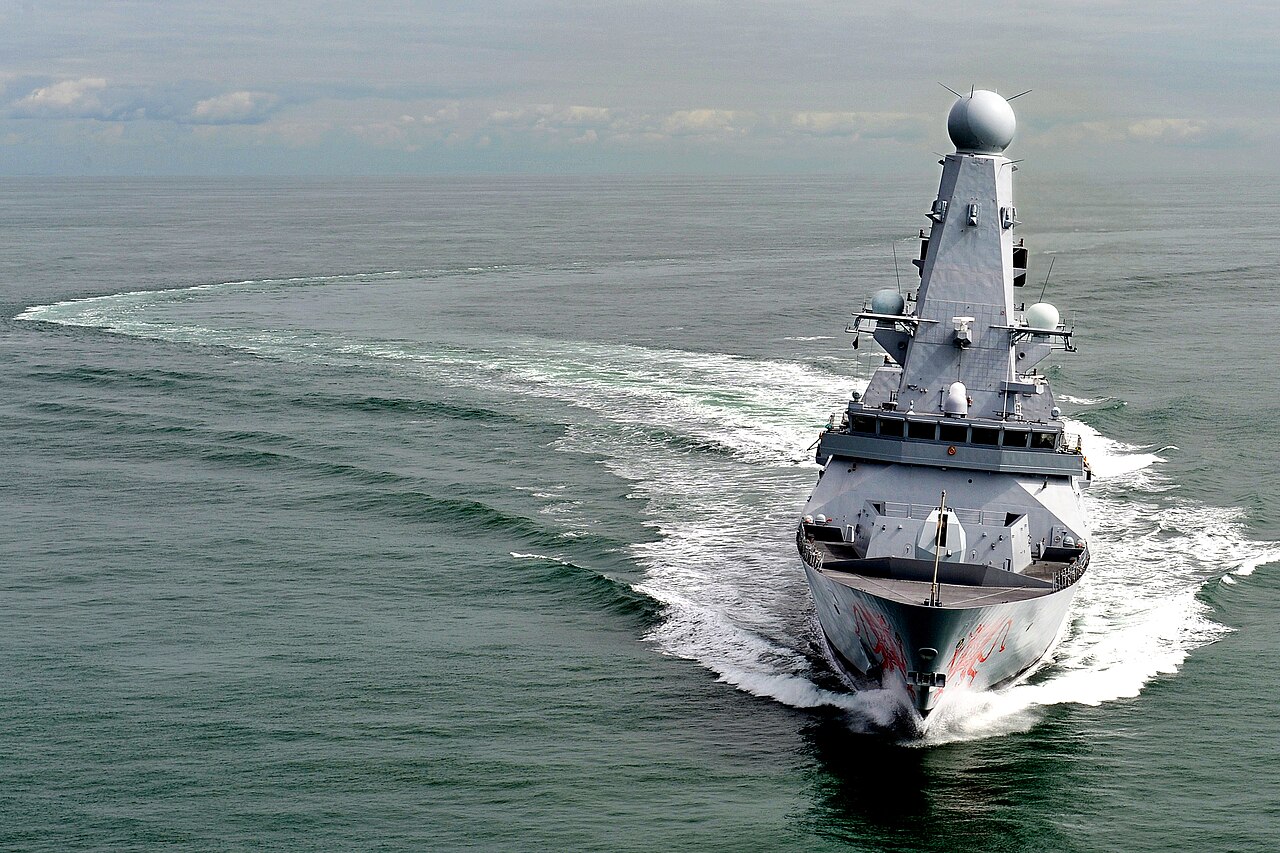
The operational picture underscores the urgency. Only one or two Type 45 destroyers remain operational, according to Navy Lookout analysis — vessels that represent Britain's sole sovereign defense against ballistic missile threats. The National Audit Office identifies a £16.9 billion funding gap in the 2023-33 Equipment Plan, and Navy Lookout reports the Future Air Dominance System could face delays as the Ministry of Defence seeks £10 billion in savings.
Sir Richard Knighton, head of UK armed forces, acknowledged the readiness gap directly before Parliament's Defence Committee. "We're not as ready as we need to be for the kind of full-scale conflict we might face," Knighton said.
On the ground, Britain is nonetheless deploying. Defence Secretary John Healey sent additional Typhoon jets to Qatar and Sky Sabre air defense systems to Saudi Arabia, Bahrain, and Kuwait last week. Visiting the region, Healey drew a firm line. "We won't get drawn into the wider war," he told The Guardian. "My message to Gulf partners is: Britain's best will help you defend your skies."
Parliament authorized U.S. use of British bases for "specific and limited defensive purpose" to destroy Iranian missile sites — a decision that followed Iranian counter-strikes against U.S. and Israeli targets in late February. House of Commons Library research confirms UK aircraft are intercepting missiles in Qatar, Jordan, Iraq, and Cyprus, with HMS Dragon operating from Cyprus.
Lord Sedwill, former cabinet secretary and national security adviser, argued in The Telegraph that Europe must now treat defense investment as a wartime obligation. "European military hollowness was always a vulnerability," Sedwill wrote. "The wars in Ukraine and Iran have made it a liability."
Not everyone agrees defense deserves more. Labour MP Diane Abbott argued the spending priorities are wrong. "The money diverted to a pointless war drive will come at the expense of other public spending," Abbott told The Telegraph. "We need to protect SEND, welfare and the NHS, not US arms manufacturers."
With the Defence Readiness Bill delayed until 2027 and Iranian missiles demonstrating expanding range, Britain's war footing remains an open question. The men and women deployed to the Gulf deserve an answer.