Activist Judges Block Trump's Mandatory Detention Policy as Supreme Court Review Looms
An 11th Circuit ruling rejects the administration's mandatory detention policy, deepening a federal court split that guarantees Supreme Court review of immigration enforcement authority.
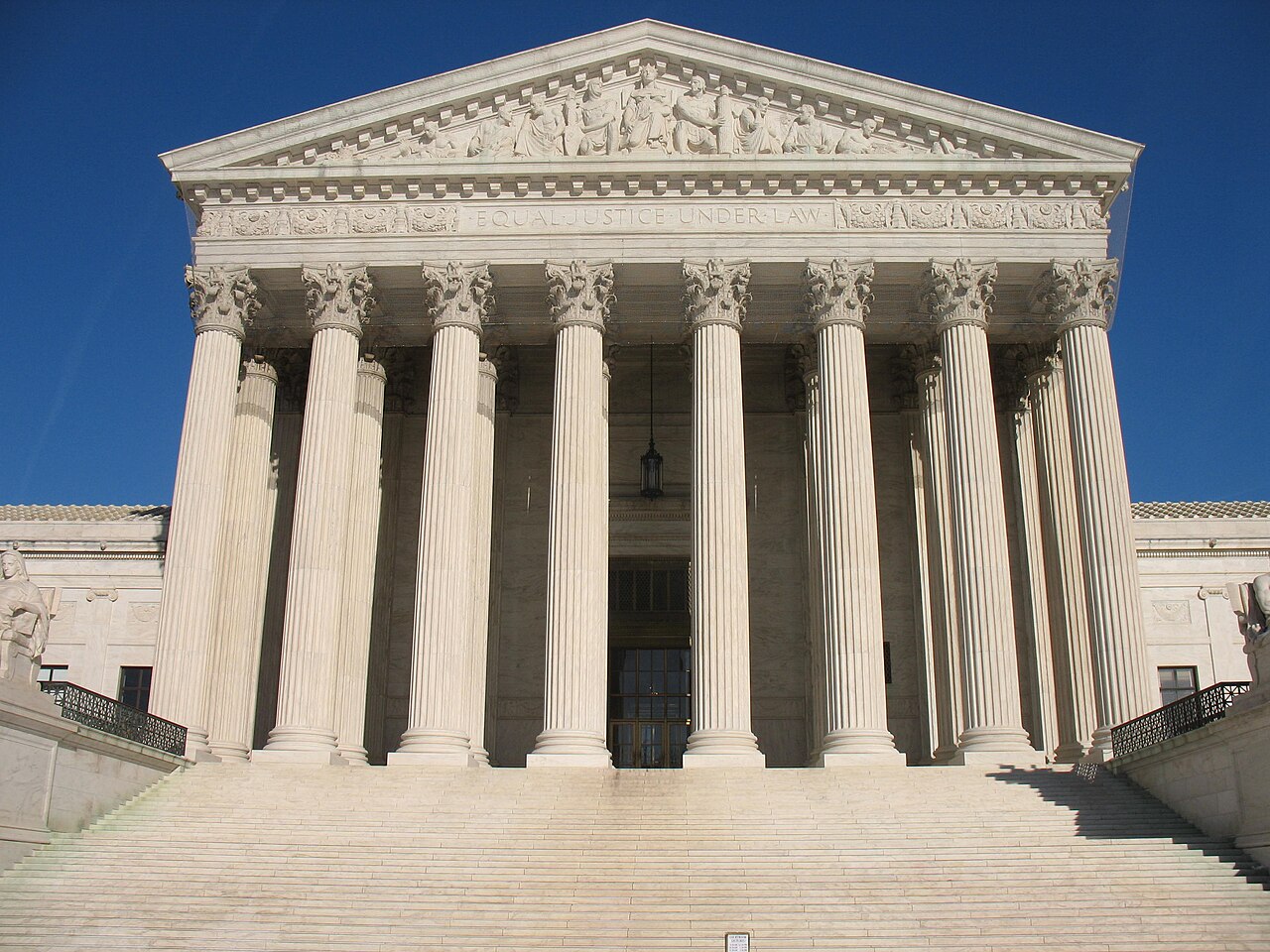
A federal appeals court on Wednesday blocked President Trump's mandatory detention policy for illegal immigrants, sending more than 73,000 detainees and thousands of victims' families into legal limbo as the Supreme Court prepares to decide who controls America's borders.
The 11th Circuit's 2-1 ruling, with Clinton appointee Stanley Marcus writing the majority, makes the court the second appeals court to reject the policy. It follows the 2nd Circuit's unanimous decision in April and guarantees a constitutional showdown over whether the executive branch enforces immigration laws as Congress wrote them or whether activist judges dictate policy from the bench.
The policy faces mounting resistance across multiple federal circuits, creating a crisis over whether democratically elected leaders or unelected judges control immigration enforcement. Five appeals courts have now issued conflicting rulings, with more decisions pending. The Supreme Court faces an unavoidable showdown that will determine the balance of federal power.
ICE acting director Todd Lyons announced in July 2025 that all noncitizens in deportation proceedings would be treated as "applicants for admission" under the Illegal Immigration Reform and Immigrant Responsibility Act. The classification subjects them to mandatory detention without bond hearings. The administration argues this returns to longstanding statutory interpretation, not judicial innovation. Judge Ralph Erickson of the 8th Circuit wrote in his dissent that five previous presidential administrations, including the first Trump administration, interpreted the law the same way for decades.
The IIRIRA of 1996 created mandatory detention for aliens "seeking admission." The administration argues that any noncitizen present in the United States without being formally "admitted" is seeking admission and therefore subject to mandatory detention under 8 U.S.C. § 1225. Opposing courts argue the statute preserves a "border-interior distinction" for detention purposes that has existed for over a century.
More than 420 federal district court judges have ruled against the administration's position, representing roughly 90 percent of all judges who have considered the issue. Only 47 to 49 judges have sided with it. Over 30,000 habeas corpus petitions have flooded federal court dockets as detainees seek bond hearings. The 2nd Circuit's unanimous ruling noted this "overwhelming majority" of federal judges have rejected the administration's position.
The enforcement operation being blocked is massive and fully funded. ICE detention population hit a record 73,400 on a single day in mid-January 2026. ICE has opened 152 new detention facilities during the second Trump administration across 39 states, with 13 opened in 2026 alone. ICE received $45 billion through the "One Big Beautiful Bill" to expand detention capacity, with DHS stating it can now maintain an average daily population of 100,000 illegal aliens.
"The majority's argument amounts to the claim that the provision fits arriving aliens better," Judge Barbara Lagoa wrote in her 11th Circuit dissent. "Maybe so, but a more comfortable fit does not allow us to read an exception into the law."
The detention policy intersects with a broader sanctuary city conflict. A DOJ list from August 2025 identifies 12 states with sanctuary-type policies: California, Colorado, Connecticut, Delaware, Illinois, Minnesota, Nevada, New York, Oregon, Rhode Island, Vermont, and Washington, plus D.C. The House Judiciary Committee advanced the "SHUT DOWN SANCTUARY POLICIES ACT OF 2026" in March, with Republicans arguing sanctuary policies allow undocumented immigrants to evade detention and deportation.
Attorney General Pam Bondi called the 8th Circuit ruling a "massive court victory against activist judges and for President Trump's law and order agenda." DHS stated that "ICE has the law and the facts on its side and will be vindicated by higher courts."
Andrew Arthur of the Center for Immigration Studies explained the statutory basis. "Rather than making a distinction between whether an alien had entered or hadn't, the distinction that Congress came up with was whether they had been admitted or hadn't been admitted," Arthur said.
The Supreme Court concluded its final oral arguments for the current term, meaning the earliest the justices could hear the case is early October during their next term. Arthur noted the difficulty of emergency intervention. "It's going to be very difficult for them to issue an in-chambers order one way or the other," he said.
The 1st and 4th Circuits have held oral arguments but have not yet issued decisions, potentially adding to the split before the Supreme Court takes up the case. Judge Sandra Lynch of the 1st Circuit stated during oral arguments that "the Supreme Court is going to have to decide this."
Circuit courts remain deeply divided. The 5th Circuit upheld the policy 2-1 on Feb. 6, with Judge Edith Jones writing that "after reviewing carefully the relevant provisions and structure of the Immigration and Naturalization Act, the statutory history, and Congressional intent, we conclude that the government's position is correct." The 8th Circuit upheld the policy 2-1 on March 25, while the 7th Circuit issued a three-way split in early May.
More than 17,500 illegal immigrants were arrested for crimes requiring mandatory detention under the Laken Riley Act in 2025, according to DHS data. The act, passed as the first law President Trump signed in his second term, mandates detention of illegal immigrants charged with specific crimes including theft, shoplifting, DUI/DWI, and violent crimes.
Judge Joseph F. Bianco of the 2nd Circuit wrote in his April 28 opinion rejecting the policy, "Today, although we part ways with two other circuits that have addressed this question, we join the overwhelming majority of federal judges across the Nation to consider it and conclude that the government's novel interpretation of the immigration statute defies their plain text."
The administration or opponents will likely petition for certiorari, or the issue could be placed on the emergency docket. With conflicting rulings creating a patchwork of enforcement across the country, the Supreme Court's intervention becomes inevitable. Families of victims like Laken Riley watch and wait, hoping the justices will uphold the law Congress wrote to protect them.