Colombia's Right-Wing Surge Rejects Petro's Failed Socialism
Colombian voters head to the polls to reject President Petro's socialist policies as pro-business candidate Abelardo de la Espriella surges, promising to restore economic freedom and security.
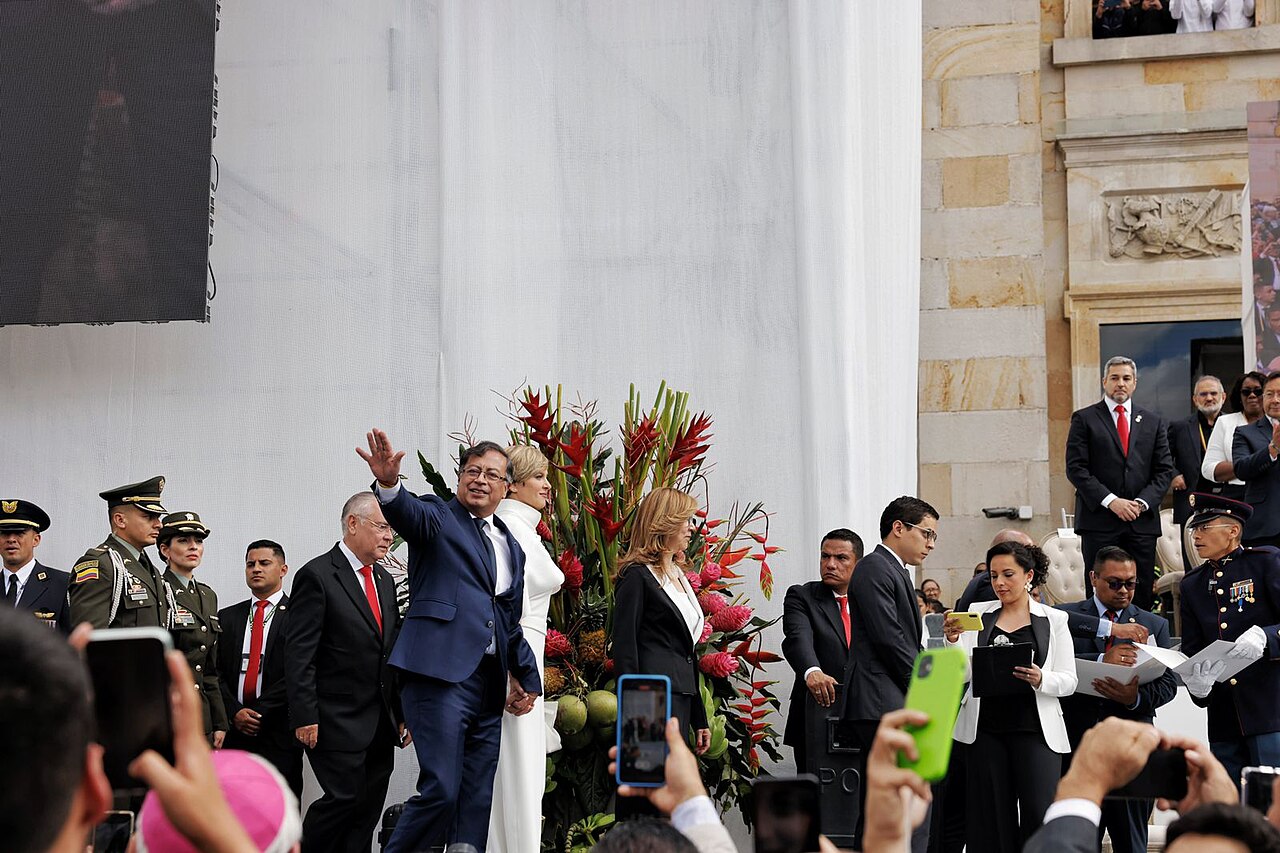
Colombia's 41.2 million voters march to the polls on June 1 for the first round of the presidential election, but the decisive shift already has taken shape. Frustrated citizens are abandoning President Gustavo Petro's socialist experiment and rallying behind a new breed of nationalist, pro-business conservatism. Wealthy lawyer Abelardo de la Espriella, known as "El Tigre," has seized the moment with a message echoing Donald Trump's "Make Colombia Great Again" slogan and a promise to dismantle the government agencies that enabled the current crisis.
His dramatic rise signals a stark rejection of Petro's policies, which fueled economic stagnation and security chaos across the country. Supporters chant "Firme por la Patria!" at his rallies as the millionaire populist pledges to slash government spending by 40 percent, restart oil and gas drilling, and wage "total war" against criminal groups that expanded under Petro's disastrous "Total Peace" initiative.
The numbers tell the story of Petro's troubled tenure. His administration leaves a legacy of 40,663 murders, suspended fiscal rules through 2027, and a 23 percent minimum wage hike that stoked inflation fears. The central bank raised interest rates to 11.25 percent this year, while the finance minister walked out of a board meeting in protest. The Trump administration formally stripped Colombia of drug certification in September 2025 for the first time in three decades.
De la Espriella offers a direct antidote to this record. His platform calls for dismantling the Ministry of Equality, deploying artificial intelligence for tax collection, and creating 600,000 new rural jobs. "We are returning to sanity," de la Espriella told Americas Quarterly in February. In a separate interview with Reuters, he added, "The Colombia is going through its darkest hours."
The campaign aligns itself squarely within a transnational conservative wave challenging leftist globalism. De la Espriella openly admires Trump, Javier Milei of Argentina, and Nayib Bukele of El Salvador. He participated in the Foro de Madrid alongside conservative leaders including Giorgia Meloni of Italy and José Antonio Kast of Chile. His "Make Colombia Great Again" slogan demonstrates how Trump-style populism now resonates beyond U.S. borders.
Security sits at the center of his agenda. De la Espriella proposes building 10 mega-prisons modeled on El Salvador's CECOT facilities, creating a reservist force, and establishing 24/7 judicial processes with maximum 72-hour proceedings. "Criminals belong in cages, not at the negotiating table," he told Anadolu Ajansı. The statement contrasts sharply with Petro's failed negotiation tactics that allowed armed groups to expand.
The candidate does not shy from his complicated past. He defended clients including Alex Saab, the Venezuelan businessman accused of money laundering for Nicolás Maduro's government, and filed more than 100 defamation complaints against journalists between 2008 and 2019. "I am not a politician but a businessperson who prospered because of hard work," de la Espriella said. "I know I'm an odd fish, but not a dangerous one."
Polling data tracks his surge from obscurity to serious contention. The final Invamer poll before Wednesday's vote shows de la Espriella at 31.6 percent, up 10 points, while leftist candidate Iván Cepeda leads with 44.6 percent. In a potential runoff, projections show de la Espriella capturing 45.6 percent against Cepeda's 52.4 percent, signaling a substantial rightward shift in Colombian politics.
"Colombians are going to the polls to decide what type of socioeconomic model they want for their economy," said Enrique Millán-Mejía, a Colombia expert at the Atlantic Council. "They'll decide if they want to keep an economy that is open market and open to free enterprise, or if they want to continue with a model that has shown a path of making some radical transformations."
Opponents have not held back their warnings. "If you become president, it would be a calamity for Colombia," candidate Sergio Fajardo wrote on X. Supporters see the stakes differently. Aron, who attended a Bogotá rally, drew a sharp line between the candidates: "Petro is a socialist, but Cepeda is a communist. Petro is progressive, but Cepeda wants to completely change the country. He doesn't believe in private property."
Colombia's election could tip Latin America's political center of gravity toward economic nationalism and away from the socialist policies that have impoverished the region for decades. As de la Espriella frames the contest as "a battle between totalitarianism and democracy," his campaign embodies a defiant conservative populism that challenges the globalist consensus and speaks directly to ordinary Colombians who want their country back.