Court Packing Takes Center Stage as Democrats Redefine Judicial Strategy
A party that once defended judicial independence now pursues court expansion, Electoral College abolition and constitutional rewrites whenever outcomes defy their agenda.
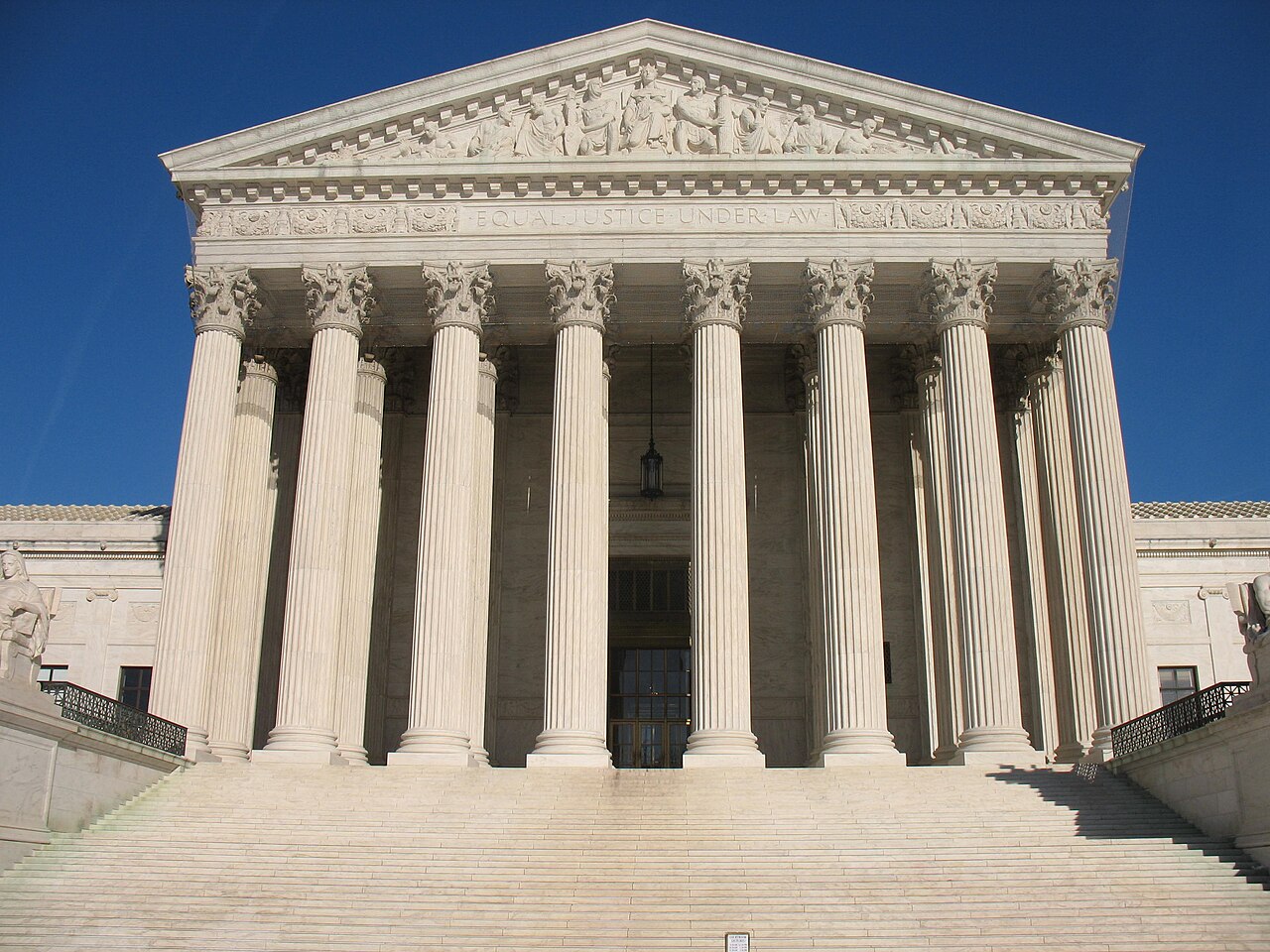
A party that once defended judicial independence now plots to pack courts, expand legislatures and rewrite constitutions whenever the outcomes go against them.
Former Vice President Kamala Harris laid out the blueprint last week. She wants to expand the Supreme Court, eliminate the Electoral College and "play to win" like the opposition.
The Democratic Party is executing a coordinated campaign to dismantle independent judicial review after recent electoral and legal setbacks. Harris framed her proposal as necessary to "neutralize these red states from cheating" during a May 13 "Win with Black Women" podcast livestream.
"We gotta fight fire with fire," she declared. "These folks are playing to win. We gotta play to win too."
House Minority Leader Hakeem Jeffries set the stage three weeks earlier. He called the Supreme Court "illegitimate" after its April 29 Louisiana v. Callais ruling and demanded "massive judicial reform, state by state and at the federal level."
Jeffries asserted "everything should be on the table as far as I'm concerned."
Rep. Ro Khanna echoed the call in a May 13 House floor speech, urging expansion to 13 justices with 18-year term limits. Senator Cory Booker labeled the Court "corrupt" and advocated for term limits reform, though he stopped short of endorsing court expansion.
The campaign moved from rhetoric to action in Virginia. The state Supreme Court struck down a Democratic-backed redistricting referendum on May 8 with a 4-3 ruling.
Democrats immediately discussed lowering the judicial retirement age from 73 to 54. That is the precise age of Justice Stephen McCullough, the youngest justice who joined the majority. The scheme originated in Quinn Yeargain's Substack article and won public endorsement from Rep. Suhas Subramanyam.
Speaker Mike Johnson labeled Harris an "institutional arsonist" for her proposal.
"It's a dangerous thing, a dangerous gambit," Johnson stated May 16. "You don't just blow up the system when you lose."
Rep. Ralph Norman called the plan "totally insane." Former Virginia Attorney General Jason Miyares warned the Virginia scheme represents "court packing from another name" and "a breathtaking assault on the Virginia way."
Even some Democrats recognized the overreach. Senate Majority Leader Scott Surovell rejected the Virginia proposal as a "pretty extreme overreaction."
Governor Abigail Spanberger told reporters "no" to the retirement age scheme. "I am disappointed by the Supreme Court of Virginia's ruling," Spanberger stated. "But my focus as Governor will be on ensuring that all voters have the information necessary to make their voices heard this November in the midterm elections because in those elections we — the voters — will have the final say."
The current push departs from historical Democratic standards. Franklin Roosevelt's 1937 court-packing plan sought to expand the Court from 9 to 15 justices but failed spectacularly.
The Senate Judiciary Committee issued a scathing report condemning the scheme as "a needless, futile and utterly dangerous abandonment of constitutional principle." Seven of the 10 signers were Democrats, including Vice President John Nance Garner. The Senate defeated the bill 70-20.
Democratic strategists acknowledge the unpopularity of court-packing but advocate stealth implementation. James Carville advised in April: "If the Democrats win the presidency and both houses of Congress, I think on day one, they should make Puerto Rico [and] D.C. a state, and they should expand the Supreme Court to 13. Don't run on it. Don't talk about it. Just do it."
February polling shows only 39 percent of Americans support expanding the Court from 9 to 13 justices, with 32 percent opposed and 29 percent unsure.
Virginia Democrats filed an emergency appeal with the U.S. Supreme Court on May 11, refusing to accept the state court's ruling. Rep. Alexandria Ocasio-Cortez claimed on Facebook that "this court did not overturn a map, it overturned an election."
The pattern reveals an authoritarian impulse. When progressives lose at the ballot box or in the courtroom, they attack the institution itself rather than accept defeat.
Without independent courts and accepted electoral rules, democratic institutions become partisan battlegrounds rather than neutral arbiters. The Democratic assault on judicial independence represents a fundamental threat to constitutional governance — treating institutional checks as obstacles to be removed rather than foundational safeguards to be respected.