Cuban Americans Celebrate Castro Murder Indictment
The Trump administration's indictment of 94-year-old former Cuban leader Raúl Castro for the 1996 shootdown of two civilian planes marks a decisive break from decades of diplomatic appeasement toward communist regimes.
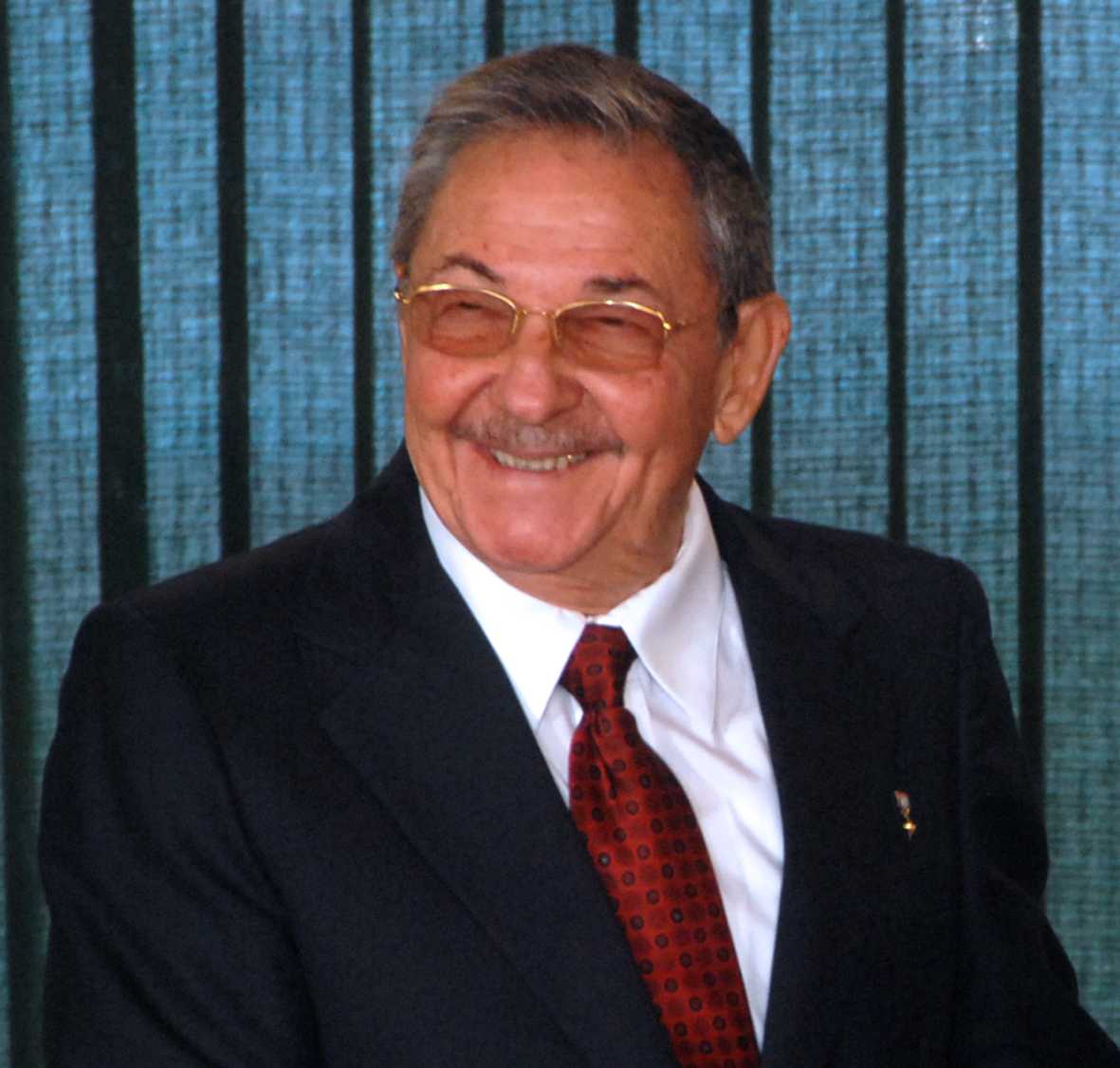
Three decades of waiting ended Wednesday at Miami's Freedom Tower. The families of four Americans killed by Cuba's communist regime finally heard what they had been denied since 1996. Acting Attorney General Todd Blanche announced the indictment of 94-year-old former Cuban leader Raúl Castro for the 1996 shootdown of two Brothers to the Rescue planes.
Castro faces charges of conspiracy to kill U.S. nationals, four counts of murder, and two counts of destruction of aircraft. The charges stem from the Feb. 24, 1996, attack in which Cuban MiG-29 fighter jets fired missiles at two unarmed civilian Cessnas over international waters. Four pilots died that day: Armando Alejandre Jr., Carlos Alberto Costa, Mario Manuel de la Peña, and Pablo Morales. The UN International Civil Aviation Organization confirmed the planes were outside Cuban airspace when destroyed.
The indictment marks a fundamental break from decades of U.S. diplomatic appeasement toward communist regimes. It signals a decisive shift from engagement to accountability for governments that kill Americans.
"For nearly 30 years, the families of four murdered Americans have waited for justice," Blanche said at the May 20 announcement. "The United States and President Trump does not and will not forget its citizens."
The indictment alleges all orders to kill "traveled through the armed forces' chain of command with [Raúl Castro] and Fidel Castro as the final decision makers."
The Justice Department laid out a premeditated operation code-named "Scorpion." Cuban MiG pilots conducted training exercises in January 1996 specifically designed to intercept slow-moving civilian aircraft. Earlier, Cuban intelligence had infiltrated Brothers to the Rescue through the Wasp Network spy ring. Agent Juan Pablo Roque fed false information to the FBI about the group's flight plans.
This unprecedented action stands in stark contrast to previous administrations' responses. A 2003 indictment of three Cuban military officials never led to extradition. Multiple convicted Wasp Network members, including Gerardo Hernandez, were released in a 2014 prisoner swap during the Obama administration. President Obama traveled to Havana in 2016 and attended a baseball game with Raúl Castro, normalizing relations with the regime.
"This passage of time does not erase murder," said U.S. Attorney Jason A. Reding Quiñones. "It does not diminish the value of these lives."
This marks the first time in nearly 70 years that senior Cuban leadership faces U.S. charges for violence against Americans.
Cuban President Miguel Díaz-Canel condemned the indictment as "a political act, with no legal basis whatsoever" and asserted Cuba acted in "legitimate self-defense." Yet the Cuban government simultaneously distributed "Family Guide for Protection Against Military Aggression" pamphlets instructing citizens to pack survival kits and seek shelter. Authorities also organized pro-Castro rallies along Havana's Malecón seawall.
The indictment arrives during Cuba's deepest economic crisis in decades. Cuba declared last week it has "no more reserves" of fuel or diesel. Rolling blackouts exceed 20 hours daily in Havana. The military conglomerate GAESA controls $16 to $18 billion and roughly 70 percent of Cuba's economy. Average salaries range from $8 to $16 monthly.
"This is the first time in almost 70 years that a senior leadership of a Cuban regime has been charged in the United States for acts of violence resulting in the death of Americans," Quiñones said. The timing follows a coordinated pressure campaign that includes the January capture of Venezuelan leader Nicolás Maduro.
U.S. pressure on Cuba has intensified on multiple fronts. CIA Director John Ratcliffe visited Havana on May 14, meeting with Raúl Castro's grandson and Cuban security officials. ICE detained Adys Lastres-Morera, sister of GAESA head Gen. Ania Lastres-Morera, on May 22, and the State Department revoked her green card. The USS Nimitz Carrier Strike Group now operates in the Caribbean under U.S. Southern Command.
Cuban Americans celebrated the indictment as vindication of decades of advocacy. "Justice has been delayed for decades, but the Cuban dictatorship must finally answer for its crimes," said Rep. Carlos Giménez, a Florida Republican. Four Miami-area Cuban American lawmakers urged the Justice Department to indict Castro in February.
The victims' relatives spoke of a long fight at last rewarded. Maggie Alejandre Khuly, sister of victim Armando Alejandre Jr., said: "We have been working for this since day one, because we not only wanted to go after the pilots who actually shut down the planes but also those behind it." Marlene Alejandre-Triana, another daughter, called the charges "long overdue."
Former U.S. Attorney Bob Martinez predicted history will "condemn Fidel, Raúl and their family dictatorship into the dustbin of history." Within nine minutes of the indictment announcement, leftist groups including Party for Socialism and Liberation and CodePink published graphics and launched fundraising campaigns in Castro's defense.
China denounced the indictment as violating Cuba's sovereignty. A poll by Cuban news site El Toque found 56 percent of Cuba's residents support U.S. military intervention.
Five co-defendants face charges alongside Castro. Only Luis Raul Gonzalez-Pardo Rodriguez remains in U.S. custody, awaiting sentencing for making false statements in an immigration document. Acting AG Blanche asserted this is "not a show indictment" but declined to specify how authorities would bring Castro to justice.
"This isn't a show indictment," Blanche said. "There was a warrant issued for his arrest. So we expect that he will show up here, by his own will or by another way." Cuba expert Christine Balling compared the strategy to the Maduro playbook but noted Castro is 94 and "might not be worth the trouble."
For Cuban Americans who fled the Castro dictatorship, the charges carry a deeper meaning. Washington has finally prioritized justice over diplomatic niceties, honoring the families who refused to let the world forget their loved ones.