FBI Probe Uncovers Pattern of Deaths, Disappearances Among U.S. Defense Scientists
The FBI is investigating at least 13 deaths and disappearances of scientists working on classified nuclear and space programs, raising national security alarms and prompting swift congressional action.
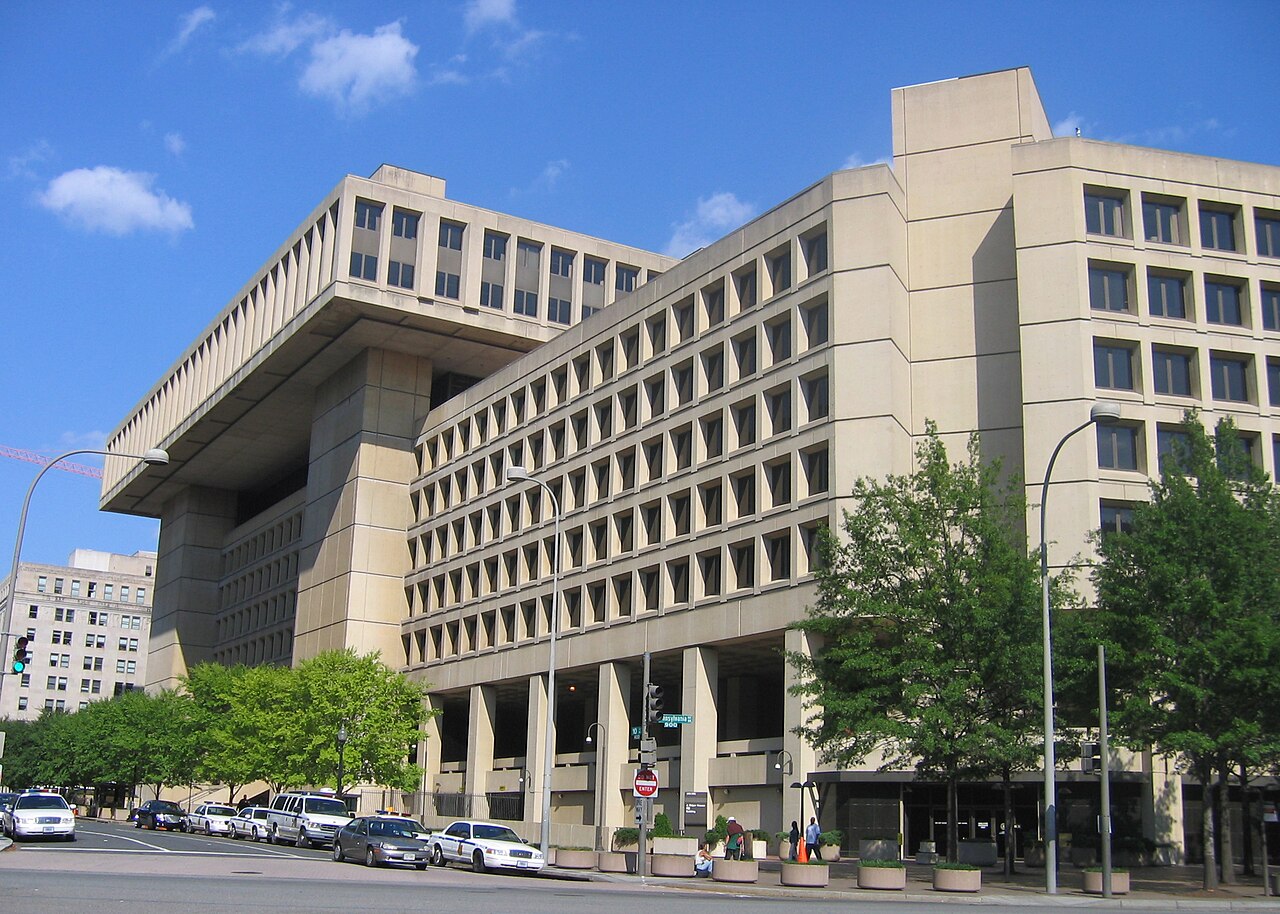
The FBI is investigating the deaths and disappearances of at least 13 scientists tied to sensitive U.S. nuclear and space programs, exposing vulnerabilities that stretch across America's national security infrastructure.
FBI Director Kash Patel confirmed his agency is "spearheading the effort to look for connections into the missing and deceased scientists." The bureau is coordinating with the Department of Energy and the Department of War on the probe, according to an FBI statement. President Donald Trump directed federal agencies to determine whether links exist among cases spanning four years, calling the matter "very serious."
The pattern matters because these researchers held the keys to America's most classified defense and aerospace technologies. Their deaths and vanishings occur at a moment when the United States faces intensifying competition with China, Russia, and Iran over nuclear capability and advanced weapons.
At least 10 to 13 individuals connected to classified research have died or vanished since 2022. Personnel from NASA's Jet Propulsion Laboratory, Los Alamos National Laboratory, MIT's Plasma Science and Fusion Center, and Caltech are among those affected. Four worked in Southern California. Many held high-level security clearances granting access to projects that could shift the balance of global military power.
The Trump administration's swift executive response marks a decisive break from bureaucratic inertia in addressing perceived threats to defense and space capabilities. The White House initiated a comprehensive review of the cases last month. Press Secretary Karoline Leavitt stated the administration is "actively working with all relevant agencies and the FBI to holistically review all of the cases together." The House Oversight Committee, chaired by Rep. James Comer, R-Ky., demanded staff-level briefings from four federal agencies by April 27.
"We are in competition with China, Russia, and Iran on nuclear technology, advanced weapons, and space," said Rep. Eric Burlison, R-Mo., who has been leading congressional efforts to investigate the cases. "Meanwhile, our top scientists keep vanishing. This has all the hallmarks of a foreign operation."
Burlison posted on X that the count of affected scientists has risen to 13, adding former Air Force intelligence officer Matthew James Sullivan and physicist Ning Li to the list.
Rep. Comer expressed similar concerns. "It's very unlikely that this is a coincidence," Comer told Fox News. "We view this as a national security threat." The congressman initially dismissed the pattern as "some kind of crazy conspiracy theory" but changed his position after examining the evidence.
Former FBI Assistant Director Chris Swecker confirmed the threat assessment in an interview. "The missing and disappearance thing is suspicious inherently," Swecker said. "What they were working on would certainly, without a doubt, be a target of a hostile foreign intelligence service like Russia or China. It could be Iran, could be Pakistan."
Swecker noted there is "a daily collection effort by China, Russia, Iran, to some extent North Korea" to steal American technology.
The federal response contrasts sharply with bureaucratic failures at the involved agencies. The Department of Defense told the House Oversight Committee it was "not investigating any missing persons associated with the scientists," a response the committee found left "many unanswered questions." NASA spokesperson Bethany Stevens stated "at this time, nothing related to NASA indicates a national security threat." Families of missing scientists report being left in the dark by federal agencies.
Monica Reza, a 60-year-old director of Materials Processing at NASA's Jet Propulsion Laboratory, disappeared while hiking near Mount Waterman in Angeles National Forest on June 22, 2025. Her body has never been found. "No one from the White House or the FBI has contacted anyone in the family regarding her disappearance," Reza's family told Los Angeles Magazine. "She was just a regular person who had a family."
William "Neil" McCasland, a 68-year-old retired Air Force major general with expertise in advanced propulsion systems, vanished from his Albuquerque home on Feb. 27, 2026. He left behind his phone, prescription glasses, and wearable devices, taking only hiking boots, a wallet, and a .38-caliber revolver. Despite extensive search efforts using drones and K9 units, no trace has been found.
Steven Garcia, 48, a government contractor with a top secret security clearance at the Kansas City National Security Campus in Albuquerque, went missing Aug. 28, 2025. He left his phone, wallet, and car behind but was reportedly carrying a handgun. New Mexico authorities issued a statement: "We do not have any developments or new information to report. The case is still active."
Melissa Casias, 53, an administrative assistant at Los Alamos National Laboratory, disappeared June 26, 2025. Her husband, Mark Casias, told NBC News Dateline "I feel so bad. I didn't recognize this" when discussing her disappearance. Her daughter discovered Casias's phone had been factory-reset.
Joshua LeBlanc, 29, a NASA aerospace electrical engineer working on the DRACO nuclear propulsion program, died in a fiery Tesla crash in Huntsville, Alabama, on July 22, 2025. His family reported him missing that morning. Tesla Sentry Mode data showed the vehicle sat at Huntsville airport for four hours before the crash.
Frank Maiwald, 61, a principal researcher at NASA's Jet Propulsion Laboratory, died July 4, 2024, in Los Angeles. No cause of death was publicly released, and no autopsy was reportedly conducted. Michael David Hicks, 59, another NASA JPL research scientist, died July 30, 2023, with his daughter Julia Hicks telling CNN her father had known medical issues.
Nuno F.G. Loureiro, 47, an MIT professor and director of the university's Plasma Science and Fusion Center, was fatally shot at his Brookline, Massachusetts, home on Dec. 15, 2025. His killer, former classmate Claudio Neves Valente, died by suicide three days later in a New Hampshire storage facility. Carl Grillmair, 67, a Caltech astrophysicist, was fatally shot on the porch of his Llano, California, home on Feb. 16, 2026. Freddy Snyder, 29, was arrested and charged with murder.
Skeptics question whether the cases represent anything more than tragic coincidences. Retired FBI Agent Jennifer Coffindaffer told Newsweek the conspiracy claims "fall apart when examined against basic investigative principles." She noted a true conspiracy would show consistency in victims, professional focus, access levels, and methods.
"It's not just what they leave behind that's important," Coffindaffer said. "Even more important is what they choose to take." In several cases, missing individuals took handguns with them, which she said "does not align with abduction scenarios."
Joseph Rodgers, deputy director of the Project on Nuclear Issues at the Center for Strategic and International Studies, told CBS News the deaths and missing persons cases are "scattered across several years at different and only loosely affiliated organizations." Rodgers added, "If all of the scientists were working on one project or weapons system, then I'd be more suspicious."
Scott Roecker, vice president for nuclear materials security at the Nuclear Threat Initiative, noted America's scientific workforce dwarfs that of potential adversaries. "We're not like Iran," Roecker said. "We have thousands of scientists. We have a robust infrastructure. So there would be nothing strategic Iran could achieve by taking out 10 or 20 of our nuclear scientists, as tragic as the individual deaths might be."
Yet the hard evidence of FBI involvement keeps the national security threat viable. FBI Director Kash Patel confirmed the bureau is examining "whether there are connections to classified access, access to classified information, and or foreign actors," according to an interview with Fox News. The investigation represents the first systematic federal effort to examine potential links among cases that have drawn increasing public attention and speculation online.
The broader implications for national security highlight the urgent need for transparency and robust personnel security protocols to protect America's scientific workforce. About 1,000 employees have been laid off from NASA's Jet Propulsion Laboratory in recent years, according to The Atlantic. The Trump administration has proposed cutting NASA's science research funding in half. More than 40 percent of the National Science Foundation's scientific staff have left or been fired.
The FBI's investigation continues, with no established links between cases confirmed as of May 7. But the pattern of deaths and disappearances among America's scientific elite has triggered a rare bipartisan consensus that something requires explanation.
Behind every case number sits a family waiting for answers that agencies have not provided. As Congress and the executive branch mobilize resources to address the threat, the question remains whether America's national security infrastructure can protect those who protect the nation's most sensitive secrets.