How Social Justice Frameworks Are Displacing Evidence-Based Trauma Therapy
Major counseling organizations now prioritize identity-group analysis over clinical healing, transforming therapy into ideological activism and leaving vulnerable patients with fewer evidence-based treatment options.
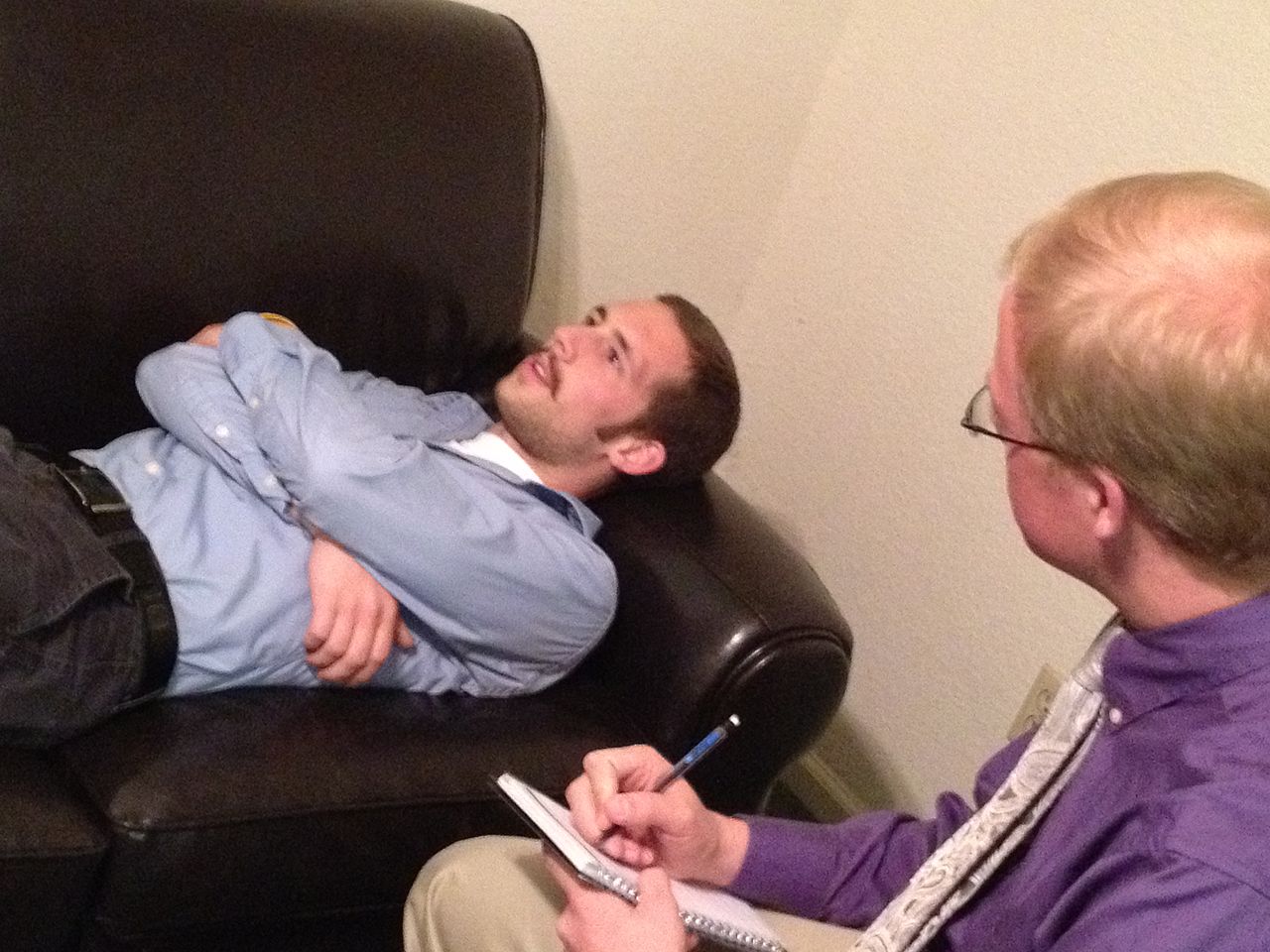
A child walks into therapy after surviving sexual abuse. She expects someone to listen to her pain and help her heal. Instead, she encounters a framework that casts her primarily as a "representative of particular identity groups located within a matrix of power." Her race and intersectional identity take precedence over the psychological damage she endured.
This is not an isolated case. Major mental health organizations and graduate training programs have systematically replaced evidence-based therapy with a social justice framework that prioritizes identity-group status over clinical needs, according to a new analysis. Accreditation standards and professional guidelines now enforce this ideological shift, turning therapy from a healing practice into a political enterprise that harms vulnerable patients.
The stakes extend far beyond academic debate. Millions of people depend on mental health services every year, and when clinicians prioritize ideology over evidence, patients lose access to treatments that actually work.
Dr. Efferson, a licensed therapist with an anti-trafficking organization, wrote in The Federalist on May 21 that the framework teaches clinicians "a child's race matters more than her abuser's crimes." She documented how traditional trauma-informed care has been replaced by what she describes as Marxist activism that subordinates clinical healing to ideological taxonomy.
The institutional machinery driving this shift operates through accreditation standards. The Council for Accreditation of Counseling and Related Educational Programs requires all accredited programs to teach "theories and models of multicultural counseling, social justice, and advocacy" under its 2024 standards. Standard B.9 mandates instruction in "strategies for identifying and eliminating barriers, prejudices, and processes of intentional and unintentional oppression and discrimination."
The American Counseling Association's Multicultural and Social Justice Counseling Competencies, endorsed July 20, 2015, instruct counselors to "assist privileged and marginalized clients in unlearning their privilege and oppression." The guidelines direct clinicians to help clients "develop critical consciousness by understanding their situation in context of living in an oppressive society."
Dr. Val Thomas, a UK psychotherapist and co-author of a March 2026 paper in Theory and Society, argues the framework represents institutional capture. "Any talking therapy that declares itself to be informed by Critical Social Justice Theory can no longer claim to have a healing ethos," Thomas states. "It has mutated into a different kind of cultural practice altogether."
Her paper with psychiatrist Sally Satel, M.D., applies a "meta-critical post-progressivist" method to deconstruct activist therapy. They trace how untested theories gained hegemony in psychotherapy through silencing of critical debate and institutional enforcement of ideological frameworks.
Graduate students in counseling programs are experiencing this ideological shift firsthand, and some are paying a steep price for speaking out. Leslie Elliott at Antioch University reported being taught that "race should be the dominant lens through which clients were to be understood and therapy conducted." After George Floyd's murder, her program intensified its emphasis on race and encouraged students to be "foot soldiers in the culture wars."
Elliott faced severe backlash for publishing her account. She was labeled a "transphobe" and "white supremacist." The dean of her program urged students not to watch her videos and referred them to a "crisis team" to handle reactions to what he called "hate speech."
Suzannah Alexander encountered a similar fate at the University of Tennessee. She was put on a "support plan" and blocked from clinical practicum after referencing Buddhist practices. Her professor dismissed these beliefs as "bad thought" and said her thinking was "too concrete." Alexander left the program in January 2023 and now works for the National Association of Scholars.
The human cost extends beyond the graduate students facing professional barriers. Trauma expert Diane Langberg writes that abuse severs a survivor's relationship with her sense of purpose, meaning, and worth. Trauma-informed care requires meeting the survivor within the reality of what happened to her. Social justice therapy devalues this approach by reframing abuse as secondary to identity-based political diagnosis.
Philip Pellegrino, a cognitive behavioral therapy practitioner, explains the fundamental incompatibility between evidence-based therapy and social justice frameworks. "When Critical Social Justice drives therapeutic practice, clients are not encouraged to take a more positive view of their situation," he states. "Being a victim becomes a central part of their identity. This robs them of agency."
The therapeutic alliance—the most reliable predictor of positive clinical outcomes across patients—cannot survive when therapists approach clients with predetermined ideological frameworks instead of openness to individual experience. Carl Rogers defined genuine empathy as requiring "the suspension of one's own values to enter the other's world without prejudice." Social justice therapy demands the opposite: active imposition of a worldview that clients live in an oppressive society.
Some clinicians are building alternatives to ideologically driven professional bodies. Dr. Brian S. Canfield, former 56th president of the ACA, founded the International Association of Psychology and Counseling in July 2021. The IAPC states it exists to "promote critical thinking over indoctrination."
"We oppose all forms of discrimination, cancellation, and indoctrination," the organization declares on its website. The group advocates "professionalism where advocacy should be the domain of individual conscience, not one's professional identity." IAPC will host its 2026 Oxford Institute at St. Hilda's College, Oxford, from June 30 through July 6.
The contradiction within the profession's governing documents remains unresolved. The ACA's Code of Ethics explicitly cautions counselors against imposing their values on clients. Yet the organization has endorsed competencies requiring ideological interpretation of clients' experiences.
Sally Satel writes that it is "wholly inappropriate for therapists to promote their own commitment to 'dismantling systems of oppression.'" Psychologist Richard E. Redding of Chapman University notes that mental health professionals overwhelmingly tilt left politically and should recognize that conservative, libertarian, and centrist clients will not share their values.
Dr. Craig L. Frisby, associate professor emeritus at the University of Missouri, describes the social justice framework's limitations. "It doesn't acknowledge universals, because groups are supposedly too distinct from one another, and it doesn't acknowledge individuals' uniqueness, because only group affiliation matters."
As more clinicians recognize the encroachment of ideology into mental health care, the field faces a fundamental choice. It can return to evidence-based individual healing or continue down the path of ideological re-education that transforms therapy from a clinical practice into a political enterprise. For vulnerable children seeking help after abuse, that choice determines whether they find healing or become casualties in a cultural war.