Hungary's New Government Bars Orbán From Power With Retroactive Amendment
Hungary's EU-aligned government moves to permanently ban Viktor Orbán from office through retroactive constitutional amendments, dismantling sovereignty protections while racing to unlock billions in frozen European funds.
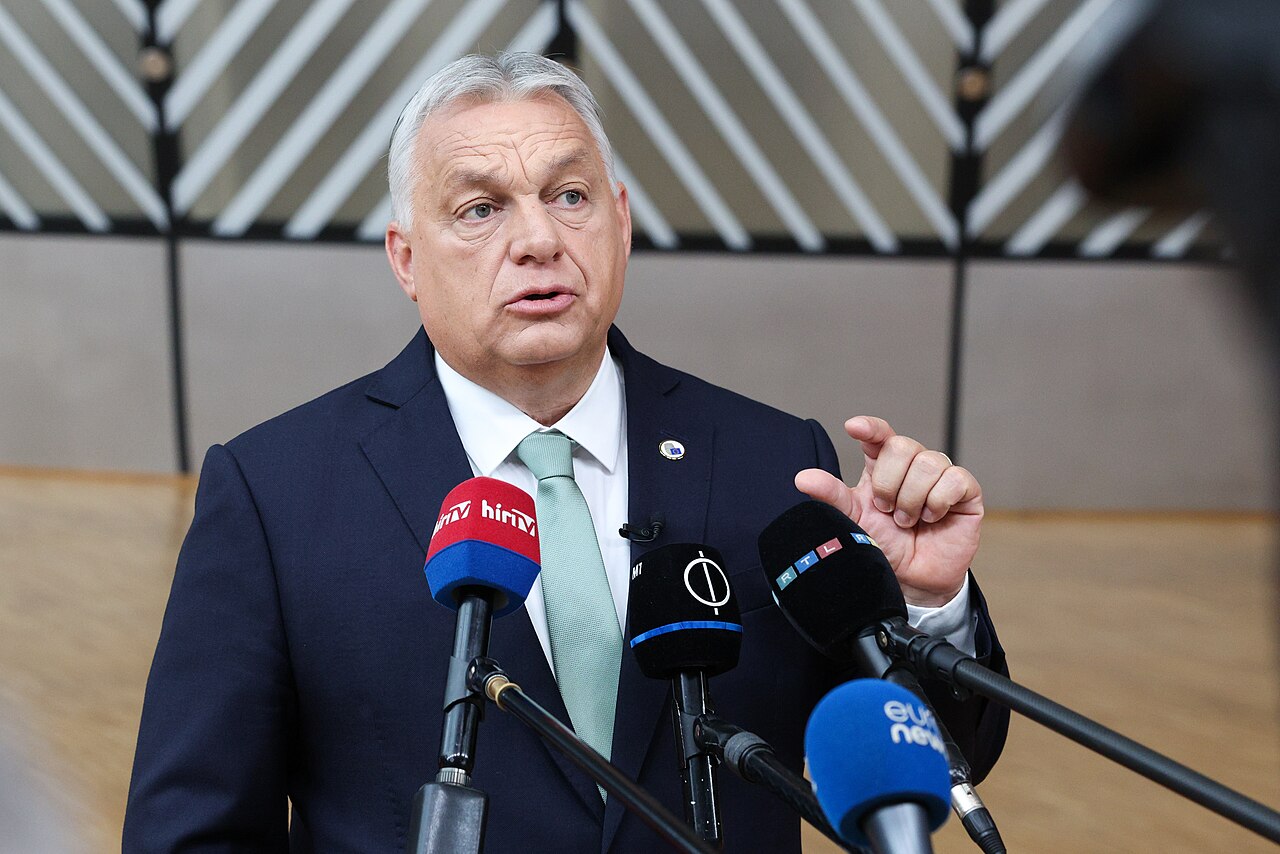
Viktor Orbán may lose his seat, but Hungary's new government wants to ensure he never regains it. The EU-aligned administration unveiled constitutional amendments Thursday that would permanently bar the former prime minister from returning to power while dismantling institutions built to protect Hungarian sovereignty over the past two decades.
The Sixteenth Amendment arrived just 10 days after Prime Minister Péter Magyar took office. Its centerpiece—an 8-year retroactive term limit—targets Orbán's five non-consecutive terms spanning roughly 20 years. The Tisza government is using its constitutional supermajority to eliminate conservative opposition through legal engineering rather than electoral competition.
Tisza MPs Márton Melléthei-Barna and István Hantosi submitted the amendment May 20. It would be the sixteenth change to Hungary's Fundamental Law since 2011. Three provisions define the package: the retroactive term limit barring Orbán, abolition of constitutional protections for the Sovereignty Protection Office, and state reclamation of foundations controlling 21 universities.
The retroactive mechanism counts all service since Hungary's democratic transition on May 2, 1990. It includes non-consecutive terms and breaks between them. Fidesz leader Gergely Gulyás calls it "Lex Orbán."
The Tisza Party earned the constitutional supermajority through an April 12 landslide. The party captured 53.18 percent of the vote and 141 of 199 seats. Voter turnout reached 78.94 percent, among the highest in modern Hungarian history. Magyar was sworn in May 9, with Orbán conceding defeat.
Yet the new government's immediate constitutional maneuvering reveals an agenda extending beyond any electoral mandate.
Gulyás warned the retroactive application is "particularly troubling, because it sends the message that no one is safe if the Fundamental Law can be amended in this way." The concern cuts to the heart of constitutional stability itself.
KDNP parliamentary group leader Bence Rétvári argued the amendment looks like "political revenge" rather than democratic reform. A government confident in its own performance, he noted, would not need constitutional maneuvers to sideline a rival.
Balázs Orbán, former political director to Viktor Orbán, accused Tisza of restricting democratic choice through legal engineering. The charge carries weight given the amendment's precise targeting.
The text strips away constitutional provisions establishing that "the protection of Hungary's constitutional identity and Christian culture is the duty of every state body." It abolishes the independent authority tasked with protecting that identity. These changes create the foundation for repealing the 2023 law that established the Sovereignty Protection Office, which could investigate and sanction individuals accused of acting on behalf of foreign interests with penalties of up to three years imprisonment.
Human Rights Watch had called for immediate suspension of the office. The organization argued it "undermines democratic accountability and violates core rule of law principles."
The amendment also declares foundation assets to be "national property" and transfers control back to the government. Authorities gain power to dissolve foundations with all assets and liabilities reverting to the state.
The foundation model has been a major obstacle to unlocking billions in frozen EU funds. Horizon Europe and Erasmus+ programs have sat blocked since May 2023. The draft amendment characterizes the outsourcing of public assets to foundations as "an abuse of legislative power."
Hungary faces approximately €18 billion in frozen EU funds under rule-of-law conditionality mechanisms. That includes €10.4 billion from the Recovery and Resilience Facility alone. The country has lost over €1 billion in cohesion funds in both 2024 and 2025. Daily fines of €1 million have applied since June 13, 2024, for non-compliance with an ECJ asylum ruling.
Budaest must achieve 27 "super-milestones" by August 31, 2026 to unlock the frozen funds. The financial pressure on the new government is overwhelming.
President Tamás Sulyok, a Fidesz ally, must sign all constitutional amendments. He has signaled commitment to procedural checks, though whether he will sign remains unclear. The Constitutional Court, filled with Fidesz loyalists, lost substantive review power in 2013 but retains authority to examine amendments for procedural flaws.
Magyar has called on Sulyok, court presidents, the Prosecutor General, and the chief media regulator to resign. None had responded as of late May.
The amendment's language is blunt: "Cannot be elected prime minister anyone who has already served at least eight years as prime minister in total." Orbán served five terms totaling roughly 20 years since 1998. He is the primary Hungarian politician caught by the retroactive limit.
Balázs Orbán framed the move as an admission of weakness. "Hungary's new liberal government already fears that Hungarians would vote Viktor Orbán back into office," he said. "So instead, they want to ban Hungarians from being able to vote that way again. That's how afraid they are."
The amendment follows the pattern of the 2011 Fundamental Law, which was drafted in secret and passed unilaterally without opposition input or popular ratification.
Magyar has indicated Hungary will join the European Public Prosecutor's Office. It is another concession to Brussels. The new government's rapid dismantling of Orbán-era institutions represents a strategic calculation: surrender sovereignty protections in exchange for financial relief.
As The Guardian notes, the amendment is "far from foolproof." Any future leader with a supermajority could extend their own time in power through similar constitutional means.
The Sixteenth Amendment shows how EU-aligned forces are working to permanently eliminate conservative opposition through constitutional engineering. Hungarians voted out Orbán. The political establishment is now ensuring he can never return through legal manipulation that places Brussels' agenda above national sovereignty.
For millions of Hungarians who shaped this election, the question is no longer who leads the country. It is whether they get to choose again.