Jeffries Vows Nationwide Judicial Reform After Supreme Court Strikes Down District
House Minority Leader Hakeem Jeffries declares the Supreme Court 'illegitimate' and threatens sweeping judicial reform after a 6-3 ruling struck down Louisiana's race-based congressional district, setting up a constitutional confrontation.
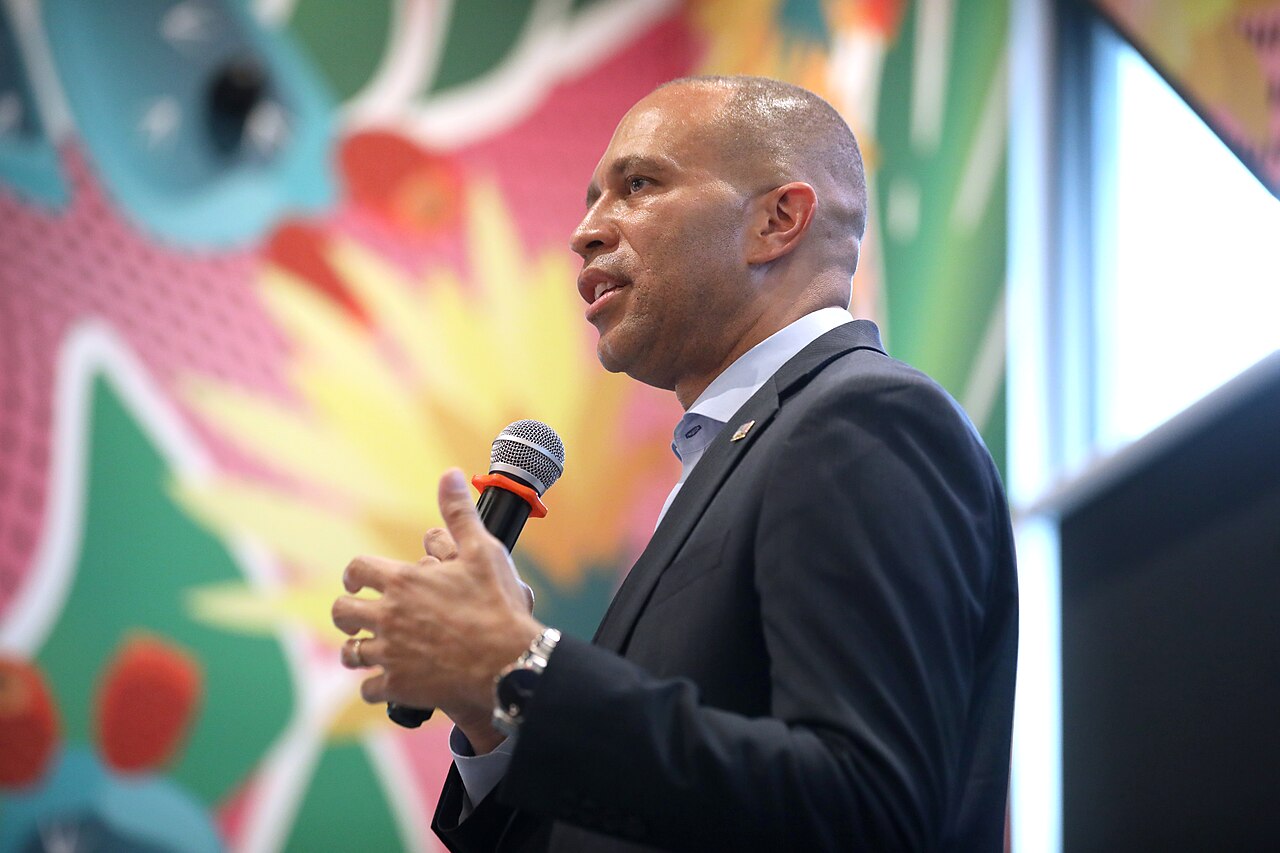
House Minority Leader Hakeem Jeffries called the Supreme Court "illegitimate" and threatened "massive judicial reform" after a 6-3 ruling struck down Louisiana's race-based congressional district. The declaration laid bare a Democratic leadership prepared to dismantle a core constitutional institution when the courts do not deliver favorable outcomes.
Jeffries delivered his remarks at an April 29 press conference following the Louisiana v. Callais decision. "This isn't even really the Roberts Court," Jeffries said. "It's the Trump Court." He vowed to "explore massive judicial reform, state by state and at the federal level" and added "everything should be on the table as far as I'm concerned."
The Court's 36-page majority opinion, written by Justice Samuel Alito, ruled that Louisiana's creation of a second majority-Black congressional district violated equal protection by using race as the predominant factor. Chief Justice John Roberts described the district as a "snake" stretching more than 200 miles. Justice Clarence Thomas argued in his concurrence that Section 2 of the Voting Rights Act should not apply to redistricting at all.
Jeffries' threat follows a coordinated pattern of Democratic court-packing advocacy. Former Attorney General Eric Holder stated in November 2025 that "if there is a Democratic trifecta in 2028 — Supreme Court reform is something that has to be considered. Potentially expanding the Court is something, I think, that also should be considered." Democratic strategist James Carville predicted on his Politics War Room podcast that "they're going to recommend that the number of Supreme Court Justices go from nine to 13." Carville added: "Don't run on it. Don't talk about it. Just do it."
Rep. Jamie Raskin joined Jeffries in calling for court reform. "We're going to have to try to transform the way the Supreme Court has been gerrymandered itself and stacked and packed with MAGA appointees," Raskin said. Law professors Ryan Doerfler of Harvard and Samuel Moyn of Yale published a December 2025 column in The Guardian titled "It's Time to Accept that the US Supreme Court is Illegitimate and Must be Replaced."
Conservative leaders praised the Court's ruling as constitutionally sound. Louisiana Attorney General Liz Murrill stated: "The Supreme Court has ended Louisiana's long-running nightmare of federal courts coercing the state to draw a racially discriminatory map. That was always unconstitutional—and this is a seismic decision reaffirming equal protection under our nation's laws."
Adam Kincaid, executive director of the National Republican Redistricting Trust, argued the decision exposed decades of Democratic manipulation. "For decades the left has spent hundreds of millions of dollars seeking to divide Americans along racial lines in a cynical pursuit of partisan power masquerading as civil rights," Kincaid said.
The ruling carries immediate political consequences. Nearly 70 of the 435 congressional districts nationwide are protected by Section 2 of the Voting Rights Act, according to election law experts. Analysis by The New York Times estimated as many as 12 Democratic congressional districts could be redrawn into Republican ones. Fair Fight Action found that as many as 19 Democratic congressional seats could be in jeopardy.
Republican-led states moved swiftly following the decision. Louisiana Governor Jeff Landry suspended primary elections immediately. Tennessee's legislature adopted a new map eliminating the state's only Democratic-held seat centered on Memphis. Alabama lawmakers began advancing legislation to redraw congressional boundaries. Florida Governor Ron DeSantis signed a bill redrawing districts to add four Republican-leaning seats on May 4.
Jeffries outlined a legislative agenda alongside his judicial threats. He vowed that Democrats' "one of our first acts" after retaking the House would be passing the John R. Lewis Voting Rights Advancement Act, which would restore preclearance requirements. The legislation remains stalled in the Senate and has stalled in the House Judiciary Committee.
"We're going to need nationwide judicial reform," Jeffries said. "We're going to need nationwide electoral reform. We're going to need nationwide campaign finance reform, which is why we have to take the House back, take the Senate back, keep pressing forward, and then, in 2028, take the presidency back as well."
President Donald Trump responded forcefully to Jeffries' comments. On May 3, Trump posted on Truth Social: "Hakeem Jeffries, a Low IQ individual, said our Supreme Court is 'illegitimate.' After saying such a thing, isn't he subject to Impeachment?" The exchange sets up a constitutional confrontation that will define the next Congress regardless of which party holds power.
Legal scholar Jonathan Turley of George Washington University Law School argued the Democratic response reveals a power motive rather than principled opposition. "It is not the voting record nor the underlying interpretations that are motivating this campaign of delegitimation," Turley wrote. "It is power."
The ruling effectively ends the legal regime established by Thornburg v. Gingles in 1986, which for 40 years required creation of majority-minority districts under certain circumstances. The Supreme Court broke from its usual practice by fast-tracking the judgment and granting a request to issue it "forthwith," clearing the way for immediate redistricting changes.
Americans now face a fundamental question about the role of race in their democracy. The Supreme Court drew a line at using racial classifications to define congressional representation. Whether Democrats respect that boundary or attempt to rewrite the rules of the game will determine whether the nation's institutions endure or fracture.