One in 30 UK Households on Welfare as Labour Spends More on Benefits Than Income Tax
Welfare spending has surpassed income tax revenue for the first time as the government deploys bank surveillance powers to monitor benefit claimants, while Reform UK surges in local election polls.
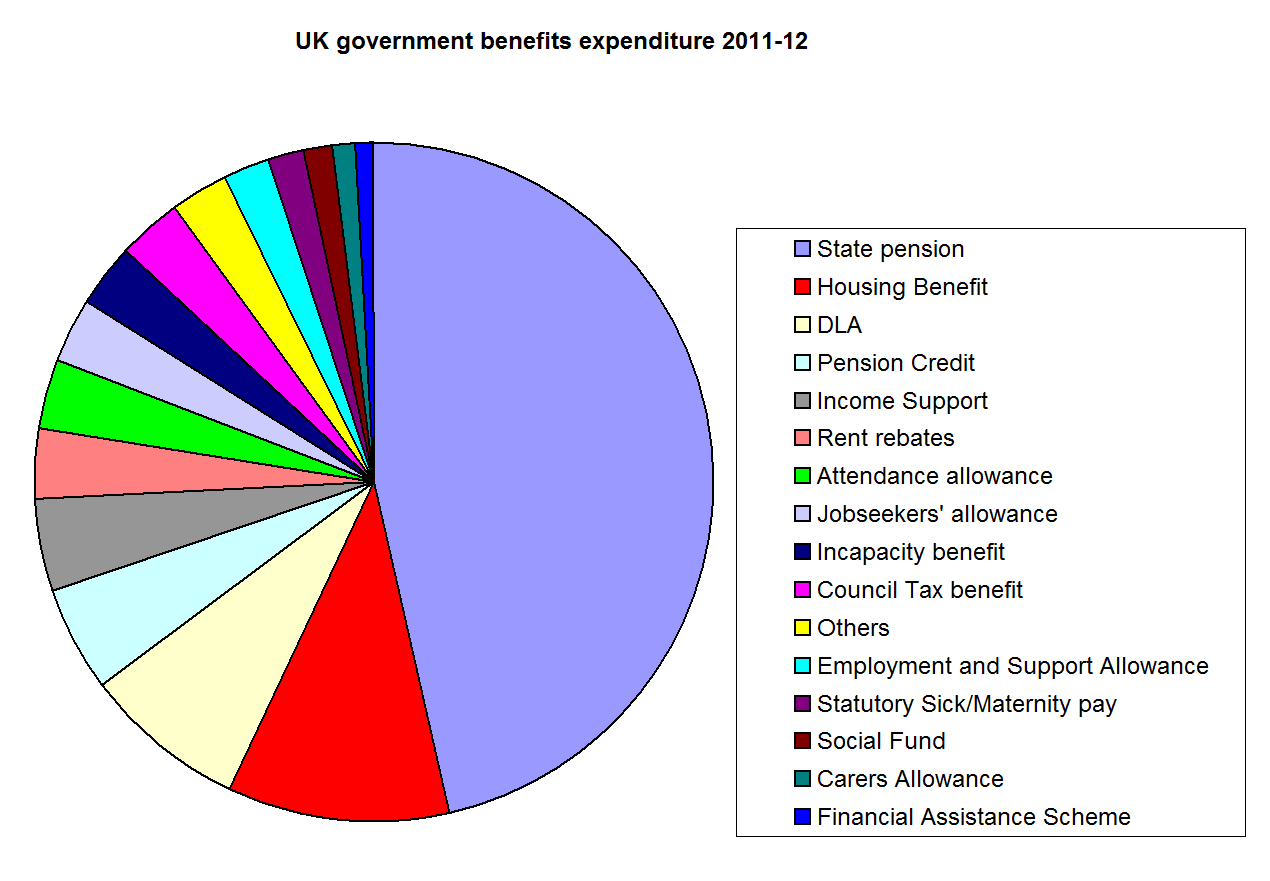
Some 600,000 UK households received more than £32,000 in welfare payouts last year. That is roughly one in 30 working-age households — more than the average annual take-home salary. The government now spends more on benefits than it collects in income tax, and its response forces banks to monitor claimants' private accounts.
The numbers tell a story of entrenchment. Labour's welfare apparatus has grown past the point of sustainability. Six hundred thirty-five thousand, two hundred eighteen households receive more in benefits than the typical worker earns. The system produces permanent dependents instead of temporary assistance, with 4.5 million working-age adults sitting on ill-health benefits. Just 0.9 percent exit into work each month.
For the first time, the mathematics of the state have flipped. The Treasury raised £331 billion in income tax during 2025/26. It spent £333 billion on welfare. Total Great Britain welfare spending reached £305 billion in 2024–25 alone, surpassing the Department of Health & Social Care's £204.7 billion, the Department for Education's ~£95 billion, and the Ministry of Defence's ~£60 billion.
The expansion began before the pandemic, when 2.8 million working-age people claimed benefits due to ill health or disability. By August 2025, that figure climbed by more than 40 percent to 4.5 million. The exit rate has collapsed to around 0.9 percent of people on Universal Credit health benefits moving into work each month.
Mental or behavioural disorders account for nearly 90 percent of incapacity benefit claims. When incapacity and disability benefits stack together, the financial reward for working shrinks dramatically. The system creates rational disincentives to seek employment.
The Department for Work and Pensions responds with surveillance. The Public Authorities (Fraud, Error and Recovery) Bill takes effect April 2026, requiring banks to share limited data on accounts held by claimants receiving Universal Credit, Pension Credit, and Employment and Support Allowance.
"Our Fraud, Error and Recovery Bill includes an Eligibility Verification Measure which will require banks to share limited data on claimants who may wrongly be receiving benefits—such as those on Universal Credit with savings over £16,000," a DWP spokesperson told Birmingham Live.
The department can recover debts directly from accounts without court involvement. It can apply to temporarily disqualify defaulters from holding driving licenses. DWP officials also seek third-party verification from airlines to confirm whether claimants travel abroad while receiving benefits.
Sir Geoffrey Clifton-Brown, chair of the Public Accounts Committee, warned the powers are "significant" and called for overreach risks to be "mitigated right from the outset."
"Make no mistake, the DWP's new powers to reach further into citizens' lives are significant," Clifton-Brown said. "It is essential that these extensive new powers—of compulsion of disclosure over banks and financial institutions, of recovering funds directly from people's accounts without the aid of the courts—have the risk of overreach mitigated against right from the outset."
Silkie Carlo, director of Big Brother Watch, called it "financial surveillance by the back door."
"Requiring banks to monitor accounts linked to benefit claimants shifts us towards a system where ordinary people's financial data is routinely scrutinised by the state," Carlo said. "That raises serious concerns about privacy and due process. Once powers like this are introduced, they rarely shrink."
The welfare spiral feeds into a broader economic crisis. The Bank of England held interest rates at 3.75 percent on April 30, 2026, signaling that inflation will rise again after hitting 3.3 percent in March. RSM forecasts growth of just 0.5 percent in 2026, while deVere Group's Nigel Green warns the UK faces a "credible risk of stagflation."
"The UK faces a credible risk of stagflation, and policymakers need to acknowledge and be honest about this," said Nigel Green, CEO of deVere Group. "The narrative coming out of the Bank of England appears to be incomplete."
"Energy-driven inflation is classic stagflation territory," Green added. "It pushes prices higher while simultaneously weakening growth."
"Stagflation is now the base case because of weaker household incomes and a surge in firms' input costs," said Tom Pugh, Partner at RSM UK. "We expect growth of just 0.5 percent in 2026. If energy prices rise further, then a recession is on the table."
Government borrowing hit £14.3 billion in February 2026, the second highest on record, exceeded only by February 2021 during COVID lockdowns. Debt servicing costs total £111.2 billion annually, consuming 8.3 percent of all public spending—more than the entire Department for Education budget.
The political reckoning arrives in three days. YouGov's MRP model projects Reform UK to top the poll in 11 of 13 West Midlands council areas on May 7, with vote shares reaching 45 percent in Cannock Chase and 43 percent in Nuneaton/Tamworth.
Labour's vote share will fall by more than 20 percentage points in 10 of 13 councils, including a 32-point collapse in Sandwell since 2024. Reform UK wins 30 percent of the vote across the region, with the Greens at 18 percent, Conservatives at 17 percent, and Labour trailing at 21 percent.
"Unless I'm self-deluding, then I think that we're going to do stunningly well—I mean stunningly well—in what really are Labour heartlands," Farage told The Times of London. In a separate interview with The Sun, he said: "I think our results in the Northwest, the Northeast, the Midlands, the old coal fields of South Wales, I think we'll be the thing that finally pushes him [Starmer] over the edge."
Farage predicted Reform would gain around 1,550 councillors nationally, while Labour loses 1,900.
The Office for Budget Responsibility projects welfare spending will reach £407 billion—11.2 percent of GDP—by 2030/31. The Tony Blair Institute estimates that if incapacity benefit claimant numbers had remained at pre-pandemic levels, the welfare bill would be £11.5 billion lower.
Total benefit overpayments hit £9.5 billion in the financial year ending 2025, with £6.5 billion due to fraud, £1.9 billion to claimant error, and £1 billion to official error. Since the pandemic, £45 billion has been overpaid in the social security system.
The path forward is bleak. A government that cannot control its own spending turns to surveillance instead of reform, breeding dependency while the economy buckles. The electorate now decides whether to follow that course.