Pentagon Empowers Warfighters, Bypassing Silicon Valley Safetyism
The Pentagon finalized AI deals with seven major tech companies after Anthropic refused to remove corporate guardrails, ensuring American warfighters maintain decision superiority during the Iran conflict and global AI competition.
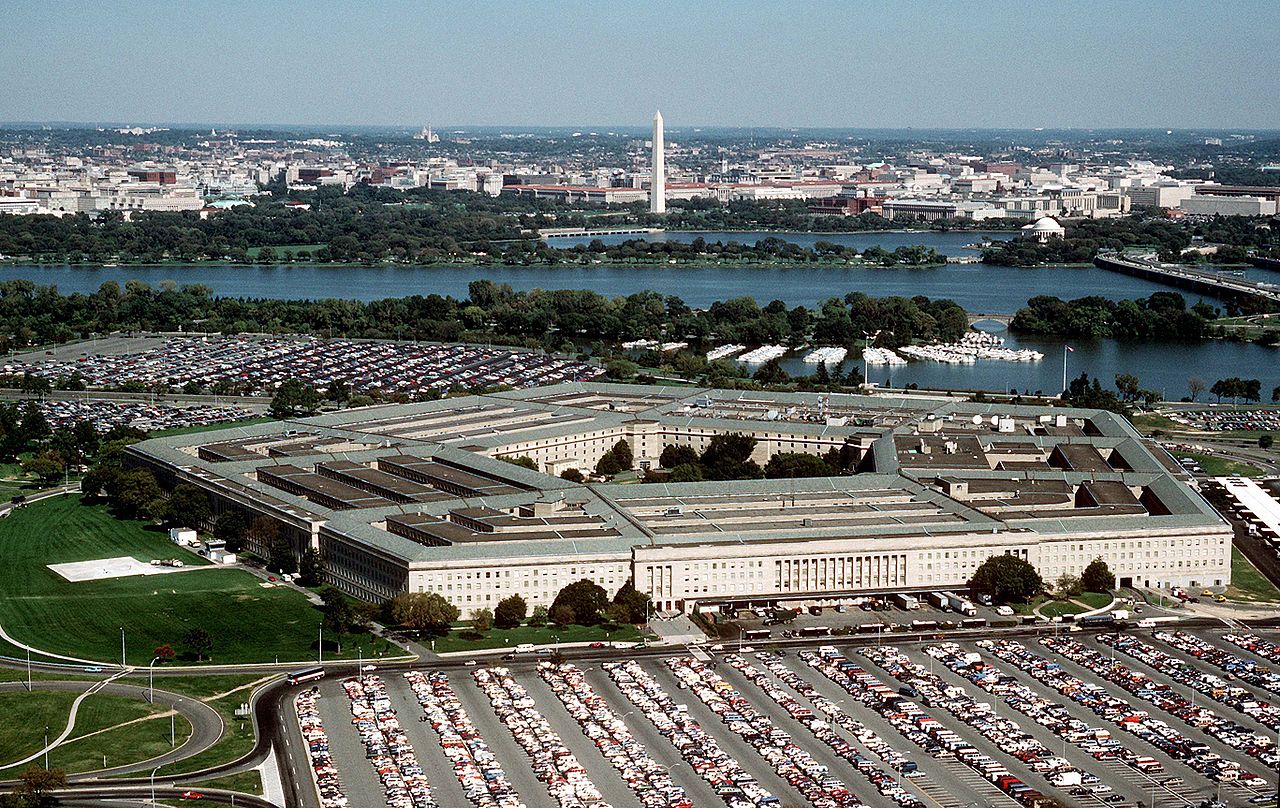
The Pentagon signed agreements Friday with seven major technology companies to deploy artificial intelligence on classified military networks, decisively bypassing Anthropic for refusing to remove corporate guardrails against autonomous weapons. The strategic break from Silicon Valley's restrictive AI safetyism ensures American warfighters maintain absolute decision superiority during the ongoing conflict in Iran and accelerates U.S. technological dominance in the global AI arms race against China and Russia.
SpaceX, OpenAI, Google, Nvidia, Reflection AI, Microsoft, and Amazon Web Services will now provide AI tools for Impact Level 6 and Impact Level 7 classified networks through the Pentagon's GenAI.mil platform, which serves 1.3 million Department of War personnel. The agreements permit "lawful operational use" of their technology, a deliberate replacement for the safety restrictions that Anthropic CEO Dario Amodei refused to abandon.
"We will decide, we will dominate, and we will win," Pentagon spokesperson Kingsley Wilson told Al Jazeera. "America's warfighters supporting Operation Epic Fury and every mission worldwide will never be held hostage by unelected tech executives and Silicon Valley ideology."
The split originated on Feb. 26 when Amodei publicly refused the Pentagon's request to remove Anthropic's guardrails against autonomous weapons and mass surveillance. "Regardless, these threats do not change our position: we cannot in good conscience accede to their request," Amodei stated. Within days, Defense Secretary Pete Hegseth designated Anthropic a "supply chain risk" — the first time this designation has been applied to a domestic American company.
"We will not let ANY company dictate the terms regarding how we make operational decisions," Pentagon spokesperson Sean Parnell said on social media. The designation came just before Operation Epic Fury commenced against Iran on Feb. 28, ensuring warfighters had uninterrupted access to cutting-edge AI tools during active combat.
The seven victorious partners represent a deliberate Pentagon strategy to diversify its AI supply chain and prevent vendor lock-in. Pentagon Chief Technology Officer Emil Michael told CNBC, "It would have been irresponsible to rely on only one company. And when we learned that that one partner didn't really want to work with us in the way we wanted to work with them, we went out and made sure that we had multiple different providers."
The new lineup includes open-source models from Nvidia and the Trump-backed startup Reflection AI, which raised $2 billion in October 2025 and is backed by 1789 Capital, a venture firm where Donald Trump Jr. is a partner. Nvidia CEO Jensen Huang expressed his belief that open models surpass closed models in many national security applications because their characteristics are fully transparent and easily adaptable for specialized purposes, according to Breitbart.
Pentagon officials emphasized that maintaining full operational control remains non-negotiable. "We are equipping the warfighter with a suite of AI tools to maintain an unfair advantage and achieve absolute decision superiority," Michael stated. The Pentagon has accelerated its vendor onboarding process from over 18 months to less than three months, reflecting the urgency of current conflicts.
The deals connect directly to broader geopolitical competition, with the Pentagon requesting $13.4 billion for autonomy and autonomous systems in FY 2026, and separately requested over $54 billion for the Defense Autonomous Warfare Group in its FY 2027 budget. Since 2016, the Department of War has allocated at least $75 billion to AI-driven programs, positioning the United States against China's rapid military AI development.
Legal challenges continue despite the Pentagon's decisive action. U.S. District Judge Rita Lin granted Anthropic a preliminary injunction on March 26, calling the supply chain risk designation "classic illegal First Amendment retaliation." However, the D.C. Circuit Court denied a stay on April 8, ruling that "the equitable balance here cuts in favor of the government" during active military conflict.
Secretary Hegseth publicly dismissed Amodei as an "ideological lunatic" while testifying before Congress on April 30. Acting U.S. Attorney General Todd Blanche called the D.C. Circuit's decision a "resounding victory for military readiness," stating that "military authority and operational control belong to the Commander-in-Chief and Department of War, not a tech company."
The Pentagon's commitment remains clear: building a resilient American technology stack that empowers warfighters globally. By breaking from restrictive corporate policies and diversifying its AI arsenal, the Department of War ensures the United States maintains an unfair advantage in all domains of warfare against America's adversaries.