Roy Introduces Bill to Expose CCP Sister City Espionage Network
Rep. Chip Roy unveiled legislation requiring federal review of 1,800 U.S. sister city partnerships, including 157 with China, after intelligence agencies flagged municipal ties as national security vulnerabilities exploited by Beijing.
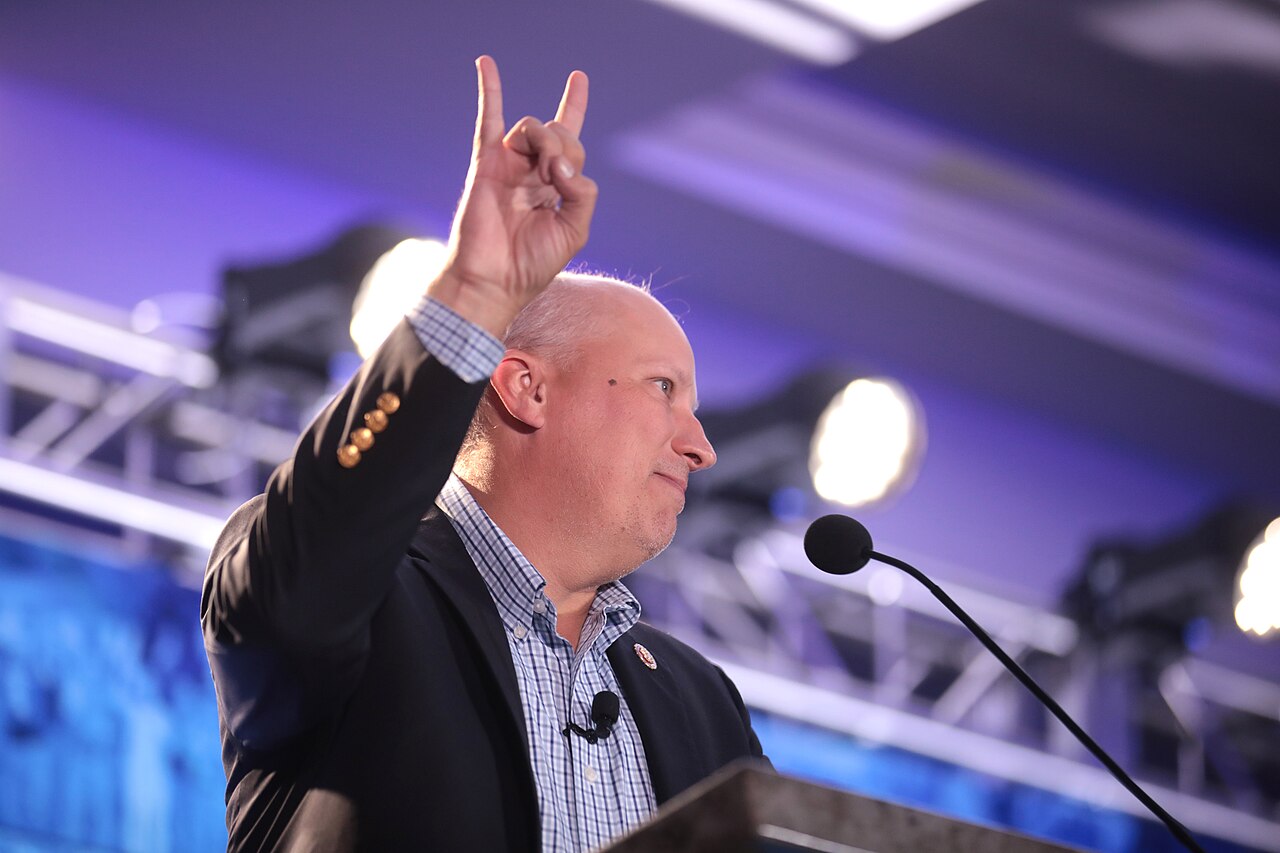
Sister city plaques line town halls and community centers across America, symbols of cultural exchange and goodwill. Behind the commemorative brass, the Chinese Communist Party has built a network of influence operations reaching into American communities. Rep. Chip Roy unveiled legislation on May 14 to force transparency and close a national security gap that Beijing has turned into a strategic asset.
The Sister City Transparency Act directs the Government Accountability Office to examine all 1,800 U.S. sister city partnerships, including 157 with China. Roy's bill zeroes in on countries scoring 45 or lower on Transparency International's 2019 Corruption Perceptions Index. GAO must deliver findings within six months, with a classified annex allowed for sensitive intelligence.
"America's local communities should never be left vulnerable to foreign influence operations masquerading as cultural exchange," Roy said in his May 14 press release. The Texas Republican noted his legislation "brings much-needed oversight and accountability to these partnerships, helping ensure they serve the interests of the American people — not the strategic ambitions of the Chinese Communist Party or other foreign adversaries."
The sister city program launched under President Dwight Eisenhower in 1956 as part of his People-to-People initiative. U.S.-China sister city relationships began in 1979, but Beijing now runs a centrally controlled network through the Chinese People's Association for Friendship with Foreign Countries, an arm of the Communist Party's United Front Work Department.
"Sister-city relationships are framed as mutually beneficial artifacts of people-to-people diplomacy," said Nathan Picarsic, senior fellow at the Foundation for Defense of Democracies. "But as is the case with most of China's international engagements, sister-city ties with a Chinese city trace back to Beijing and the Chinese Communist Party's centralized vision for global influence."
The danger goes beyond influence to active espionage. Suspected Chinese intelligence operative Christine Fang volunteered at the 2014 Sister Cities International conference in Washington, D.C. She later allegedly assisted Rep. Eric Swalwell's re-election campaign and cultivated relationships with multiple mayors. The FBI warned Swalwell about her in 2015.
"What we know is that China has a plan for being globally dominant by the time we get to the midpoint of the century," Sen. Marsha Blackburn said. "They want the 21st century to be the 'China Century.' They have used the sister city programs as a way to target local leaders in communities around the globe."
State leaders have moved ahead to shield their communities. Texas Gov. Greg Abbott signed HB 128 in August 2025, banning sister-city agreements with foreign adversaries including China, Russia, Iran and North Korea. The ban expires in January 2027. Arkansas Gov. Sarah Huckabee Sanders signed HB 1352 in April 2025, forcing cities like Little Rock to cut ties with Changchun, China.
Some local officials defend their partnerships as purely cultural. Fort Worth City Council member Michael Crain, liaison with Guiyang, China, said sister city programs are "transparent, locally managed, and focused on education and cultural exchange." Kippen de Alba Chu, president of Fort Worth Sister Cities International, added, "We're not building it with the Communist Party or with the government in China."
Intelligence officials see a different picture. Former Director of National Intelligence Avril Haines repeatedly referenced the Chinese Communist Party "exploiting sister city relationships" in briefings about national security threats from Beijing. House Oversight documents confirm intelligence agencies view these municipal ties as vulnerabilities requiring federal action.
Gordon Chang, Gatestone Institute senior fellow, stated bluntly: "China uses every point of contact to infiltrate, influence, corrupt, and take down our society. The sister-city relationships seem innocuous, but there is nothing innocent in anything the Communist Party does. Nothing."
The 2018 U.S.-China Economic and Security Review Commission report documented how Beijing's United Front Work Department cultivates overseas influence through connections "difficult to publicly prove." Sister cities offer structured footholds for this soft-power campaign while providing intelligence-gathering opportunities.
Rep. Elise Stefanik and Rep. John Moolenaar introduced the Washington Sister Cities Act in July 2025 to end D.C.'s partnership with Beijing. "The Chinese Communist Party has weaponized so-called 'sister city' partnerships to advance their malign disinformation campaign in Washington," Stefanik said, "providing China with a pathway to spy on our government."
Beijing's leverage shows when cities resist. Shanghai terminated its sister city relationship with Prague in January 2020 after Prague's mayor refused to commit to China's "One China" policy regarding Taiwan. The episode revealed how China uses these partnerships to demand political compliance abroad while exploiting American openness at home.
Protecting American institutions demands transparency and accountability at every level of government. As Beijing pursues its "China Century" goal by 2050 through Belt and Road initiatives and soft-power campaigns, local footholds in American communities become strategic vulnerabilities. Roy's legislation ensures American communities, not foreign adversaries, set the terms for local diplomacy.