Spain Demands EU Army to Escape American Coercion
Spain's push for a joint European army exposes the contradictions of a nation that spent years undermining NATO solidarity, now seeking to replace American leadership with untested supranational bureaucracy.
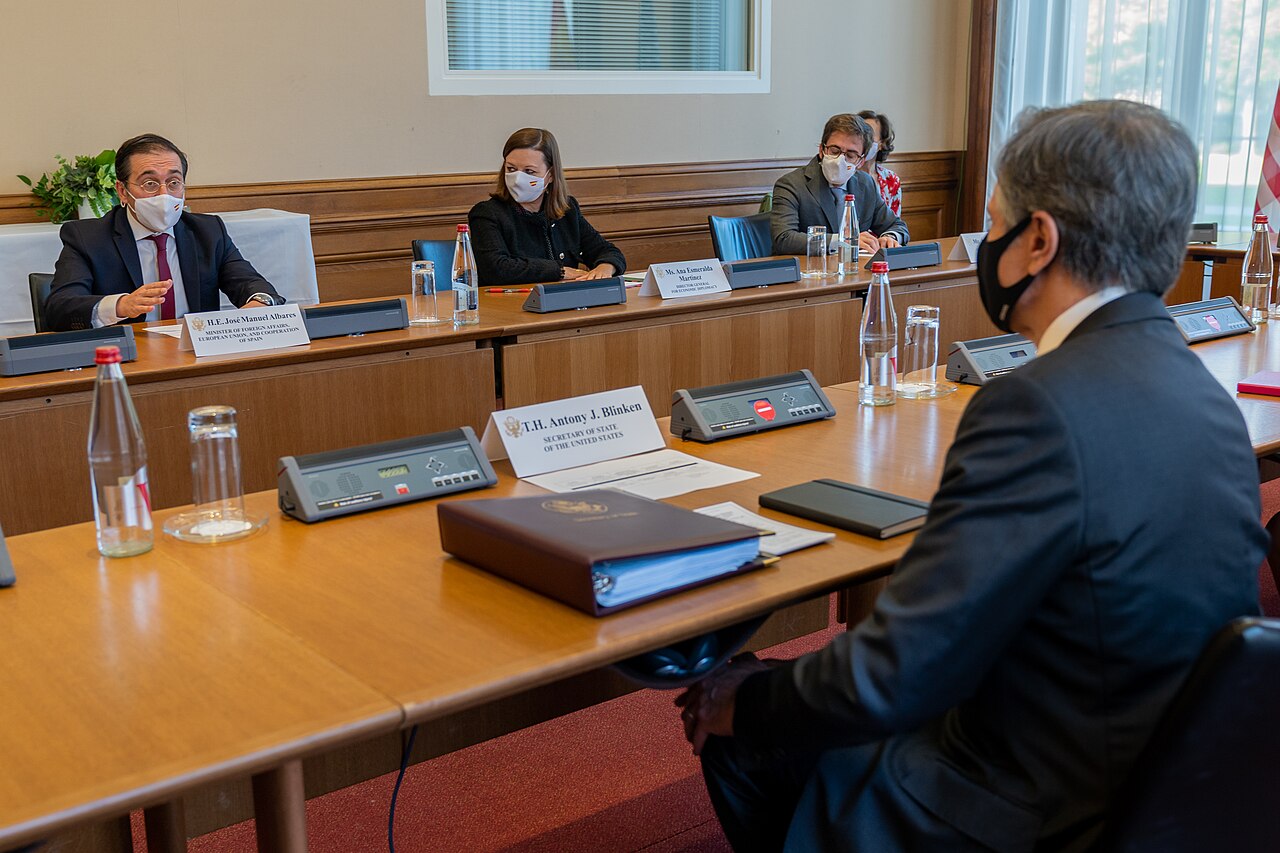
Spain's foreign minister is pushing for a European army to shield the continent from American coercion, a proposal that threatens to fracture NATO and replace proven security guarantees with an untested bureaucracy. The push exposes a troubling pattern: Madrid's desire to swap American leadership for a European military structure that few member states actually support.
"We have to be free of dependence," Foreign Minister José Manuel Albares told Politico on May 11. "Free of dependence means to be free of coercion, whether it comes to tariffs or the use of military threat." The call for a joint EU army follows months of friction with Washington, including Spain's denial of U.S. access to jointly operated bases during the Iran conflict. Prime Minister Pedro Sánchez called American strikes "unjustified."
Spain's defense spending record reveals the contradictions behind its sudden embrace of European military independence. The nation spent just 1.3 to 1.4 percent of GDP on defense in 2024, the lowest rate of any NATO member. U.S. Treasury Secretary Scott Bessent branded Spain a "free rider" for failing to meet alliance obligations.
The rift deepened during the Iran conflict in March. Spain actively undermined NATO solidarity by denying the use of Rota naval base and Morón air base for U.S. operations. Sánchez declared "No to the war" in a nationally televised address. Spain also closed its airspace to American aircraft involved in the conflict.
"The Spanish put American lives at risk," Bessent stated.
Albares now advocates for a joint EU army that would demand massive financial commitments from member states. The European Commission targets up to 800 billion euros in defense spending by 2030 through its ReArm Europe plan, representing a dramatic expansion of state power and military bureaucracy.
The proposal lacks support among key European allies. Portugal explicitly rejected a standalone EU army. Defense Minister Nuno Melo stated, "We're not in favour of a single European army." NATO Secretary-General Mark Rutte dismissed the concept as economically unviable, warning it would cost member states far more than the 5 percent GDP target NATO has agreed upon.
Rutte laid out the math plainly in March. "We believe that Spain needs to spend 3.5 billion," he said of Spain's defense capabilities. "Spain believes it can do it with 2.2 billion. Time will tell who is right, but I believe I am." Spain reached 2 percent of GDP defense spending in 2025, a 44.5 to 50 percent increase from the previous year. The government still rejected NATO's 5 percent target as "unreasonable" and "counterproductive."
Former President Donald Trump expressed frustration with Spain's position. "Spain has been horrible. Absolutely horrible," he told TIME on May 1, threatening to withdraw U.S. troops from the country. As of December 2025, 3,814 American troops remained stationed in Spain.
The irony remains stark. Spain spent years as a NATO "deadbeat," actively undermining alliance solidarity during a major conflict, then positioned itself as a champion of European military independence. The proposal would shift financial and military burdens from individual nations to an unaccountable superstate. It would weaken the very alliance that has guaranteed European security since World War II.