State Department Launches Probe Into Mexico's 53-Consulate Lobbying Network in America
The State Department's first comprehensive review of Mexico's sprawling consulate network confronts decades of documented political interference that has shaped U.S. policy from NAFTA to DACA.
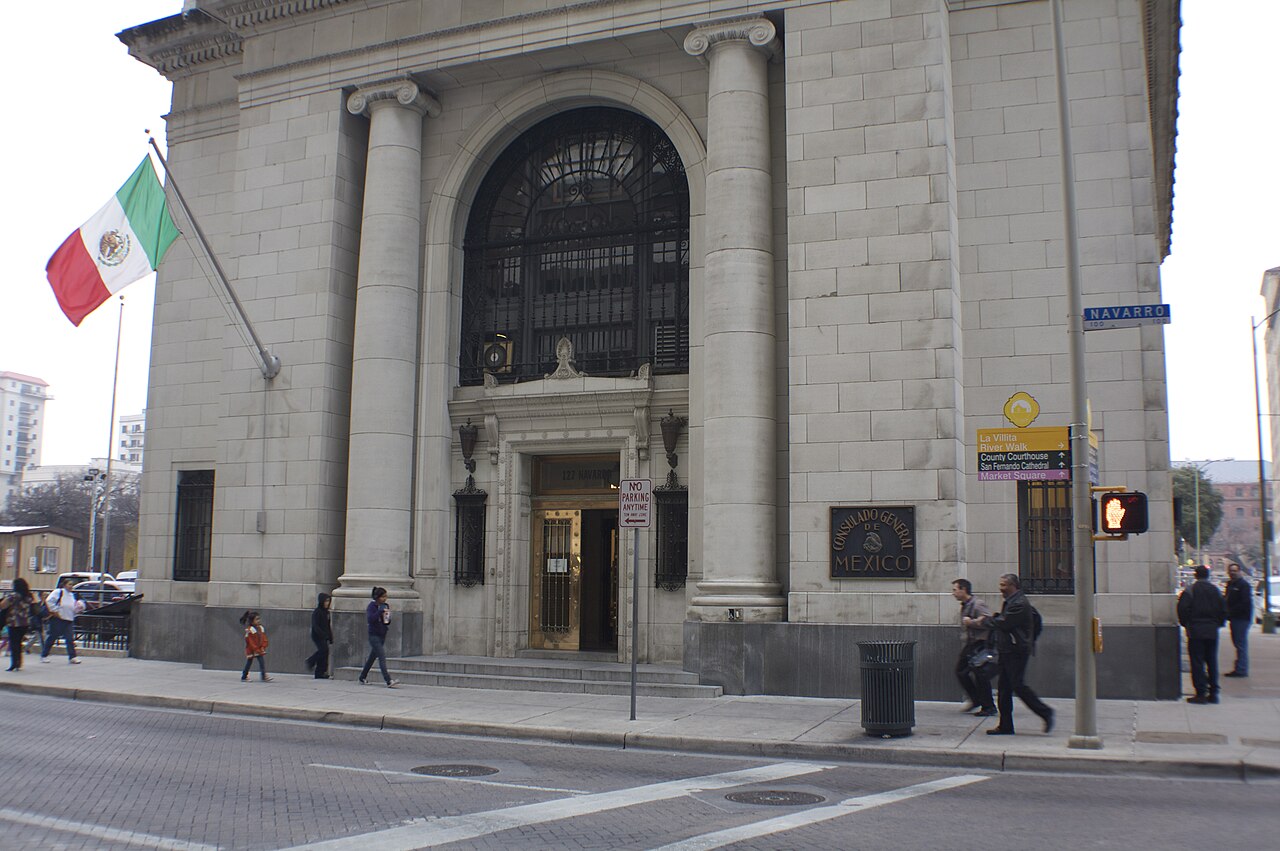
The United States has launched its first comprehensive challenge to Mexico's 53-consulate foreign lobbying operation on American soil, a decades-long scheme designed to cultivate a political pressure group that undermines American assimilation. The State Department's review of every Mexican consulate, first reported May 7, confronts a half-century of documented political interference that has shaped U.S. policy from NAFTA to DACA.
Mexico's 53 consulates represent the largest foreign consular network in any single country, dwarfing Japan's 17 offices, Canada's 12, and the eight each maintained by Germany and the six maintained by the United Kingdom. The disproportionate footprint serves a political purpose, not a consular one: only 29 percent of 39 million U.S. residents of Mexican origin are foreign-born, and just 35 percent of those are naturalized citizens, meaning fewer than one in five require any consular services.
The network traces its origins to Mexico's 1990 Program for Mexican Communities Abroad, which included among its four documented objectives "to create a political lobby," according to Robert S. Leiken's 2000 Center for Equal Opportunity report. Former President Ernesto Zedillo privately told Latino leaders in Texas in 1995 that dual nationality aimed "to develop a close relationship between his government and Mexican Americans, one in which they could be called upon to lobby US policymakers on economic and political issues."
Mexican consulates have repeatedly intervened in American policy debates across multiple administrations. They lobbied for NAFTA from 1991 through 1993, took a public stand against California's Proposition 187 in 1994, paid DACA processing fees starting in 2012, supported DAPA in 2014 with free workshops, launched a naturalization drive before the 2016 election, and mobilized against a remittance tax in May and June 2025. President Claudia Sheinbaum further ordered consulates in February 2025 to take "a proactive diplomatic approach" in areas including "strategic partnerships" and "combatting disinformation."
Mexican officials have explicitly articulated this transnational loyalty project. Former President Vicente Fox created the Institute for Mexicans Abroad and declared on his presidential website that "Mexico is one nation of 123 million citizens — 100 million who live in Mexico and 23 million who live in the United States." Juan Hernandez, head of the IME, told ABC News in 2001: "I want the third generation, the seventh generation, I want them all to think 'Mexico First.'" Carlos González Gutiérrez, who later became consul general in Los Angeles, wrote in the Journal of American History in September 1999 about how to "guarantee in the second and subsequent generations (who were not born in Mexico and do not expect ever to live there) the awareness of being part, not simply of an ethnocultural minority, but of the Mexican diaspora in the United States."
Sheinbaum told reporters May 8 that "the idea that Mexican consulates are doing anything political in the United States is absolutely false." She made the same categorical denial in January 2026. Yet the documented record from NAFTA lobbying to DACA fee payments to the 2025 remittance tax campaign contradicts her claims. Sheinbaum's own February 2025 directive ordering "strategic partnerships" further confirms the political nature of consulate operations.
The State Department review comes amid heightened tensions following the April 2026 deaths of two CIA officers in a counter-narcotics operation in Chihuahua state and U.S. drug trafficking indictments of Mexican officials including Sinaloa Governor Rubén Rocha Moya. Assistant Secretary of State Dylan Johnson stated the State Department "is constantly reviewing all aspects of American foreign relations to ensure they are in line with the President's America First foreign policy agenda and advance American interests." The New York Times reported the review was prompted in part by Peter Schweizer's bestseller The Invisible Coup, which debuted at number one on the NYT bestseller list after President Trump promoted it on social media.
Peter Schweizer, author of The Invisible Coup and president of the Government Accountability Institute, stated: "Across America, the Mexican government, through its more than 50 consulates, is blatantly interfering in our domestic politics, working with American political advisors to turn legal and illegal migrants inside the U.S. into a political force to wield for their benefit." The Trump administration previously ordered China's consulate in Houston closed in 2020 over espionage and Russia's consulate in San Francisco shut in 2017. The question now is whether the State Department will go further and shutter portions of a network that was, by its own architects' admission, designed to lobby American policymakers.
The review represents a direct sovereignty challenge to what former President Teddy Roosevelt warned would bring "this nation to ruin" — permitting America "to become a tangle of squabbling nationalities…each preserving its separate nationality." With Mexico receiving more than $60 billion in annual remittances from the U.S., the financial stakes match the political ones. The question hanging over every American community touched by this sprawling foreign operation is simple: whose interests do these consulates truly serve?