Supreme Court Restores Colorblind Redistricting, Exposes VRA Bias
The Supreme Court struck down Louisiana's congressional map Wednesday in a 6-3 ruling that ends decades of race-based redistricting mandates, triggering immediate map redraws across the South and suspended primaries.
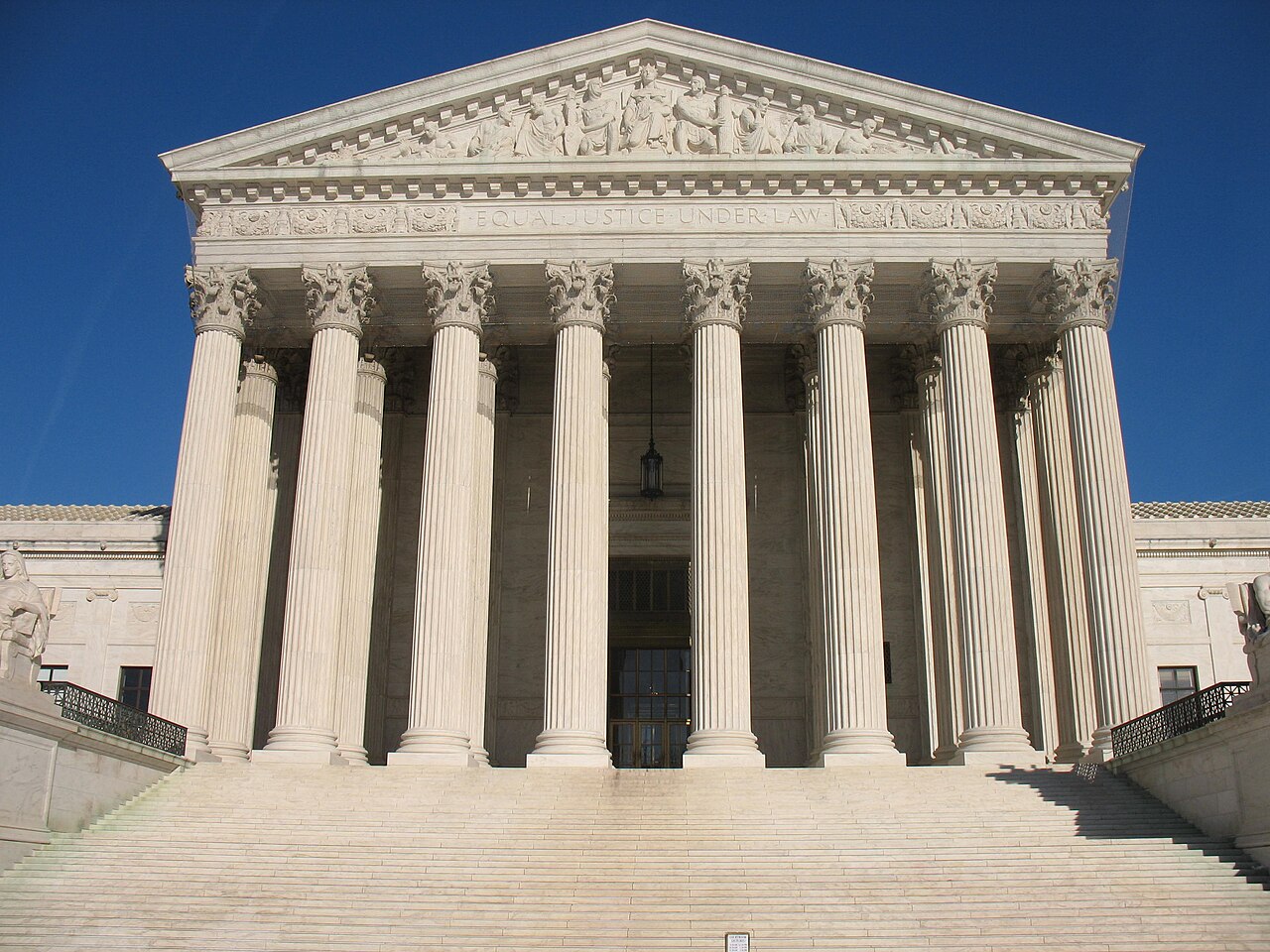
The Supreme Court delivered a sweeping rebuke to race-based redistricting Wednesday, striking down Louisiana's congressional map as an unconstitutional racial gerrymander and freeing states from federal courts' decades-long mandate to carve minority districts by racial quota. The 6-3 ruling in Louisiana v. Callais represents a decisive step toward colorblind redistricting, exposing how lower courts applied Section 2 of the Voting Rights Act to enforce race-based districting in electoral maps.
For voters across the South, the decision means election maps will reflect geography and community interests rather than racial engineering.
Justice Samuel Alito's majority opinion declared the Constitution's equal protection guarantee as the governing standard for map-drawing. "Section 2 of the Voting Rights Act of 1965 … was designed to enforce the Constitution — not collide with it," Alito wrote. He continued, "Unfortunately, lower courts have sometimes applied this Court's §2 precedents in a way that forces States to engage in the very race-based discrimination that the Constitution forbids."
The Court struck down Louisiana's 2024 map, which created a second majority-Black district stretching diagonally from Shreveport to Baton Rouge. Alito warned that voting rights litigation had become a vehicle for partisan gerrymandering disguised as civil rights enforcement. "In a State where both parties have substantial support and where race is often correlated with party preference, a litigant can easily exploit §2 for partisan purposes by 'repackag[ing] a partisan-gerrymandering claim as a racial-gerrymandering claim,'" the majority opinion stated.
The ruling updated the legal framework for Section 2 challenges, requiring plaintiffs to prove intentional racial discrimination rather than just discriminatory effects. Plaintiffs must now provide illustrative maps that achieve all state goals without using race as a districting criterion. "Correctly understood, §2 does not impose liability at odds with the Constitution, and it should not have imposed liability on Louisiana for its 2022 map," Alito wrote.
Louisiana Governor Jeff Landry issued Executive Order 26-038, suspending the state's May 16 U.S. House primaries, following certification from Secretary of State Nancy Landry that an electoral emergency exists. "The best way to end race-based discrimination is to stop making decisions based on race," Landry said Wednesday. "Allowing elections to proceed under an unconstitutional map would undermine the integrity of our system."
President Donald Trump called the ruling "a BIG WIN for Equal Protection under the Law" on Truth Social. Louisiana Attorney General Liz Murrill praised the decision, stating, "The Supreme Court has ended Louisiana's long-running nightmare of federal courts coercing the state to draw a racially discriminatory map."
Democratic leaders reacted with outrage. DNC Chair Ken Martin called it a "dark day for America." Election lawyer Marc Elias filed a lawsuit challenging the primary suspension, while Louisiana Rep. Cleo Fields, who represents the contested majority-Black district, questioned the legality of canceling an election already in progress. Over 100,000 absentee ballots had been mailed, with 4,300 already returned in East Baton Rouge Parish alone.
The ruling triggered immediate redistricting action across the South. Florida's legislature approved a new map adding four GOP-leaning seats within hours of the decision. Mississippi Governor Tate Reeves called a special legislative session for May 20 to address state Supreme Court districts, with GOP operatives suggesting congressional redistricting could be added, potentially targeting the state's majority-Black 2nd District held by Democratic Rep. Bennie Thompson. Tennessee Sen. Marsha Blackburn proposed a map eliminating the Democratic-held 9th District.
Experts estimate 12 to 19 Democratic-held House seats could be redrawn out of existence nationwide. "This is a full gut," said Loyola Law School professor Justin Levitt. "This is burn the house down and pretend the house still exists because you can point to where the foundation used to be."
Zack Smith of the Heritage Foundation offered a different perspective. "The court did not overturn Section 2 of the Voting Rights Act; they simply said that the way certain lower courts had been interpreting and applying it was incorrect," Smith argued. "What the Roberts court has done well is say that, no, there is no such thing as good discrimination."
In her dissenting opinion, Justice Elena Kagan warned the decision renders Section 2 "all but a dead letter." Joined by Justices Sonia Sotomayor and Ketanji Brown Jackson, Kagan omitted the traditional "respectfully" from her conclusion, writing only "I dissent." Civil rights organizations echoed her alarm, with the ACLU calling the ruling "a profound betrayal of the legacy of the civil rights movement."
Conservative legal scholars note the decision aligns with Justice Clarence Thomas's long-standing view that Section 2 should not create proportional representation entitlements. Thomas's concurring opinion, joined by Justice Neil Gorsuch, argued the Court should never have interpreted Section 2 to give racial groups "an entitlement to roughly proportional representation."
Left-leaning media outlets framed the decision as a demolition of civil rights protections. The Guardian described the ruling as "demolishing" the Voting Rights Act, while Democracy Docket accused the Court of "greenlighting racial discrimination and a rash of GOP gerrymanders." These characterizations contradict the Court's explicit finding that lower courts had misapplied Section 2 to enforce unconstitutional racial quotas.
The ruling reaffirms the 14th Amendment's equal protection clause as the governing standard for redistricting, limiting the circumstances under which VRA compliance can justify race-based districting. States now have freedom to draw maps based on geography, community interests, and partisanship without federal coercion to create racial quotas. Louisiana's Republican-controlled legislature, which holds supermajorities in both chambers, will begin redrawing maps immediately with the regular session ending June 1.
For millions of Americans who waited decades to see the Constitution's promise of equal protection fully realized, Wednesday's ruling marks a moment when the law finally honored the principle that government should treat citizens as individuals, not as members of racial categories destined to be sorted into districts.