Teachers Union Bypasses State Sovereignty in Education
A New Hampshire bill challenges a partnership between the American Federation of Teachers and the World Economic Forum that aims to reshape K-12 curriculum across the United States.
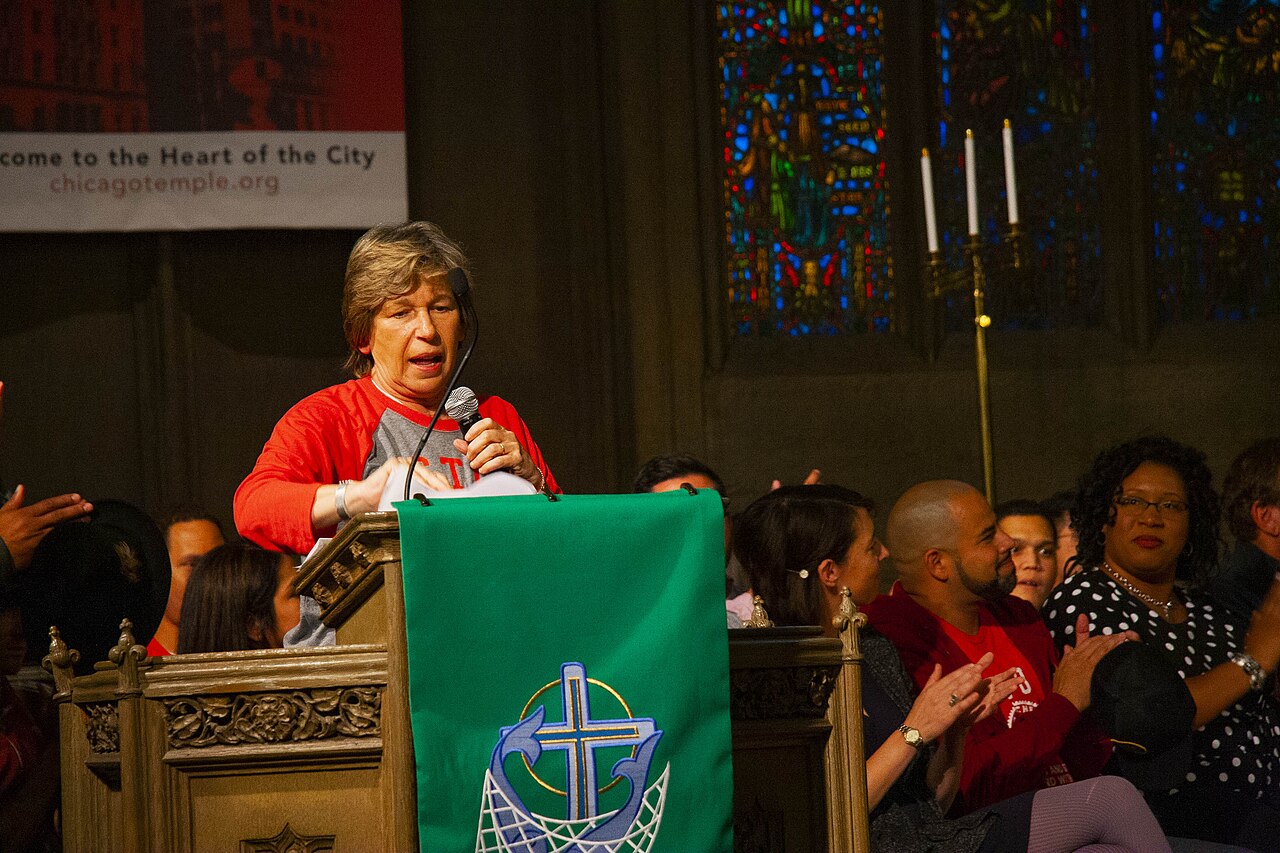
"You can't keep on doing this governor by governor." American Federation of Teachers President Randi Weingarten made the declaration at the World Economic Forum in Davos in January 2026. She called state-by-state education governance obsolete. Her push for an "integrated network" linking education, labor, government and industry amounts to a direct challenge to the authority states hold over American classrooms.
New Hampshire lawmakers pushed back with House Bill 1448. The measure bans "any lectures, lesson plans, and other educational materials provided or created by the World Economic Forum" in public schools. The bill confronts a supranational curriculum apparatus that bypasses local control.
Weingarten's vision extends beyond rhetoric. She announced the AFT-WEF partnership in July 2025 at the union's TEACH Conference. "We are partnering with the World Economic Forum to create a curriculum that will lead to good jobs and solid careers in U.S. manufacturing," she told attendees.
That partnership reached New Hampshire classrooms this spring. AFT-New Hampshire President Deb Howes confirmed the arrangement before the state Senate Education Committee on April 21. "The American Federation of Teachers did announce that it is working with industry leaders from around the world to develop career and technical education curriculum to share with any school in the United States," Howes testified.
She presented the curriculum as voluntary. "If our schools in New Hampshire think that would be a bad thing to have from industry leaders around the world, we could make that illegal for them to use," Howes told legislators.
The union's political alignment tells its own story. Federal records show the AFT directed 99.89 percent of its 2024 political spending to Democrats — $3,069,063 compared with just $3,323 to Republicans. Weingarten served on the Democratic National Committee from 2002 until her resignation in mid-2025.
The House Education Committee rejected Howes' argument in a 10-8 vote on Jan. 22. Representative Mike Belcher, the bill's primary advocate, argued that WEF values "would seem to run counter to our form of government, our constitution, the nature of individual rights." He said the international organization promotes "global citizenship" that undermines allegiance to nation and state.
The Senate Education Committee heard testimony from both sides on April 21 and took no immediate vote. Members requested follow-up documentation from the sponsor. The bill remains pending as of May 1.
The stakes stretch far beyond New Hampshire classrooms. The AFT-WEF partnership creates a curriculum pipeline capable of reaching schools nationwide. If New Hampshire does nothing, the same apparatus can deploy in any other state without public debate or parental consent.
Weingarten's Davos declaration laid bare the architecture. Control what children learn about markets, sovereignty and citizenship for a generation, and elections become a formality. New Hampshire's legislative fight stands as the first line of defense against a globalist education power grab.