Texas Challenges Federal Block on State Border Enforcement
Texas Attorney General Ken Paxton appeals federal court injunction blocking state police from enforcing border security measures, arguing state sovereignty and citizen safety require local enforcement authority.
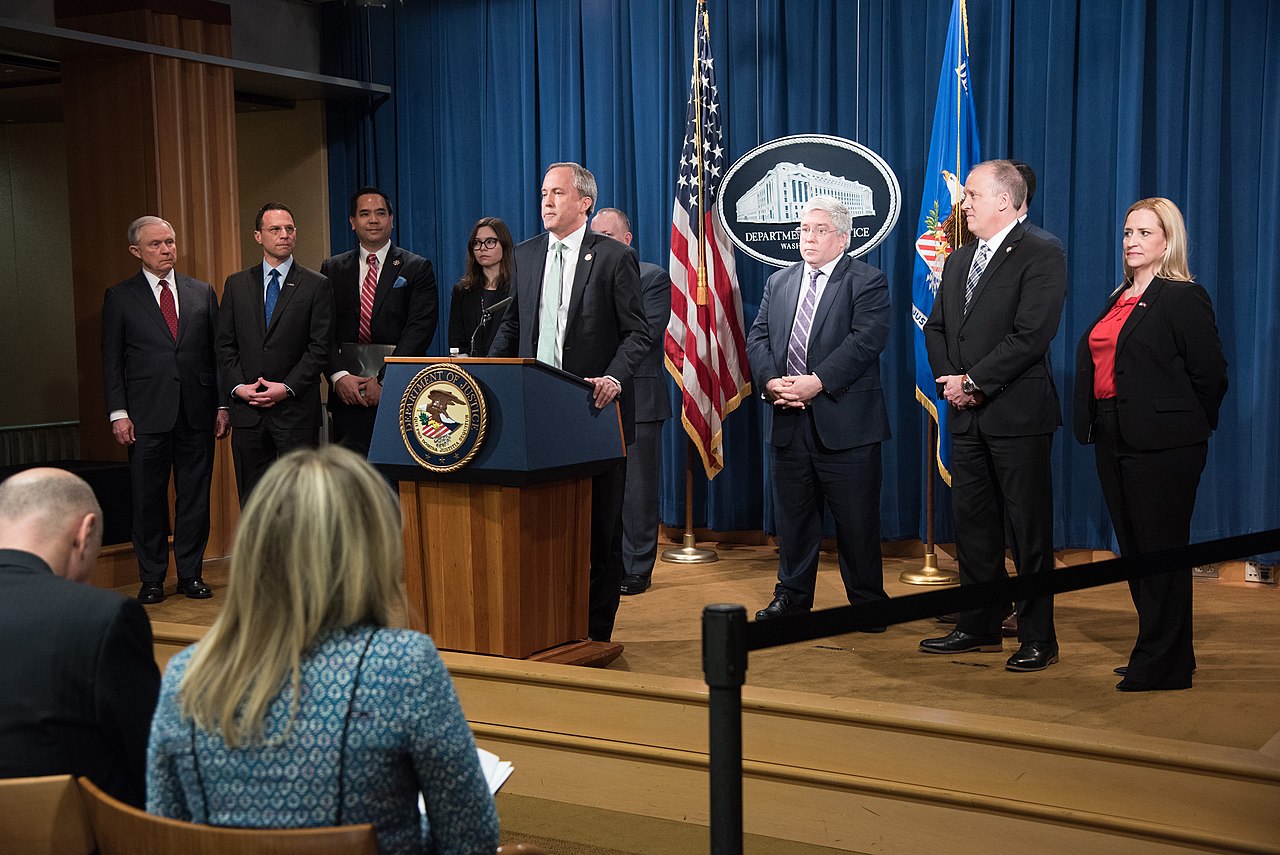
Texas Attorney General Ken Paxton is fighting to restore state police powers to arrest illegal immigrants after a federal judge blocked key provisions of the state's border security law. The ruling leaves citizens vulnerable while obstructing local law enforcement from acting at the southern border.
Paxton filed an appeal Monday with the U.S. Court of Appeals for the Fifth Circuit seeking to overturn the preliminary injunction blocking Texas Senate Bill 4. The move represents a direct challenge to federal judicial overreach that prioritizes theoretical constitutional doctrines over the safety of Texas communities.
Judge David Ezra's May 14 ruling blocked Texas police from enforcing SB 4's core provisions at a moment when border security demands urgent action. During 2021-2023, more than 6 million illegal aliens from over 100 countries flooded the U.S. southern border. Roughly 15,000 illegal aliens with criminal convictions were arrested nationwide in fiscal year 2023 alone.
Texas enacted security measures the federal government abandoned.
"Texas has the right to defend its border," Paxton said May 22. "I will never stop fighting for that right."
The attorney general's motion argues Judge Ezra improperly blocked provisions allowing state police to detain illegal immigrants and transfer them to federal authorities. The court simultaneously permitted the law's illegal entry criminalization to remain active.
The Trump administration now acknowledges state-level immigration enforcement complements federal objectives, undermining the judge's preemption ruling. The Department of Justice filed a Statement of Interest stating SB 4 "advances" federal goals. Yet federal courts continue blocking Texas police from enforcing laws designed to protect communities.
"Director Martin is likely to prevail on the merits of his appeal both because the district court lacked jurisdiction and because S.B.4 is not preempted by federal immigration law but rather compliments it," Paxton's motion states.
The Fifth Circuit previously vacated an injunction on standing grounds in a 10-7 en banc ruling April 24. Appellate judges increasingly recognize Texas's border security arguments.
About 2.5 million people unlawfully crossed the U.S. southern border in fiscal year 2023, including 118,938 unaccompanied minors. The Texas Department of Public Safety estimated SB 4 would result in approximately 72,000 arrests annually. The numbers demonstrate the practical necessity of state enforcement capabilities federal injunctions obstruct.
Judge Ezra blocked four SB 4 provisions: illegal reentry criminalization, magistrate authority to issue deportation orders, the crime of refusing removal orders, and mandatory prosecution despite pending federal immigration cases. He permitted illegal entry criminalization to take effect May 15 but called the blocked portions the "shame" of the law.
"Indeed, it is implausible to imagine each of the fifty United States having their own state immigration policy superseding the powers inherent in the United States as a Nation," Ezra wrote.
The ruling illustrates federal courts prioritizing abstract constitutional arguments over the documented reality of criminal alien influxes threatening Texas communities.
The Fifth Circuit's prior skepticism of plaintiffs' standing provides strong legal foundation for Paxton's stay request. Appellate judges noted Texas faces unprecedented border crisis conditions requiring state action when federal enforcement fails.
"...far from conflicting with the INA's objectives, state-level penalties like those in Senate Bill 4 advance those objectives, further combatting and disincentivizing the very conduct that Congress has sought to eliminate in full," the Trump DOJ Statement of Interest argues.
This executive branch position directly contradicts Judge Ezra's injunction premise. State enforcement aligns with federal goals.
Texas has bused over 12,500 migrants to Washington, D.C., and 23,800 to New York City under Operation Lone Star since federal abandonment of border security. More than 200 Texas law enforcement agencies participate in ICE 287(g) agreements, representing roughly one-fifth of national partnerships.
Border Patrol recorded just 4,265 migrant apprehensions in Texas during December 2025 under Trump administration enforcement. Texas's security measures prove effective where federal courts obstruct.
Paxton's appeal represents a crucial test of state sovereignty against federal judicial overreach that leaves citizens vulnerable. As federal injunctions actively block state-level security measures, Texas continues fighting for the authority to address border crisis realities federal courts ignore.