Warren Pushes Childcare Plan Against Trump
Senator Elizabeth Warren unveils a sweeping federal childcare plan as Democrats prepare to weaponize family expenses against the Trump administration ahead of the 2026 midterms.
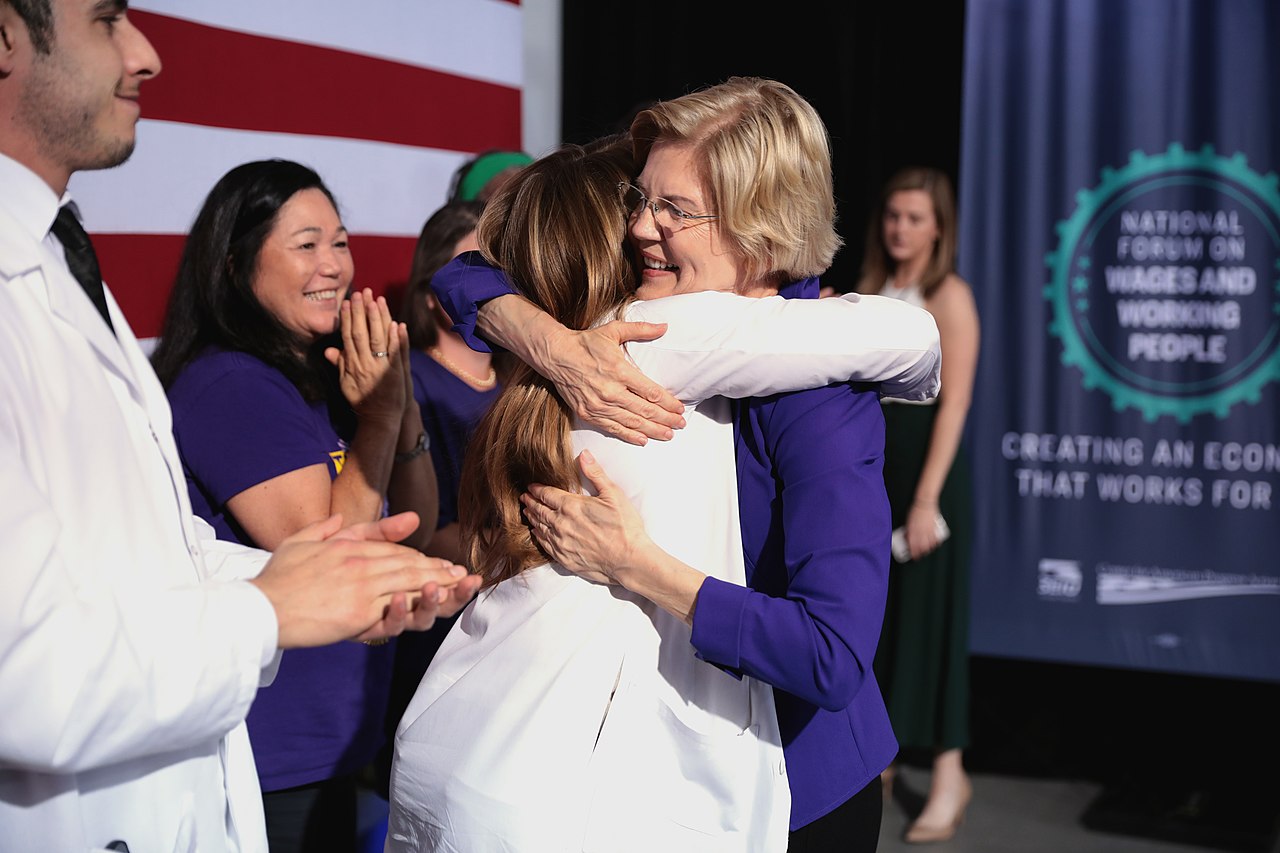
Senator Elizabeth Warren called it "political malpractice" for Democrats to stay silent on childcare ahead of the 2026 midterms. She unveiled a strategy to weaponize family expenses against the Trump administration, framing the issue as a battle for America's future.
Warren's plan would cover 90 percent of childcare costs through federal investment, cap family expenses at 7 percent of income, and reclassify care as public infrastructure. The proposal promises relief for struggling parents while expanding government reach into the most intimate decisions families make.
Warren established the "Child Care for America" working group with Senators Patty Murray and Representatives Alexandria Ocasio-Cortez and Bobby Scott. The team aims to deliver legislation ready for immediate passage if Democrats retake Congress.
Their principles mandate free care for lowest-income families and require the federal government to cover at least 90 percent of investment. The framework would establish unprecedented government control over how American families raise children.
Warren's approach sidesteps conservative alternatives that preserve family choice. The Working Families Tax Cuts, passed earlier this year, permanently locked the Child Tax Credit at $2,200 per child and expanded the Child and Dependent Care Credit to cover 50 percent of up to $6,000 in qualifying expenses.
Market-oriented experts advocate direct family allowances that provide cash straight to parents. Such programs put resources in families' hands rather than funneling money through bureaucratic childcare systems.
Polling reveals why Democrats see political opportunity. Eighty percent of voters identify childcare affordability as a crisis or major problem, and 69 percent of Republicans agree federal funding could help lower costs.
The national average for infant center-based care now reaches $1,230 monthly. Costs have climbed 5 to 8 percent since 2024, consuming over 20 percent of household income for average families despite the Department of Health and Human Services defining affordability as 7 percent or less.
Expert analysis warns Warren's plan would worsen the crisis it claims to solve. "When you get the government more involved in childcare, it crowds out more informal providers," said Rachel Sheffield, research fellow at the Heritage Foundation. "Most families prefer informal care, like someone who comes to the home, or mom or dad taking care of the child, or grandma, versus paid childcare."
Lyman Stone, senior fellow at the Institute for Family Studies, notes regulatory burdens already drive costs higher. "In big blue cities especially, proliferating regulations and standards intended to boost childcare quality and protect childcare workers have caused an enormous cost surge," Stone told the Washington Examiner. He advocates Finland-style home care allowances as "vastly preferable" to subsidized childcare.
The White House dismissed Warren's approach as ideological overreach. "While Democrats mindlessly push throwing more money at every problem under the sun and expecting different results, the Trump administration will continue exploring and implementing solutions that actually reduce costs and expand options for American families," said spokesman Kush Desai.
Warren's own words expose the ideological drive behind the push. "As a nation we invest in infrastructure so that people can go to work and businesses can flourish," Warren told NOTUS in March. "Child care is infrastructure."
This classification allows Democrats to justify massive permanent spending while expanding federal oversight into family life. Warren treats childcare not as a private responsibility but as collective infrastructure requiring government management.
The debate follows Trump's controversial April remarks at a White House Easter luncheon. He told OMB Director Russell Vought, "Don't send any money for daycare, because the United States can't take care of daycare."
Democrats seized on the comments as evidence of Republican indifference to family struggles. The White House called the characterization "out of context" and said the remarks were about rooting out fraud in welfare programs.
State-level Democratic initiatives provide templates for federal expansion. New Mexico became the first state to guarantee no-cost universal childcare last November. New York City extended free care to every 2- and 3-year-old across five boroughs. Virginia's Democratic governor signed an Employee Childcare Assistance Program incentivizing businesses to help with costs.
These programs ignore evidence that government involvement drives up expenses. Massachusetts families now spend 30.29 percent of median income on childcare, followed by New York at 30.12 percent and Nevada at 29.25 percent. All three states maintain extensive childcare regulations.
In 45 percent of U.S. counties, center-based infant care costs exceed median rent. Childcare surpasses public college tuition in 38 states.
The childcare industry itself faces structural challenges. Sixty percent of centers report severe staffing shortages, and a 28 percent gap exists between available spots and children in need.
Yet Warren's solution focuses on boosting worker pay and benefits within a government-funded system. It does not address the regulatory barriers that limit supply.
Her strategy represents a calculated political gamble. Democrats seek to exploit genuine economic pain for partisan advantage while expanding the welfare state's reach into family decisions.
By framing childcare as infrastructure rather than personal responsibility, Warren and her allies aim to permanently embed government control over how parents balance work and family life. The stakes extend beyond budgets and ballots. They define whether American families retain the freedom to make their own choices or surrender those decisions to bureaucrats in Washington.