Becerra Advances to California Governor Runoff Amid State Crisis
Xavier Becerra edges into California's November gubernatorial runoff by just 8,770 votes over conservative Steve Hilton, with 3 million ballots still uncounted in a race signaling potential cracks in the state's Democratic monopoly.
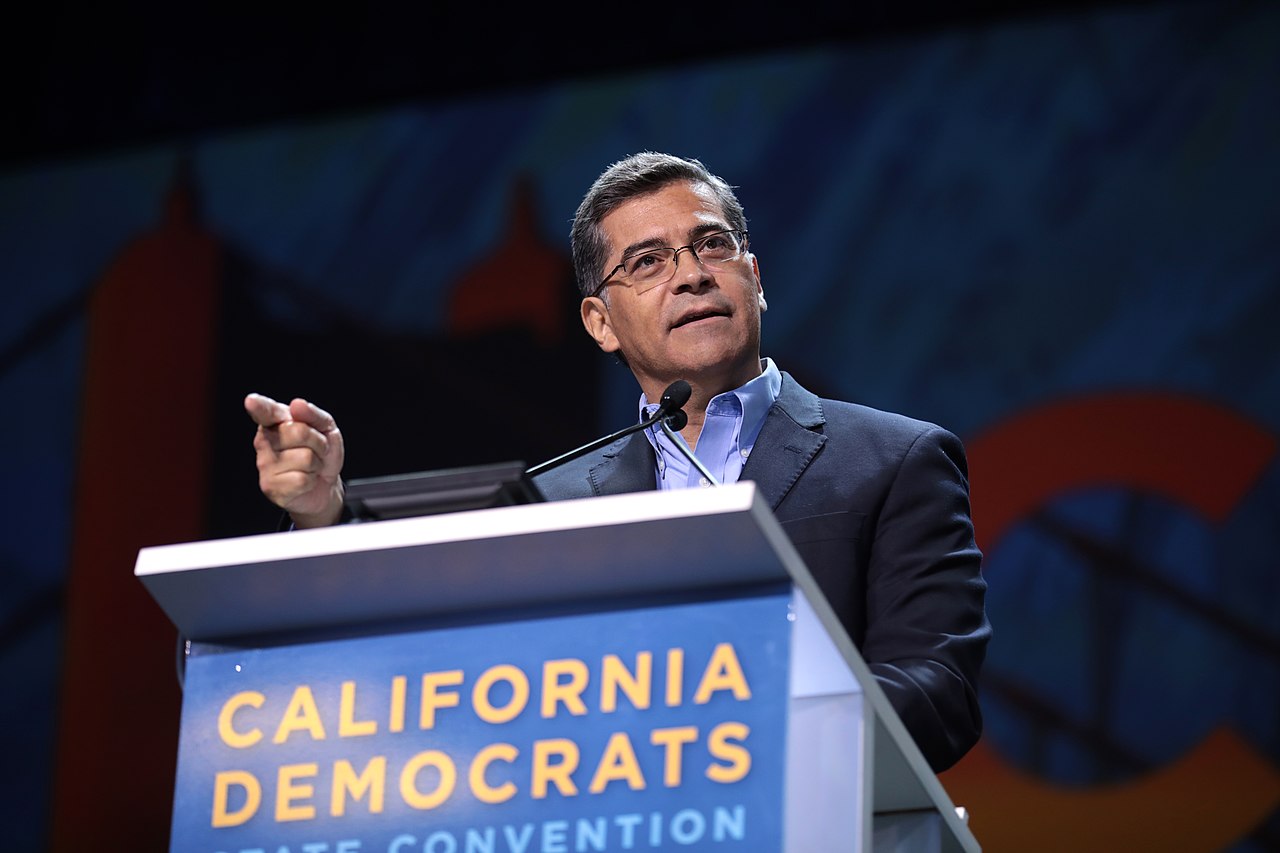
Former Biden Health Secretary Xavier Becerra advanced to California's November general election Friday, but his razor-thin victory signals something bigger: the state's progressive monopoly may finally be cracking under the weight of its own policies.
Conservative challenger Steve Hilton trails by just 8,770 votes with 3 million ballots still uncounted. It is the most serious threat to Democratic dominance in two decades.
The Associated Press called the race for Becerra after he captured 26.8 percent of counted votes to Hilton's 26.4 percent. Billionaire Democrat Tom Steyer sits in third with 21 percent, his $216 million self-funded campaign unable to overcome Becerra's establishment backing. The contest between Hilton and Steyer for second place remains too close to call, with final results expected by July 3.
Becerra's ascent from single-digit polling in March to the top of the ballot came after Democratic frontrunner Eric Swalwell imploded in April over sexual misconduct allegations. More than 500 Swalwell donors subsequently contributed to Becerra's campaign. Steyer's campaign hired an intelligence firm that found thousands of bot accounts amplifying Becerra on social media, a claim Becerra's campaign denied.
"We will not be bought. We will not be bullied. And we are never backing down," Becerra declared in a statement Friday. "November, here we come."
The former HHS secretary now faces scrutiny over his federal record. A 2024 HHS Office of Inspector General report found that during Becerra's tenure, 16 percent of required sponsor safety checks lacked documentation. Nineteen percent of children had pending state child abuse checks whose results were never updated in case files. Twenty-two percent did not receive timely required follow-up calls. The New York Times documented that more than 85,000 children became unable to be tracked by federal officials.
Becerra once told HHS staff, "If Henry Ford had seen this in his plants, he would never have become famous and rich. This is not the way you do an assembly line."
"Xavier Becerra failed those kids, failed the country, and failed to do his job," an unnamed Democratic campaign strategist told Fox News Digital. "Thinking he can become Governor of California after that record is delusional."
California's governance failures extend beyond Washington. The state spent $24 billion on homelessness from 2018 through 2023, yet its homeless population grew from 151,278 to 187,084 residents. The California State Auditor found the state could determine cost-effectiveness for only 2 of its 30 homelessness programs. Los Angeles Measure HHH spent $1.2 billion on homeless housing at $600,000 per unit while the city's homeless population increased 60 percent.
Families are voting with their feet. California lost 150,000 residents to out-migration in 2025 alone as the cost of living strained household budgets. Movers to other states found housing averaging $1,706 monthly versus $2,376 in California. After seven years, former Californians are 48 percent more likely to own homes in their new states.
"Change is coming to California, and it's long overdue," Hilton told supporters election night. The former Fox News host and British political adviser amassed more than 20,000 campaign donors, more than any other candidate, and secured Donald Trump's endorsement in April.
Hilton has consistently ranked in the top 2 in nearly every poll. His campaign focuses on affordability, homelessness, crime, drugs and human trafficking as evidence of California's decline under 16 years of Democratic rule.
"Steve is already focused on November, traveling the state, meeting with voters, and continuing to build a coalition of Californians who want change after 16 years of one-party rule," Hilton spokesman Hector Barajas said.
Establishment money fueled Becerra's unlikely rise. Outside groups spent $79 million on the governor's race, more than double the 2018 total. Labor and industry groups spent $13 million to boost Becerra, with Chevron, McDonald's, DaVita and California Resources each contributing $500,000. Meta and Airbnb added approximately $1 million each.
The California Chamber of Commerce, PG&E and realtors' PAC spent $32 million against Steyer through the California Is Not For Sale committee. The spending reveals the business establishment's clear preference for the career politician over both the billionaire outsider and the conservative challenger.
Fernando Guerra, professor of Chicano Studies at Loyola Marymount University, explained Becerra's appeal. "He just never overreacted. Even when attacked during debates, he was calm. That gave the sense of being a moderate, while he's really a liberal, so he was able to appeal not only to Latinos, but to liberals and to moderates."
Jason McDaniel, associate professor of political science at San Francisco State University, added, "I do think it was just people looking for someone who had a lot of experience who could win."
If Hilton advances to face Becerra, he would represent the first credible Republican challenge in a state where Democrats outnumber Republicans nearly 2-to-1. No Republican has won statewide office since Arnold Schwarzenegger's re-election in 2006.
Steyer gained 107,000 votes in a 24-hour period as ballots continued to be counted, keeping his hopes alive. "Nothing changes for us," Steyer campaign spokesman Anthony York said. "We're waiting to see if there are enough votes left to be counted to put Tom into the runoff."
Veteran California political strategist Garry South noted Trump's endorsement impact. "Trump just outsmarted himself on this one. Endorsing one of the Republicans in the race pretty much assures that that candidate goes up and the other starts to decline with Republican voters who follow Trump's lead."
With 3 million ballots remaining, California's 30-day canvass continues. Stephen Richer, former registrar of voters in Maricopa County, Arizona, explained the delay. "In California, about 80 percent of voters vote using the ballot they get in the mail — compare that to Texas for example, where only about 15 percent of voters use mail-in ballots, and you can understand why it takes so long."
First Assistant U.S. Attorney Bill Essayli announced "multiple probes underway" into alleged voting fraud. UC Berkeley statistics professor Philip B. Stark said, "While it does have some security vulnerabilities, there's no evidence that there is a problem at a scale bigger than a handful of votes in any particular election."
Becerra, who would become California's first elected Latino governor in modern history, emphasized his experience. "I am not learning this job on Day One," he told a Long Beach rally. "I have done this job."
Families packing U-Hauls and voters weighing their futures will decide whether California's progressive governance can survive frustration with homelessness, out-migration and cost-of-living crises. Or whether Hilton's conservative challenge represents a genuine crack in the Democratic monopoly.