European Cowardice Vindicates Trump's Burden-Sharing Demands
European NATO allies refused to support U.S. operations against Iran despite billions in defense spending. As NATO chief Rutte meets Trump in Washington, America demands genuine burden-sharing or faces consequences.
When America asked European NATO allies to help defend the Strait of Hormuz against Iranian threats, they closed their airspace. They denied their bases. They told Washington to handle it alone. The refusals came even as those same allies spent billions on defense, raising questions about what American taxpayers are funding.
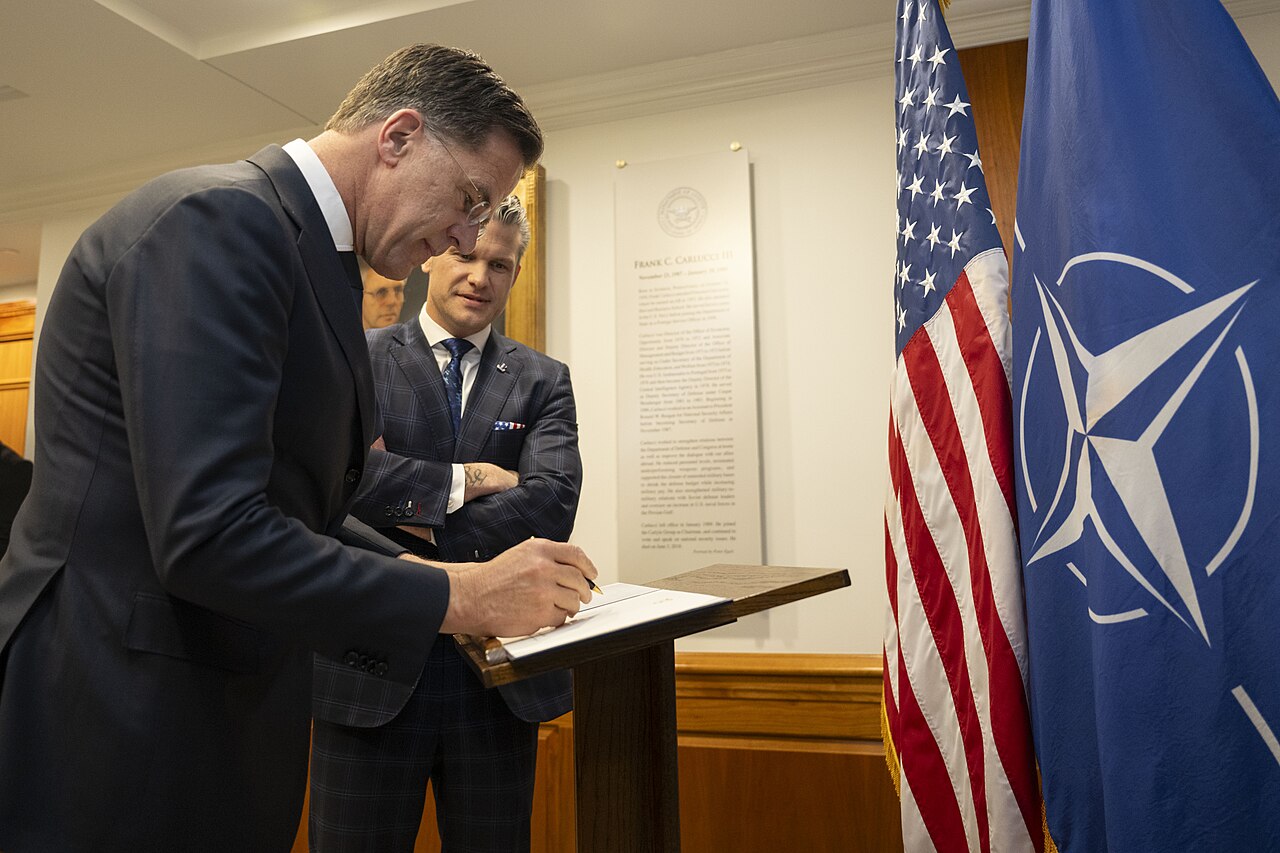
Now NATO Secretary General Mark Rutte arrives in Washington this week to meet President Donald Trump. The upcoming White House meeting on June 24 cannot obscure the hard evidence of European free-riding. The visit validates Trump's longstanding demands for genuine burden-sharing within the alliance.
The confrontation reaches beyond diplomacy. Defense Secretary Pete Hegseth announced a six-month Pentagon review of U.S. forces in Europe last week, calling the alliance a "paper tiger" and a "one-way street." The review signals that patience has run out.
The evidence of European freeloading is documented in wartime refusals. Spain closed its airspace to U.S. military planes during the Iran conflict, with its defense minister calling the war "profoundly illegal and profoundly unjust." Italy denied U.S. bombers use of its Sicily base without parliamentary approval. France blocked U.S. flights carrying military supplies over its territory.
UK Prime Minister Keir Starmer drew the line with a simple declaration: "This is not our war." He refused to join operations.
These refusals occurred while European allies and Canada increased defense spending by 20 percent in 2025 to $574 billion, according to NATO data. Yet the U.S. still accounted for 59 percent of total NATO expenditure last year, spending between $838 billion and $845 billion. Only three countries exceeded the 3.5 percent core defense target: Poland, Lithuania, and Latvia.
"For too long, NATO has been a paper tiger and a one-way street. No more," Hegseth told defense ministers in Brussels on June 18. He called European allies' refusal to provide base access "shameful" and said they "put America's sons and daughters at risk."
Hegseth's "NATO 3.0" review will examine U.S. force posture and basing in Europe, with consultations with Congress. The Defense Secretary stated U.S. dues contributions will be "contingent on other countries meeting their defense spending targets." The Pentagon already reduced Brigade Combat Teams in Europe from four to three and withdrew 5,000 troops stationed in Germany.
"Some of NATO's largest economies, some of our richest countries, allies that are happiest to go on about the rules-based international order and middle powers banding together, still seem to think the era of free-riding is here," Hegseth said.
Secretary of State Marco Rubio acknowledged Trump's "disappointment" with NATO allies' response to U.S. operations in the Middle East. "If NATO is just about us defending Europe if they're attacked but then denying us basing rights when we need them, that's not a very good arrangement," Rubio said in March.
"That's a hard one to stay engaged in and say this is good for the United States," Rubio added. "So all of that is going to have to be reexamined."
The confrontation aligns with Trump's America First foreign policy, demanding accountability from allies who have taken unconditional American protection for granted. At last year's NATO summit in The Hague, all 32 allies committed to spending 5 percent of GDP on defense by 2035. Trump insists they must move faster.
Rutte will also participate virtually from Washington in a meeting of the European Group of Five, which includes France, Germany, Italy, Poland, and the UK. He will meet with members of Congress and participate in an Atlantic Council debate during his three-day visit.
Ahead of the July 7-8 NATO summit in Ankara, Turkey, allies face a clear choice. They must present concrete plans to meet the 5 percent spending target or face further U.S. force reductions. Hegseth warned "some countries will fail, and others will pass with flying colors."
The American families who send their sons and daughters to fight deserve allies who actually show up. Trump's demands for European burden-sharing, once dismissed as political posturing, now stand validated by documented refusals when America needed allies most. The era of free-riding on American security is ending. U.S. protection requires European commitment, not empty words.