Federal Judge Blocks New Hampshire's Voter ID Law Weeks Before Primary
A Biden-appointed federal judge struck down New Hampshire's proof-of-citizenship voting law, ordering the state to restore sworn affidavits just weeks before the September primary election.
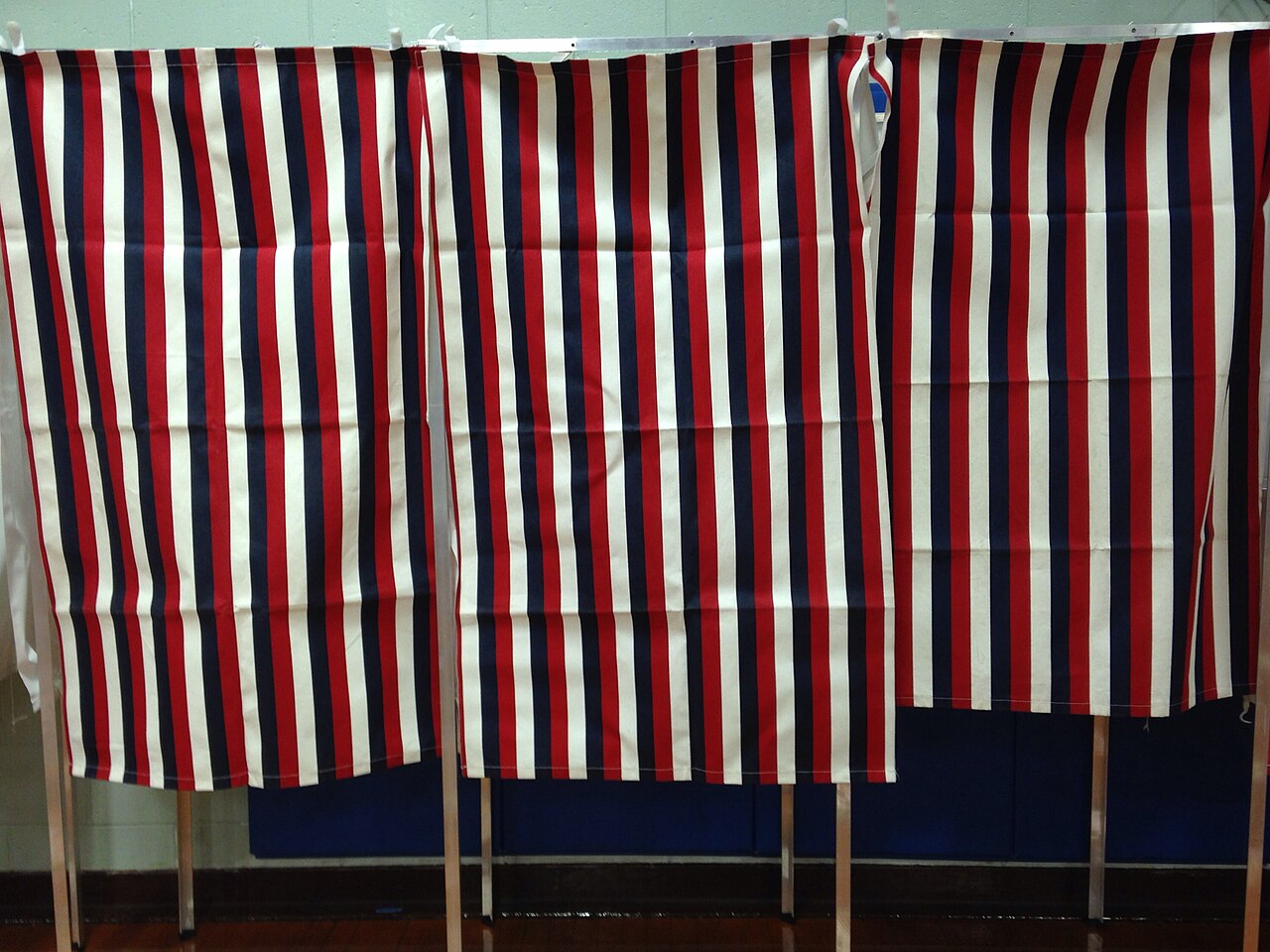
New Hampshire voters who registered on Election Day for years using a simple sworn statement now face a last-minute scramble. A federal judge appointed by President Biden has blocked the state's proof-of-citizenship voting law, ordering officials to restore affidavit-based registration just weeks before the September primary.
The May 28 ruling by Judge Samantha Elliott strikes down a 2024 law that eliminated affidavit options for voter registration. The decision marks the latest instance of federal judicial intervention overriding state election security measures.
Elliott, confirmed in 2021 by a 62-37 Senate vote, ruled that House Bill 1569 created an "unjustifiable burden on the right to vote" under the First and Fourteenth Amendments. The order forces New Hampshire to accept sworn affidavits from voters who cannot produce birth certificates, passports or naturalization papers at the polls.
The 2024 law, signed by then-Gov. Chris Sununu, eliminated two affidavit-based options for proving citizenship. First-time Election Day registrants instead had to present documentary proof under legislation that supporters called a common-sense safeguard against potential voter fraud. Twelve states currently require some form of documentary proof of citizenship, with four enacting or expanding such requirements this year and 23 states introducing 49 related bills.
"A sworn affidavit capable of exposing an affiant to criminal prosecution is a method of proving citizenship and not an exception to that requirement," Elliott wrote in her 98-page ruling. She added that "such minuscule numbers strongly undercut any legitimate concern about election integrity vis-à-vis noncitizen voting."
Between 1998 and 2024, only eight people may have cast ballots as noncitizens out of approximately 8.3 million votes, according to expert testimony cited in the ruling. Just one person has been criminally charged with intentional voter fraud over that 26-year period.
The affidavit system served a substantial portion of New Hampshire voters. Court records show 14,737 voters used qualified voter affidavits to prove citizenship between April and November 2024, representing 10.2 percent of all registrants. Among those, 5,956 were ages 17 to 24. Broad survey data shows that approximately 38 percent of U.S.-born eligible New Hampshire voters lack passports and 1 percent lack birth certificates.
Dr. Michael Herron, an expert witness in the case, estimated 5,433 to 31,291 eligible New Hampshire voters lack acceptable documentary proof entirely. Another 89,934 to 153,213 voters who possess such documents cannot retrieve them within one day. Only 11 percent of passport holders and 7 percent of birth certificate holders carry those documents regularly.
The New Hampshire Campaign for Voting Rights tracked at least 49 voters turned away in March 2025 municipal elections, seven in May 2025 town elections, and at least 90 in September-November 2025 city elections — "overwhelmingly" for lacking documentary proof. The Secretary of State's Office and Attorney General's Office did not track who was disenfranchised under the new law.
New Hampshire's voting system offers few alternatives. The state is one of four without early in-person voting, does not allow mail or online registration, prohibits provisional balloting, and offers no automatic registration. Between 2016 and 2024, 347,199 voters registered on Election Day in general elections and 175,856 in primary elections.
"New Hampshire's interest in election integrity cannot justify the burden on New Hampshire voters based on the evidence in this case," Elliott concluded.
Republican leaders expressed outrage at the ruling. State Rep. Ross Berry, chair of the House Election Law Committee, said, "The vast majority of Granite Staters support common sense election integrity laws."
Michael Garrity, spokesperson for the Attorney General's Office, said officials are "disappointed with the court's decision" and reviewing the order. "HB 1569 represents a common-sense approach to voter registration and election administration designed to protect the integrity of our elections," he stated.
The political contradiction emerged during legislative hearings. Bill sponsor Rep. Bob Lynn testified, "Do I think there's a huge issue of voter fraud in New Hampshire? No." Sununu stated the existing system "works very well right now" and was "not looking to make any changes." Both still supported the legislation.
The ruling continues a national pattern of federal courts blocking state election integrity measures. Kansas's 2018 proof-of-citizenship law was struck down after preventing more than 31,000 citizens from registering. In January 2026, Judge Colleen Kollar-Kotelly blocked the Trump administration's executive order requiring documentary proof for federal voter registration.
The House passed the SAVE America Act this year, which would require proof of citizenship for federal elections, but the legislation remains stalled in the Senate. A 2025 University of Maryland study estimated 21.3 million Americans eligible to vote lack ready access to documentary proof of citizenship.
Secretary of State David Scanlan confirmed the state will reinstate affidavits but noted the ruling does not affect other 2024 requirements including documentary proof of identity, age, and domicile. The Attorney General's office signaled intent to appeal.
The midterm elections will proceed under restored rules. But as federal judges increasingly override state legislative judgment on fundamental voting procedures, the question of who controls election policy remains unresolved.