Supreme Court Conservatives Poised to End Grace Periods for Late Mail-In Ballots
Conservative Supreme Court justices signal readiness to strike down state laws counting mail-in ballots days after Election Day, potentially establishing a nationwide standard before the 2026 midterms.
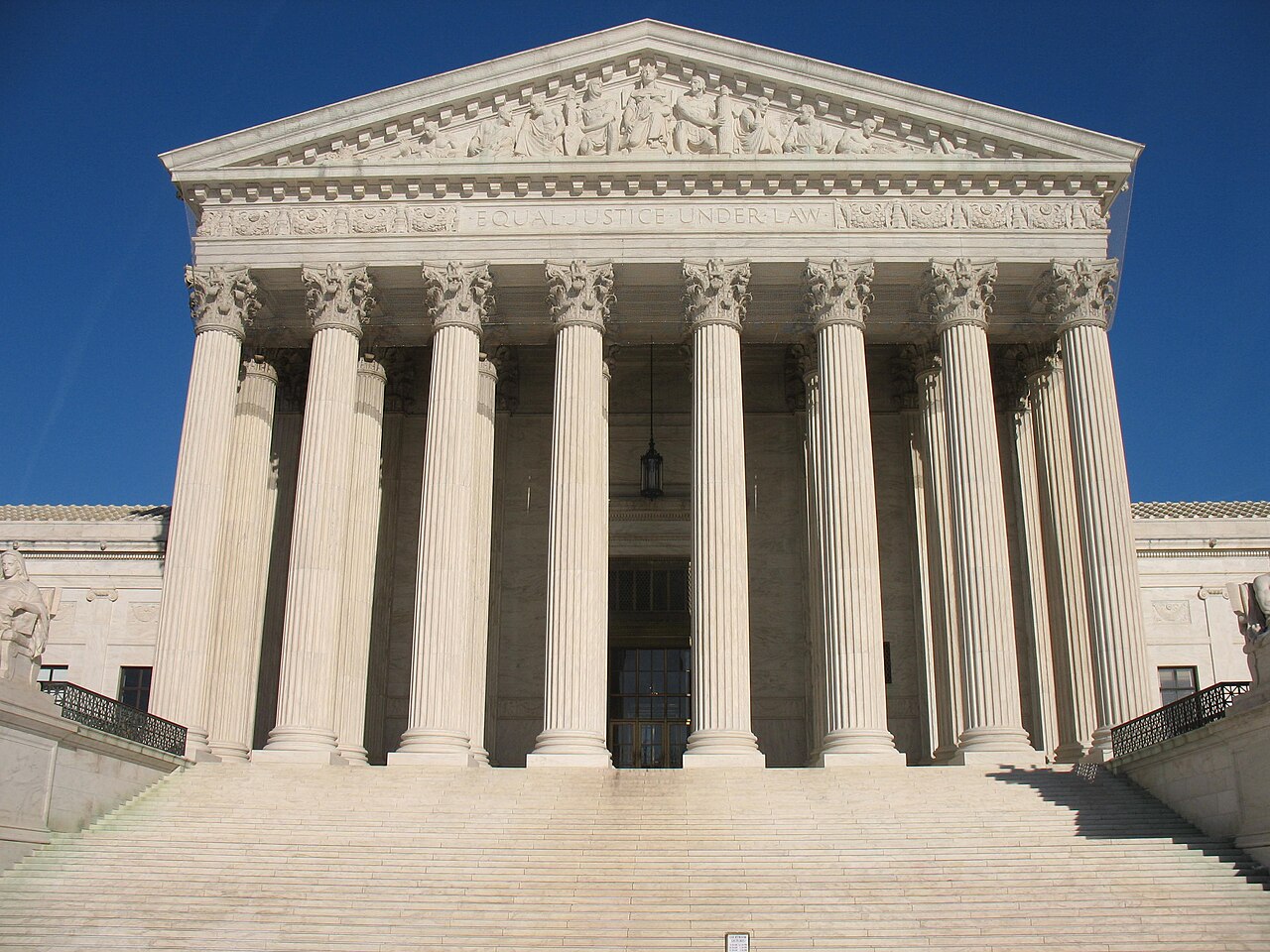
The Supreme Court is preparing to redraw the boundaries of American elections. Conservative justices have signaled they will strike down state laws that count mail-in ballots arriving days after the polls close, a move that could reshape voting procedures before the 2026 midterms.
The decision would require all ballots to be received by Election Day, establishing a nationwide standard affecting 14 states that currently permit late arrivals. The ruling marks a direct challenge to pandemic-era voting expansions that Democrats sought to make permanent.
During March oral arguments, Justices Samuel Alito, Neil Gorsuch, and Brett Kavanaugh expressed sharp skepticism about grace-period laws. The justices questioned whether extended counting windows preserve or undermine public confidence in election outcomes.
"We don't have Election Day anymore," Justice Alito stated. "We have election month or we have election months."
Justice Kavanaugh warned that "if the apparent winner the morning after the election ends up losing due to late arriving ballots, charges of a rigged election could explode."
The Trump administration filed an amicus brief supporting the challengers, reinforcing a growing consensus that Election Day should mean exactly one day for casting and receiving ballots. U.S. Solicitor General D. John Sauer argued that "Mississippi's theory of election is so general and permissive that it would authorize statutes that Congress could not possibly have approved in the 19th century."
The case, Watson v. Republican National Committee, challenges Mississippi's law allowing ballots to be counted up to five days after elections if postmarked by Election Day. Mississippi enacted the provision in 2020 as part of pandemic-era election changes.
The Fifth Circuit Court of Appeals ruled in October 2024 that federal law preempts the state statute. The court found ballots must be both cast and received by Election Day.
Four Republican-controlled states already tightened their rules in 2025 to require Election Day receipt: Kansas, North Dakota, Ohio, and Utah. Mississippi Governor Tate Reeves signed H.B. 908 in March as a trigger law requiring ballots to be received the day before Election Day if the Supreme Court strikes down the grace period.
These state-level changes reflect a fundamental shift away from the extended voting periods that emerged during the COVID-19 pandemic. Lawmakers across the political spectrum are reconsidering temporary measures that voters may not have wanted to keep.
Grace-period laws originated as emergency pandemic responses, but Democrats pushed to institutionalize them. The party sought to expand mail-in voting without adequate safeguards against late manipulation.
The current Supreme Court challenge represents a victory for election security and a rejection of efforts to permanently alter traditional voting timelines. Voters in states affected by the potential ruling are watching closely, knowing the decision could change how they participate in every future election.
More than 750,000 ballots were received after Election Day in 2024 across 13 states that provided data, according to Votebeat analysis. California counted 373,116 late ballots, representing 2.3 percent of its total votes. Illinois processed 106,521 late ballots, while Washington counted approximately 120,000 ballots that arrived after Election Day. Mississippi saw only 1,140 late ballots, just 0.1 percent of its total.
The numbers reveal stark differences in how states handle late arrivals. Some states process hundreds of thousands of ballots that arrive after the polls close, while others see minimal delays.
"Watson v. RNC is about a simple principle: ballots must be received by Election Day," said Ally Triolo, RNC Election Integrity Communications Director. "This prevents elections from dragging on for days and weeks after voters have cast their ballots, causing confusion and undermining our elections. 83 percent of voters agree ballots should be in by Election Day, and 78 percent say it makes elections more secure."
The Supreme Court's decision, expected by the end of June, could establish a precedent affecting not just the 14 states with grace-period laws for all voters, but also the 29 states that offer similar provisions for military and overseas voters. The ripple effects would extend far beyond the ballot box.
Justice Gorsuch noted that "if history teaches anything, as soon as anything is allowed, it will happen," suggesting a slippery slope toward indefinite voting periods. His words echo concerns from election administrators who have watched grace periods expand beyond their original scope.
Chief Justice John Roberts and Justice Amy Coney Barrett emerged as potential swing votes during arguments. Roberts questioned whether there was "any limit" to how early ballots could be cast if Election Day wasn't strictly defined. Barrett asked whether Mississippi's definition of "final choice" would preclude states from adopting laws allowing neighborhood ballot collectors to deliver votes to the ballot box.
Their votes could determine whether the Court establishes a clear nationwide standard months before crucial 2026 congressional races. A ruling before Election Day would give states time to adjust procedures and inform voters of new requirements.
"This is the most important Supreme Court election integrity case in a generation," said Tom Fitton, president of Judicial Watch. "The pandemic spread of states counting late ballots received after Election Day is a flagrant violation of long-standing federal law that not only encourages voter fraud but also severely undermines public confidence in our elections."
For Americans who take pride in showing up to vote on a single day, the Court's decision could reaffirm a tradition that binds the country together. Election Day is more than a logistical date. It is a moment when citizens participate in self-governance, shoulder to shoulder, trusting that the results reflect the will of the people.