Supreme Court Declines to Block New York Gun Liability Law
The Supreme Court declined to review a challenge to New York's gun manufacturer liability law, preserving a ruling that could open lawful firearms businesses to costly state-level lawsuits across the country.
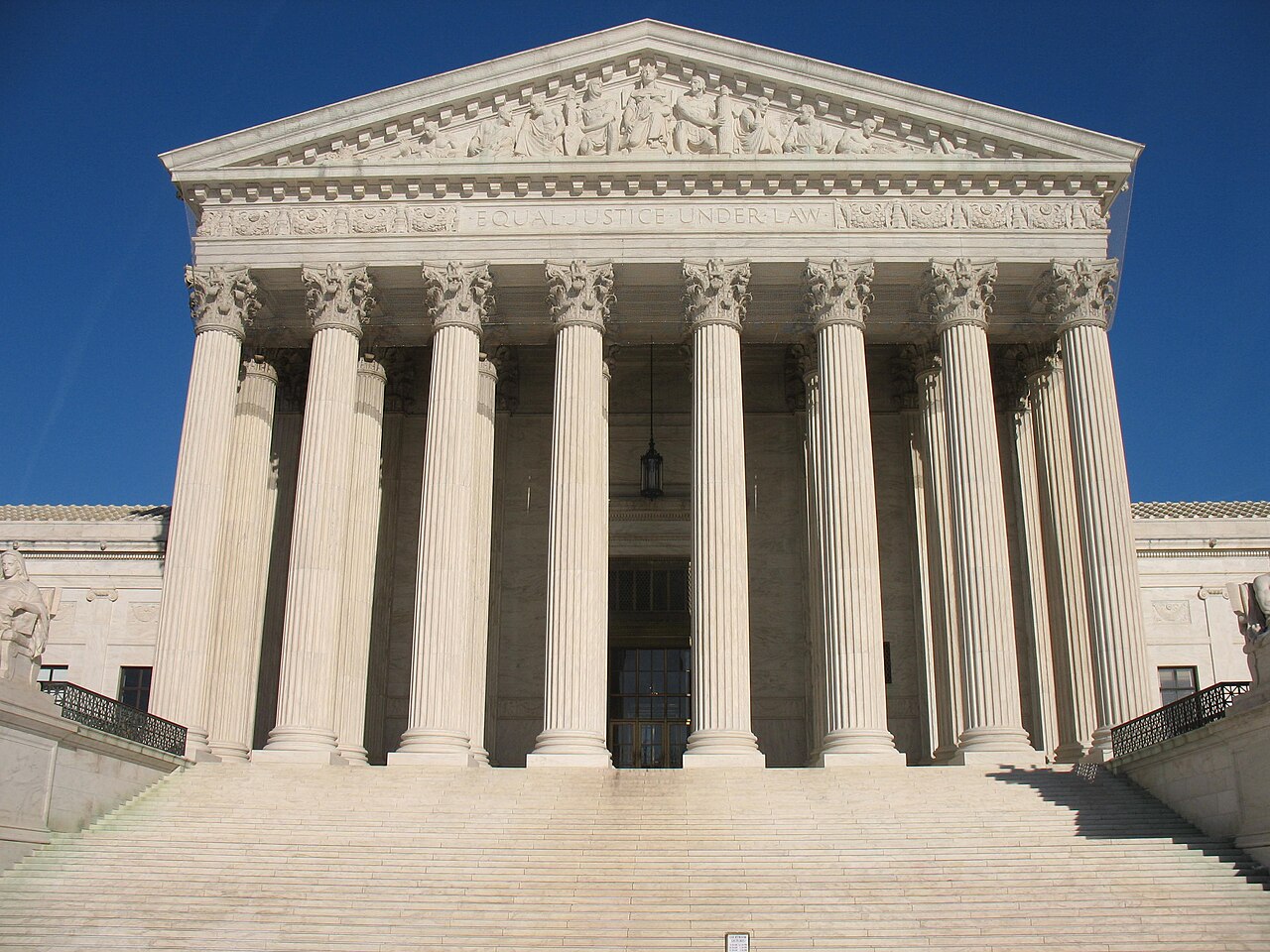
The Supreme Court's refusal to act on June 15 left gun manufacturers facing a legal system weaponized against lawful business. By declining to review a lower court ruling, the justices preserved a New York law that strips federal protections from firearms companies and hands blue states the tools to target the industry through civil litigation. The decision signals a troubling path forward for a sector that already fights an uphill battle in the courts.
The court denied certiorari in National Shooting Sports Foundation v. James on Monday without a dissenting opinion. The ruling leaves intact a Second Circuit decision that expanded state power over gun manufacturers at the expense of federal law. The NSSF and 14 major firearms companies had challenged New York's 2021 statute, arguing it violates congressional intent and constitutional protections.
The stakes extend far beyond New York's borders. At least 10 states have already passed similar gun industry accountability laws, including California, New Jersey, Delaware, Colorado, Hawaii, Illinois, Washington, Maryland, Virginia and Connecticut. Three more states are considering measures of their own. The Supreme Court's silence provides a legal blueprint for anti-gun states to advance their agenda through lawsuits rather than legislatures.
Then-Gov. Andrew Cuomo signed the law with the stated goal to "reinstate the public nuisance liability for gun manufacturers" that Congress prohibited. He said the measure would "right the wrong" done by the Protection of Lawful Commerce in Arms Act, or PLCAA. The 2005 federal statute shields gun manufacturers from lawsuits when their products are criminally misused. New York's law carves out a private right of action against manufacturers who fail to implement "reasonable controls" to prevent firearms from reaching criminals.
The Second Circuit, led by Biden appointee Judge Eunice Lee, ruled that New York's public nuisance statute falls within PLCAA's "predicate exception." The court said states may codify common-law nuisance claims in gun-specific legislation. The decision directly contradicts rulings from the Ninth and D.C. Circuits, which held that PLCAA preempts such claims. Judge Dennis Jacobs, a George H.W. Bush appointee, concurred reluctantly while calling New York's approach "an attempt to end-run PLCAA."
"They know these laws are unconstitutional," said Lawrence G. Keane, NSSF senior vice president. "They know they violate the PLCAA. They don't care. The goal is to bleed the industry dry through endless litigation."
The financial toll on lawful businesses arrives with alarming speed. A recent Buffalo settlement forced a magazine manufacturer to pay $1.75 million and resulted in the closure of a gun dealer. New York Attorney General Letitia James has deployed the statute against ghost gun creators and sellers, while multiple cities have filed similar actions against manufacturers. Each lawsuit drains resources from companies that sell products legally to millions of law-abiding Americans.
Judge Jacobs warned in his concurrence that New York "has now contrived a broad public nuisance statute that applies solely to 'gun industry members' and is enforceable by a mob of public and private actors." He added that "the intent of Congress when it closes a door is not for States to thus jimmy a window."
NSSF spokesperson Mark Oliva compared the liability standard to holding Anheuser-Busch and Ford Motor Company responsible for damages from drunk-driving crimes. The industry group drew support from 24 Republican state attorneys general and several dozen Republican members of Congress. The NSSF itself argued the law violates the dormant Commerce Clause and the Due Process Clause of the Fourteenth Amendment.
The Supreme Court offered a warning last year in Smith & Wesson v. Mexico, a unanimous 2025 decision. The justices cautioned that PLCAA's predicate exception cannot be read "capaciously" or it "would swallow most of the rule." Yet the court declined to resolve the circuit split created by the Second Circuit's expansive interpretation.
New York's law applies to any person or entity "engaged in the sale, manufacturing, distribution, importing or marketing" of firearms or ammunition in the state. It mandates screening, security, and inventory practices to prevent thefts. The statute also prohibits sales to straw purchasers, traffickers, or prohibited persons.
Without Supreme Court intervention, anti-gun states will continue using the courts to circumvent federal law. The financial viability of lawful gun manufacturers nationwide now faces systematic targeting through state-level litigation campaigns. These lawsuits seek to achieve through the courts what cannot pass through legislatures.