Treasury Targets Illegal Immigrant Money Trail Through Banks
The Treasury Department ordered banks to monitor for financial patterns linked to illegal immigrant labor networks, targeting the money trail that sustains unauthorized employment and evades billions in payroll taxes.
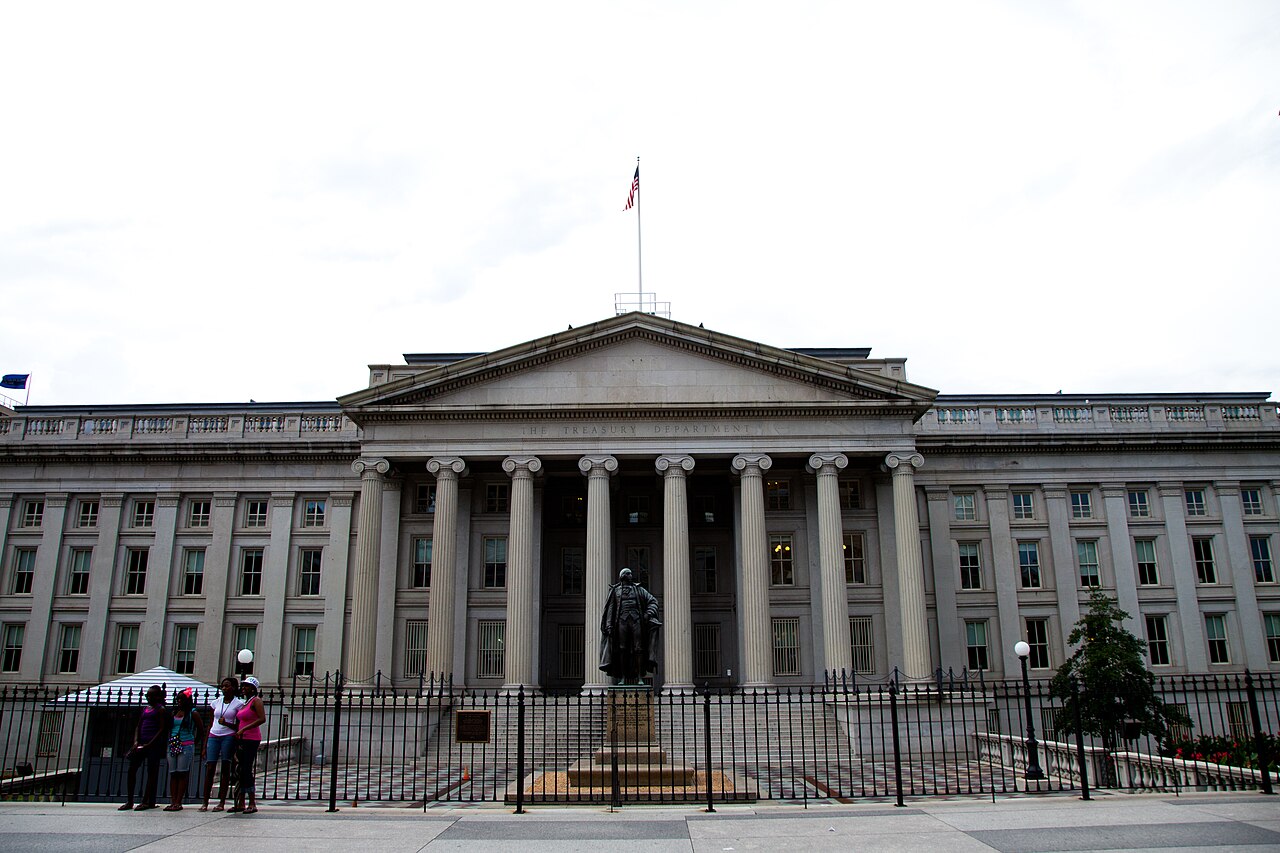
The Treasury Department has ordered banks to hunt for something they never tracked before: signs that customers are funneling money through American financial institutions to support illegal immigrant labor networks. The June 5 directive targets the banking channels that sustain unauthorized employment, shifting enforcement from the border to the money trail. It marks the latest move by the Trump administration to strike at the financial infrastructure that keeps illegal labor markets operating.
American banks reported more than $2.5 billion in suspicious activity connected to payroll fraud in 2025, FinCEN data shows. The Treasury's Financial Crimes Enforcement Network advisory now tells banks, credit unions, money services businesses, casinos and other institutions to watch for 18 red flags linked to illegal immigrant labor networks. The advisory enforces President Trump's May 19 executive order 14406, "Restoring Integrity to America's Financial System," which tasks agencies with dismantling financial networks that support unauthorized employment.
One case reveals the scale. Iris Villafranca and Osman Donaldo Zapata, both Honduran nationals, received 204-month and 51-month prison sentences in April for running a years-long off-the-books payroll operation. Their shell companies cashed $89 million in checks from construction subcontractors while dodging $38 million in payroll taxes from 2015 to 2022, Justice Department records show. "Schemes to pay unlawful workers often rely upon access to the U.S. financial system, including U.S. banks," Treasury Secretary Scott Bessent said June 5.
Labor brokers operating these schemes typically set up shell companies, often as unregistered money services businesses, to process off-the-books payroll. Employers write checks to those shell companies. The brokers take a 4 to 10 percent cut and pay workers in cash or through peer-to-peer platforms, skipping all federal and state payroll tax withholdings. The advisory warns these operations also suppress wages, enable identity theft of American citizens and can funnel money to transnational criminal organizations designated as Foreign Terrorist Organizations.
Executive Order 14406 carries four main directives, and the June 5 advisory fulfills the first. The Consumer Financial Protection Bureau has 60 days to consider whether deportation risk should factor into "ability-to-repay" lending standards. Treasury has 90 days to propose changes to Bank Secrecy Act customer due diligence rules. Regulators have 180 days to examine customer identification programs, including concerns about foreign consular identification cards. Section 3(b)(ii) allows banks to request immigration status information when assessing fraud risk, though it does not require them to do so.
"President Trump has done more than anyone in history to secure our nation's borders," Bessent wrote in the June 5 Treasury press release. "Part of that effort includes securing our financial system." Bessent pressed the point more bluntly during an April 15 interview with CNBC. "Why can unknown foreign nationals come and open a bank account? Our bank executives' job is to know your customer. How do you know your customer if you don't know if they have legal or illegal status?"
Congress is moving beyond the executive branch's advisory approach. Sen. Tom Cotton introduced the "Know Your American Customer Act" on March 25, mandating that banks verify citizenship or lawful presence and criminalizing account access for unauthorized immigrants. Rep. Keith Self filed a companion bill in the House on May 14. "Access to America's financial system is reserved for those who respect our laws — not for illegal aliens who break them," Self said in a May 14 press release.
Banks never collected customer citizenship or immigration status information, leaving a blind spot that complicit employers exploited. The advisory carries no legal force but holds supervisory weight. Institutions that ignore the guidance risk regulatory scrutiny. Banking groups viewed the advisory approach as a "partial win" after lobbying against mandatory citizenship verification. The American Action Forum estimates a verification mandate would add 30 to 70 million paperwork hours and cost banks $2.6 to $5.6 billion.
The stakes extend well beyond immigration enforcement. The IRS calculated the 2022 employment tax gap at $127 billion. A Federal Reserve Bank of San Francisco study found unauthorized immigrant worker flows produced nearly a one-for-one effect on local employment growth, with the sharpest impacts in construction, manufacturing, leisure and hospitality. Labor brokers and employers running these schemes gain an unfair edge over law-abiding businesses. American taxpayers cover the cost of stolen payroll revenue.
The advisory creates no new obligations, but it signals that FinCEN will watch closely for institutions that overlook these patterns. Banks must include the reference code "FINANCIALINTEGRITY-2026-A002" in suspicious activity reports tied to the advisory's typologies. "As no single red flag is determinative of illicit or suspicious activity, no single red flag should be taken in isolation," the advisory states on page 9.
Bessent's message leaves no ambiguity about the administration's intent. "If you're here illegally, there's no place for you in our financial system," he told Fox Business in November 2025. "Illegal aliens that use our financial institutions to move their illicitly obtained funds is exploitation, and it will end."