UK Government Builds Crisis Censorship Powers Without Defining Crisis
The UK government is constructing emergency censorship powers that allow ministers to suppress online speech during undefined crises, building on existing surveillance infrastructure that has already targeted journalists and critics.
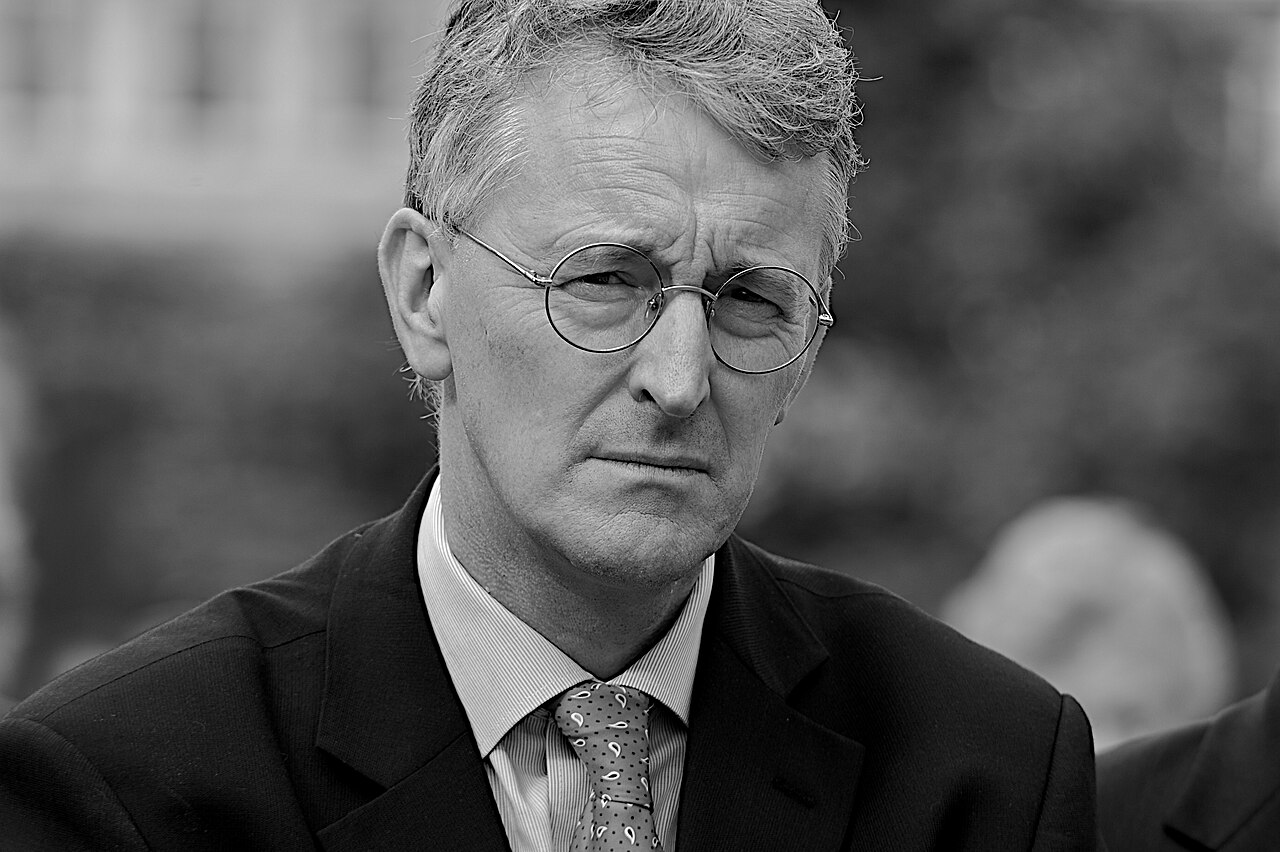
Northern Ireland Secretary Hilary Benn could not define what constitutes a "time of crisis" when Times Radio asked him last week. His answer — "that will be set out in due course" — exposed the reality of a government assembling emergency censorship powers with the trigger mechanism deliberately left blank. The UK is building a crisis-era censorship framework that will permit ministers and regulators to suppress online speech whenever they declare an emergency.
Benn confirmed on June 11 that Ofcom will target "false information" during crises. "If people are putting online false information...it is not acceptable and it may well be a criminal offence depending on the circumstances," he stated. That declaration follows Ofcom's June 9 announcement of crisis response protocols requiring platforms to deploy temporary response teams, conduct post-crisis analysis and maintain dedicated law enforcement communication channels during declared emergencies.
Ofcom defines a crisis as "an extraordinary situation in which there is a serious threat to public safety in the United Kingdom." The regulator states these protocols "must go through a parliamentary process" before taking effect, though no timeline exists. While the official language addresses "illegal content," Benn's confirmation extends the scope to "false information," a far broader category that leaves ordinary citizens wondering where lawful criticism ends and criminal speech begins.
This matters now because the government is not starting from scratch. The UK already operates sophisticated domestic speech monitoring infrastructure that has expanded well beyond its original mission. The Counter Disinformation Unit was created in 2019 within DCMS to monitor foreign disinformation threats. The Rapid Response Unit served from 2018 to 2022 as a "digital cuttings service." Both units were publicly documented by GOV.UK fact sheets in June 2023.
Big Brother Watch's "Ministry of Truth" report in January 2023 revealed these units conducted mass political monitoring of domestic debate. The civil liberties group documented that CDU and RRU flagged journalists, politicians and academics who criticized government policies. Among the targets were David Davis MP, Peter Hitchens and Professor Carl Heneghan.
These individuals also experienced platform censorship. Davis' YouTube speech against vaccine passports was scrubbed. Hitchens claims his lockdown criticism was suppressed from search results. Heneghan was temporarily suspended on Twitter.
The 77th Brigade's operational costs nearly doubled from £7.563 million in 2015-16 to £14.523 million in 2023-24, reflecting an expanded information operations role. Silkie Carlo, director of Big Brother Watch, warned the government's plans represent "a crossing of the Rubicon that would make the UK one of the most authoritarian internet regimes in the world."
The current push for crisis protocols follows the 2024 Southport riots, where misinformation about attacker Axel Rudakubana's identity fueled violence across England and Northern Ireland. The Commons Science, Innovation and Technology Committee recommended Ofcom crisis protocols in October 2025 after finding "misleading and hateful messaging proliferated rapidly online, amplified by the recommendation algorithms of social media companies."
Technology Secretary Liz Kendall said in early June the government is "looking at what more we can do" regarding misinformation during crises, including "enabling people to reset their algorithms." Chi Onwurah, chair of the SIT Committee, stated "The Online Safety Act to be woefully inadequate and riddled with regulatory gaps...a year after its publication, no progress has been made to update the OSA."
Recent unrest connected to the Henry Nowak case and Belfast stabbing accelerated the crisis protocol implementation. Ofcom's open letter of June 11 directly addressed the Belfast situation, noting "previous crises have shown how a sudden increase in the amount of illegal content circulating online can manifest in hate crime and violence in the real world."
The legal framework already exists for ministers to act without parliamentary approval. The Cabinet Office's Amber Book defines "emergency" and "crisis" interchangeably under the Civil Contingencies Act 2004, covering situations that "have not yet been harmful but have the potential to be." No fresh parliamentary vote is required. This existing framework allows ministers to designate emergency conditions unilaterally, bypassing the oversight that Ofcom's protocols supposedly demand.
Alongside crisis protocols, the government is advancing multiple surveillance initiatives. Mandatory phone scanning and digital ID requirements are in development for all phones. Separate jail threats now loom for tech CEOs who fail to comply with Ofcom orders on intimate image removal. Police.AI — a £115 million National Centre for AI in Policing — consolidates AI capabilities across 43 forces for tools including live facial recognition, deepfake detection and predictive analytics. Together, these elements form a coordinated surveillance and censorship infrastructure.
Signal's president Meredith Whittaker stated the company would "absolutely, 100% walk" from the UK rather than weaken encryption. The convergence of political monitoring infrastructure, platform regulation with crisis protocols and AI-powered police capabilities creates a comprehensive apparatus for identifying, tracking and suppressing speech during government-declared emergencies.
The infrastructure, legal framework and political will for emergency speech controls are all in place. The safeguards Parliament was supposed to provide have been systematically weakened, leaving ministers with unchecked authority to suppress speech whenever they decide public debate is becoming inconvenient.