Federal Courts Block Blue State ICE Obstruction Laws
Federal judges are dismantling state laws that dictate how ICE officers perform their duties, blocking a coordinated campaign by blue-state politicians to obstruct immigration enforcement while exposing officers to documented threats.
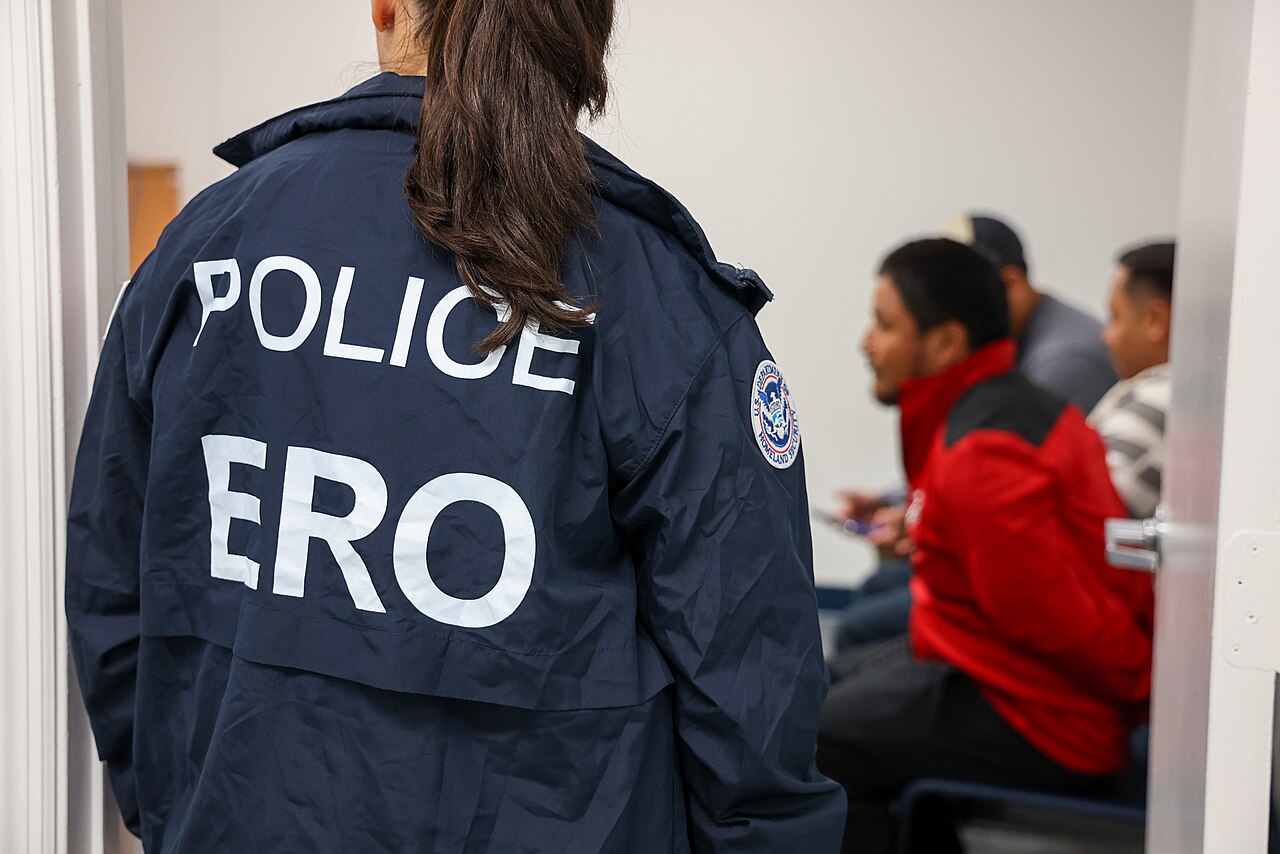
Federal judges are dismantling state laws that dictate how Immigration and Customs Enforcement officers perform their duties. The courts rejected a coordinated campaign by progressive governors to obstruct immigration enforcement and violate constitutional doctrine. Blue-state politicians deliberately flout the Supremacy Clause to shield illegal immigrants from federal authority. Federal courts now serve as the only barrier to this constitutional crisis.
Senior U.S. District Judge Robert E. Payne blocked Virginia's mask and identification law on June 30. He found it "directly regulates the conduct of federal law enforcement" and violates "the U.S. Constitution's supremacy clause." His ruling follows the 9th Circuit's permanent injunction against California's No Vigilantes Act on April 22. Judge Christina Snyder blocked California's No Secret Police Act on Feb. 9. These decisions establish a clear pattern: federal courts systematically reject state attempts to regulate federal officers.
"There is a long-standing doctrine in constitutional law known as federal supremacy," constitutional law professor Josh Blackman told The Washington Examiner. "Federal law is the supreme law of the land." Blackman characterized the state laws as "virtue signaling" by Democratic-led states wanting "to show voters they are pushing back against the Trump administration's immigration policies even if courts ultimately block the measures."
Six jurisdictions passed nearly identical laws in nine months. California led in September 2025. Philadelphia followed in April 2026, then New Jersey in March 2026. Connecticut and Virginia enacted theirs in May 2026, and New York joined that same month. All require ICE agents to unmask and display identification during operations. Some impose state use-of-force policies on federal officers. The uniformity suggests political coordination rather than independent policy decisions.
States are forcing officers to remove protective measures despite documented threats against federal agents. DHS reported an 8,000 percent increase in death threats against ICE officers and their families as of January. Assaults rose more than 1,300 percent. Vehicular attacks jumped 3,200 percent. Threats against ICE officials climbed 964 percent. Judge Payne found enforcement of Virginia's law "would expose federal employees to real risk of physical harm" during immigration operations.
"Law enforcement officers risk their lives every day to keep Americans safe, and they do not deserve to be doxed or harassed simply for carrying out their duties," Acting Attorney General Todd Blanche stated. Associate Attorney General Stanley Woodward Jr. added: "Governor Spanberger cannot tell federal officers how to do their job. And she certainly cannot prohibit them from ensuring their own safety in conducting Federal law enforcement operations."
The Justice Department filed lawsuits against all six jurisdictions. It argues the mask bans violate intergovernmental immunity and the Supremacy Clause. The 9th Circuit explicitly ruled California's law "attempts to directly regulate the United States in its performance of governmental functions."
White House Border Czar Tom Homan contrasted cooperation patterns between states. "We're working very well with red states," Homan stated. "Blue states are still a struggle. Places like New York. ICE and CBP can't even get access to the DMV database to run the checks." As of March 2, ICE reported 1,493 active 287(g) cooperation agreements with local police across 40 states. Tennessee granted funds to agencies working with ICE. Kentucky lawmakers moved to require local cooperation.
State officials defended their laws as necessary for transparency. "Flagrant abuses of power by ICE will not stand in New York," Hochul said when signing the immigration plan. She declared separately: "New Yorkers deserve to know who is enforcing the law in their communities," in a June 23 statement about the lawsuit. Gov. Abigail Spanberger argued masked agents "sow fear and confusion and erode the public trust." She criticized "fear-based policing and enforcement theatre on American streets."
UCLA law professor Eugene Volokh noted the likely outcome: "Generally speaking, states cannot tell the federal government what to do." He suggested states enact doomed laws to "communicate to voters: 'We're on your side. Maybe the federal government will stop us, but we're at least trying.'"
The conflict represents a broader Democratic strategy to create sanctuary jurisdictions shielding illegal immigrants from enforcement. The DOJ designated 13 state-level jurisdictions, four counties, and 18 cities as sanctuary jurisdictions. This pattern demonstrates a political movement prioritizing ideology over constitutional governance and officer safety. Behind every mask mandate and identification requirement stands a federal agent who risks physical harm to enforce the law. Federal courts remain their only protection against political obstruction.