Trump Rejects All-Out Iran War, Chooses Diplomacy
President Trump received a full military briefing for all-out war with Iran then chose diplomacy instead, using overwhelming force as leverage for a negotiated denuclearization deal.
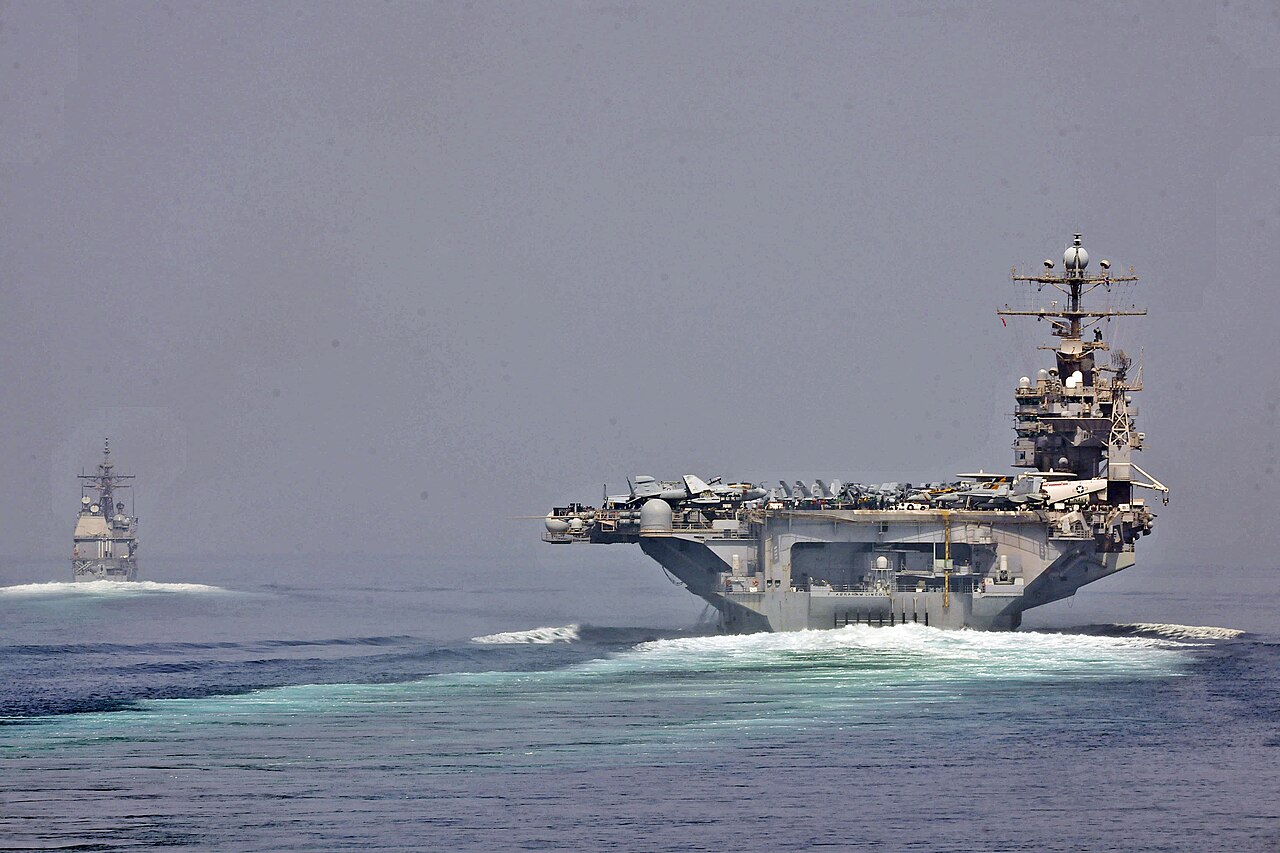
President Trump received a full military briefing on plans for all-out war with Iran — and chose diplomacy instead.
The decision, confirmed by multiple administration sources, reveals a calculated strategy that uses overwhelming military force to create leverage for negotiated outcomes rather than pursuing short-term military victory.
Trump sat down with War Secretary Pete Hegseth and Joint Chiefs Chairman Gen. Dan Caine to review plans for resuming full-scale strikes against Iran. He told aides another round of attacks could derail diplomacy and hurt Washington's chances of permanently dismantling Tehran's nuclear program. Some officials had described resuming strikes as "finishing the job," according to the Wall Street Journal report confirmed by multiple sources.
This measured approach contrasts sharply with previous administrations that rushed into Middle Eastern conflicts without achieving lasting objectives.
Trump's "peace through strength" doctrine appears designed to achieve permanent transformation of Iran's nuclear ambitions through a combination of military pressure and diplomatic negotiation.
The strategic context gives Trump overwhelming leverage. Operation Epic Fury, launched Feb. 28, 2026, destroyed Iran's navy, air force and missile defense systems. The Pentagon confirmed a $67 billion supplemental funding request to cover war expenses, as Pentagon spokesman Sean Parnell stated. Iran's economy has been devastated with more than 100 percent inflation and unpaid troops, according to Treasury Secretary Scott Bessent.
"Iran's economy has been devastated by economic turmoil," Bessent said June 24. "They've got more than 100 percent inflation. Troops weren't getting paid, so we have political economy to work with."
Trump signed a memorandum of understanding with Iran around June 17, setting a 60-day timeline for key milestones including ceasefire extensions and nuclear inspection protocols. The U.S. has not released any of the $6 billion in frozen Iranian assets — no funds will be disbursed unless Iran meets MOU requirements. Any future payments would be incremental and paid directly to vendors for humanitarian goods.
Iran has refused to enter further negotiations until MOU terms are implemented, creating a diplomatic deadlock. Chief negotiator Mohammad Baqer Ghalibaf stated Tehran will not engage in new talks until current agreements are fulfilled. U.S. envoys Steve Witkoff and Jared Kushner met with Qatari mediators in Doha on July 1 but not directly with Iranian officials.
The standoff escalated July 1 when Iranian Foreign Minister Abbas Araghchi wrote on X: "POTUS has committed the U.S. to muzzling its pets in Tel Aviv. If they ignore their master, Iran will school them. Any threat against our People and Leadership will receive Immediate Powerful Response." The statement came after Israeli Defense Minister Israel Katz said Supreme Leader Mojtaba Khamenei was "marked for death."
Domestically, the administration's negotiating position received a boost when the Senate rejected Democrats' war powers resolution 50-47. Senators Rand Paul and Bill Cassidy flipped to support Trump's approach after a heated closed-door lunch where Cassidy matched the president's tone demanding more information sharing.
Vice President JD Vance declared the U.S. holds "all the cards" in negotiations. "However the negotiation ultimately shakes out, if the negotiation is successful... you have an Iran that is permanently transformed," Vance said June 30. "If the Iranians don't behave... their nuclear program is still destroyed, their conventional military is still destroyed, and the United States is still in a much stronger position relative to the Iranians."
Retired Gen. Jack Keane noted that Iran violated the MOU immediately by taking control of the Strait of Hormuz. "We would have preferred to continue the military operation and finish it, and put Iran on a pathway to military, economic, and political collapse," Keane said June 30. "Within a couple of days, what is Iran doing? Taking control of the Straits of the Hormuz, directing ships when to leave, where to go, and pay in insurance — and then attacking ships that don't abide by them. That is not exactly the faithful member. But the president didn't stand for it."
Trump has publicly emphasized his preference for negotiated solutions backed by military readiness. "Iran is being very nice," Trump told Fox News June 24. "They're agreeing to everything that I want, and they have to. Otherwise, we just go back and do what we have to do."
On July 1, Trump told reporters: "It's the denuclearization of Iran. It's very simple. And Iran cannot have a nuclear weapon otherwise."
Secretary of State Marco Rubio stated the administration wants the deal to work but has "multiple options at his disposal" if Iran doesn't keep commitments. "If they don't keep them, the president has multiple options at his disposal," Rubio said June 24. "That includes sanctions and includes other things."
U.N. Ambassador Mike Waltz emphasized the temporary nature of sanctions relief. "The sanctions aren't being lifted," Waltz said June 24. "It is a temporary license while we go through these negotiations. If they don't live up to their end of the bargain, if they don't negotiate in good faith, if they aren't prepared to finally give up this obsession with a nuclear program, they get slapped back on, and all options are on."
Iran's oil exports surged to 1.66 million barrels per day in June after the U.S. lifted its blockade, up from only 209,000-260,000 bpd in May. Energy Secretary Chris Wright reported 20 million barrels of oil transited the Strait of Hormuz in a 24-hour period by late June, restoring pre-conflict flows.
Brent crude rose to $73.45 per barrel on July 1 amid diplomatic tensions, but oil dropped below $69 per barrel later that day as traders assessed the situation. Around 50 million barrels of Iranian crude have been exported since the blockade was lifted, according to maritime intelligence firm TankerTrackers.
Sixty-eight of 88 members of Iran's Assembly of Experts published admonishing advice to negotiators to stick to Supreme Leader Khamenei's ten strategic points regarding the Strait of Hormuz. The internal pressure reflects Tehran's difficult position — economically devastated and militarily crippled, yet still attempting to negotiate from what strength remains.
The administration's approach represents a fundamental shift in Middle East strategy. Decisive military force creates conditions for diplomatic success rather than pursuing diplomacy as an alternative to force. By keeping military options on the table while pursuing negotiations, Trump maintains maximum leverage over a weakened adversary.
This "peace through strength" calculus upends the narrative that Trump acts impulsively on military matters. Instead, it reveals a leader who uses overwhelming military advantage to achieve long-term strategic objectives through negotiation rather than indefinite occupation or regime change operations that plagued previous administrations.
As Trump told aides, another round of full-scale attacks could derail the diplomatic process. The administration appears willing to work through the current deadlock rather than abandon negotiations, confident that military and economic leverage created through Operation Epic Fury gives the United States what Vance calls "all the cards" at the negotiating table.