Former Google Engineer Convicted of Stealing AI Secrets for China
A federal jury convicted Linwei Ding on 14 counts for stealing Google's proprietary AI technology and passing it to Chinese companies, marking the first AI-related economic espionage conviction in U.S. history.
A former Google engineer walked out with thousands of pages of America's most sensitive artificial intelligence technology — not through cyber attacks but by exploiting corporate trust built for innovation, not protection.
Linwei Ding, 38, became the first person convicted on AI-related economic espionage charges in U.S. history on Jan. 30, 2026, after a federal jury found him guilty on 14 counts. The Chinese national stole more than 2,000 pages of Google's proprietary AI infrastructure secrets during an 11-month operation while secretly negotiating with Beijing-based companies and founding his own Shanghai startup.
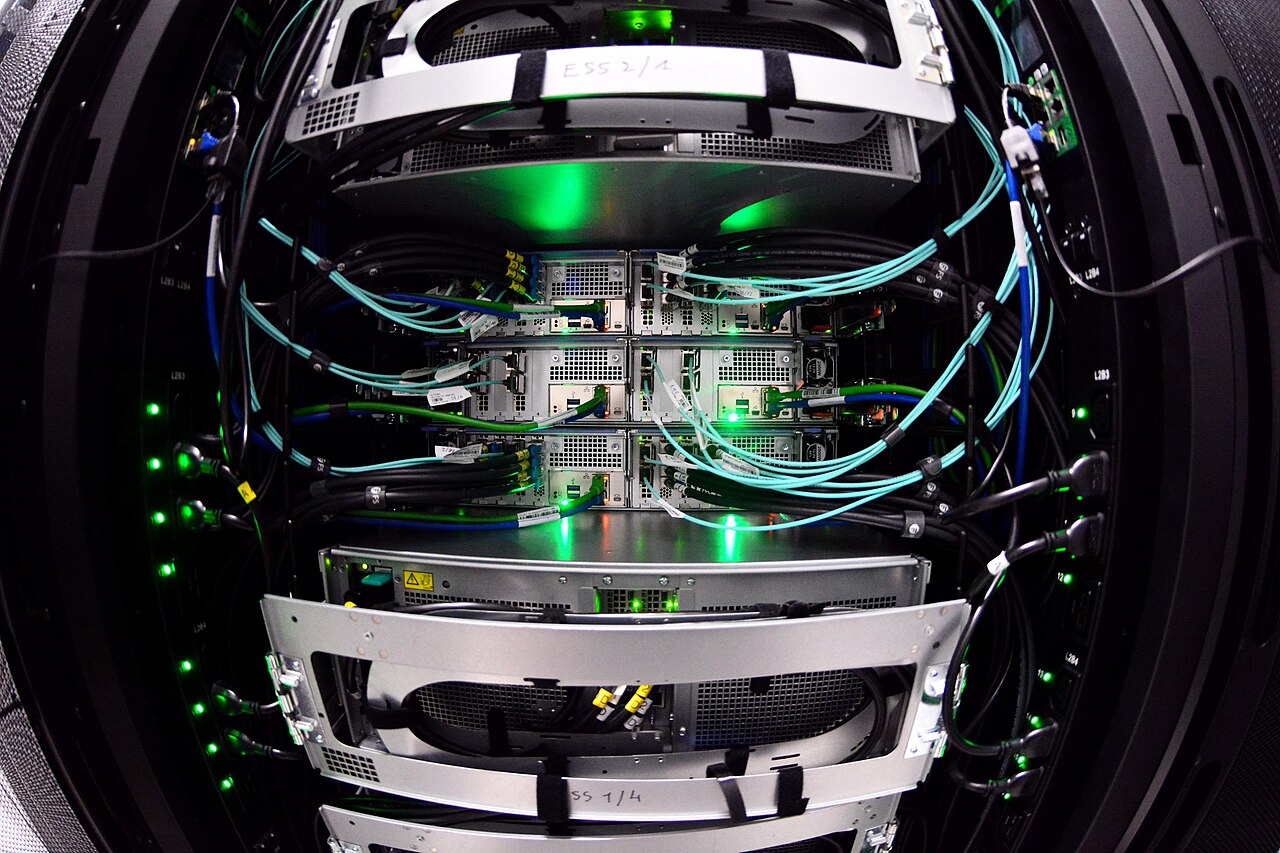
The conviction exposes a calculated breach of trust involving some of the world's most advanced AI technology at a critical moment in AI development, according to John A. Eisenberg, assistant attorney general for national security. Prosecutors documented Ding's systematic theft of Google's Tensor Processing Unit chips, SmartNIC networking hardware, and cluster management software that powers the company's AI supercomputing capabilities.
"In today's high-stakes race to dominate the field of artificial intelligence, Linwei Ding betrayed both the U.S. and his employer by stealing trade secrets about Google's AI technology on behalf of China's government," said Roman Rozhavsky, FBI assistant director of counterintelligence and espionage.
Evidence revealed Ding's dual-track betrayal. While employed at Google from May 2022 to April 2023, he entered negotiations to serve as chief technology officer for Beijing Rongshu Lianzhi Technology and founded his own company, Shanghai Zhisuan Technologies. His application to China's government-sponsored talent program stated a goal to "help China to have computing power infrastructure capabilities that are on par with the international level."
Ding told potential investors he could "build an AI supercomputer by copying and modifying Google's technology," according to Department of Justice records. Prosecutors argued intent alone suffices under economic espionage laws, while Ding's defense claimed Google "chose openness over security" and failed to protect its information adequately.
The case emerges against a backdrop of aggressive Chinese efforts to close the AI gap with the United States. In January 2025, Chinese startup DeepSeek released its R1 AI model, triggering a $600 billion single-day market capitalization loss for Nvidia as investors questioned U.S. technological dominance. Google DeepMind CEO Demis Hassabis acknowledged Chinese AI may be just "months behind" Western capabilities.
"To invent something is about 100 times harder than it is to copy it," Hassabis told CNBC in a recent interview.
FBI officials warn Ding's case represents a predictable pattern, not an outlier. China oversees hundreds of talent recruitment plans that incentivize scientists to share foreign technologies with state-aligned entities, according to bureau documents. Participants receive financial benefits and professional advancement in exchange for technology transfer.
The threat extends beyond corporate espionage. Nearly 30,000 visits by foreign nationals from adversarial countries to U.S. Department of Energy labs occurred between September 2021 and August 2024, according to FACTS database analysis obtained by the New York Post. Chinese nationals accounted for 28,028 visits during that period.
Ding's methods bypassed traditional security measures. He copied Google source files to his Apple Notes application, converted them to PDFs, and uploaded them to his personal Google Cloud account. He downloaded the documents to a personal computer less than two weeks before resigning from Google in December 2023 and booked a one-way ticket to Beijing.
"Silicon Valley is at the forefront of artificial intelligence innovation, pioneering transformative work that drives economic growth and strengthens our national security," said Craig H. Missakian, U.S. attorney for the Northern District of California. "The jury delivered a clear message today that the theft of this valuable technology will not go unpunished."
Ding faces up to 15 years imprisonment for each of seven economic espionage charges and 10 years for each of seven trade secret theft counts. U.S. District Judge Vince Chhabria granted his release pending sentencing, determining the former engineer posed no flight risk.
"The theft and misuse of advanced artificial intelligence technology for the benefit of the People's Republic of China threatens our technological edge and economic competitiveness," said Sanjay Virmani, FBI special agent in charge of the San Francisco field office.
The conviction marks a watershed moment in addressing insider threats to America's technological leadership. Some estimates suggest Chinese espionage costs the U.S. economy up to $600 billion annually in intellectual property theft, creating competitive advantages that undermine free market principles.
Corporate security experts argue the solution lies not in increased government regulation of AI but in treating intellectual property as national security infrastructure. Companies must implement stricter insider controls, enhanced monitoring of foreign talent program participation, and aggressive counterintelligence measures while preserving the open innovation environment that drives American technological advancement.
As the technological competition intensifies, the Ding case serves as a stark reminder that America's greatest vulnerability may not be external competitors but internal access points exploited by state-backed actors. The real threat to American AI dominance emerges not from regulatory constraints but from systematic theft enabled by corporate good faith and exploited by geopolitical rivals.