American Strength Breaks Iranian Aggression in the Strait
U.S. forces shot down Iranian drones and intercepted ballistic missiles over the Strait of Hormuz as an economic blockade drains Tehran's oil revenues and cripples its war-fighting capacity.
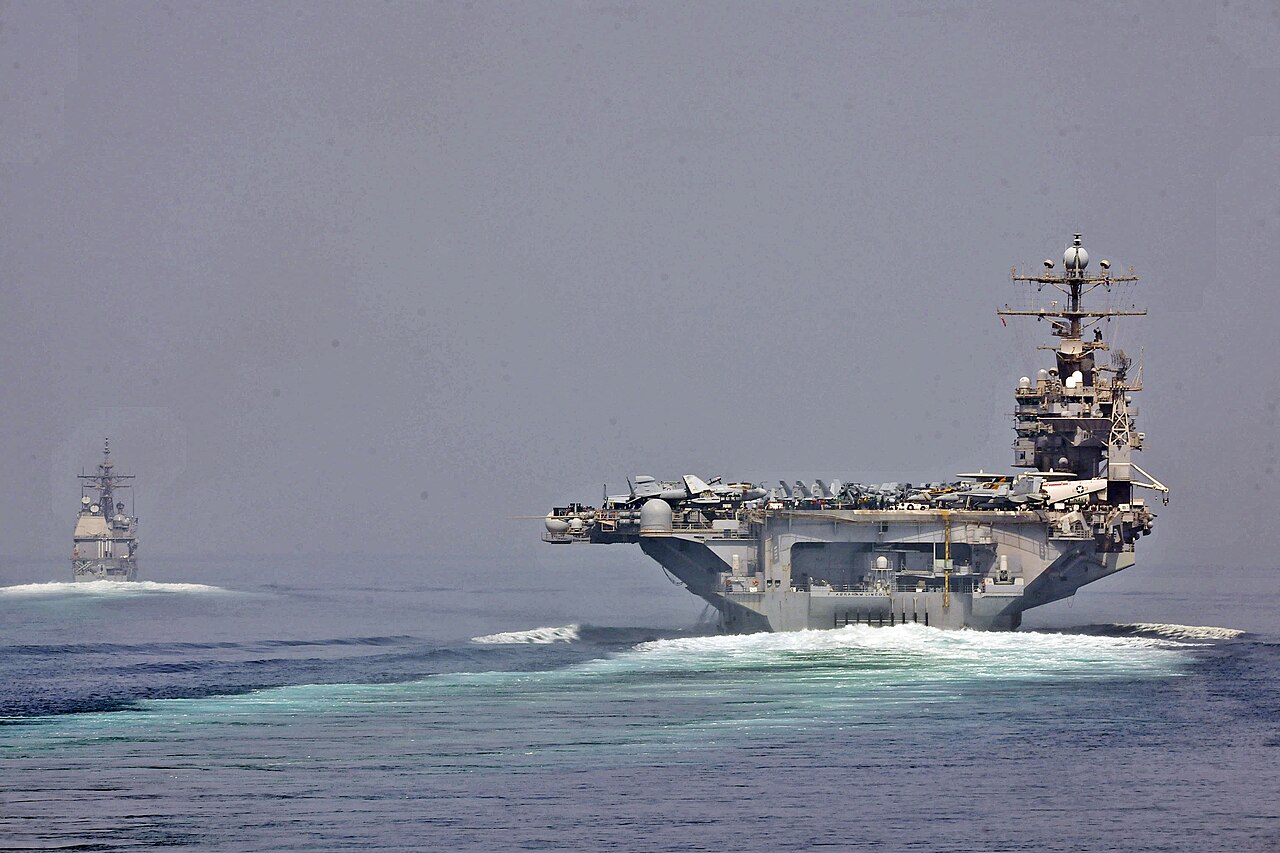
American forces shot down four Iranian attack drones and struck coastal radar sites near the Strait of Hormuz on Friday, then intercepted six of seven ballistic missiles fired in retaliation. No U.S. personnel were harmed. The strikes underscore a simpler reality: American strength is breaking Iranian aggression while Tehran's economy suffocates under the weight of its own choices.
CENTCOM forces neutralized the one-way attack drones that posed an immediate threat to regional maritime traffic. They then struck surveillance radar installations in Goruk and on Qeshm Island to defend against further attacks. Hours later, Iran fired seven ballistic missiles toward Kuwait and Bahrain. CENTCOM intercepted six; the seventh missed its target entirely.
"American forces remain vigilant and postured to respond to unjustified Iranian aggression in self-defense," CENTCOM stated.
The operation protects the critical waterway carrying one-fifth of the world's oil supply. This was not an isolated incident. It is evidence of a campaign that is working. While Iran once expanded its influence through the Obama-era nuclear deal and Biden-era concessions, U.S. military action combined with economic statecraft now forces Tehran toward submission.
Iran's economy hemorrhages under the U.S. naval blockade that began April 13. Iranian crude exports collapsed from roughly 2 million barrels per day to below 300,000 barrels per day in May. Oil revenues dropped approximately 84 percent from March to May, a loss of roughly $5.8 billion. About 147 million barrels of Iranian crude now sit in floating storage, with 67 million stranded inside the Gulf.
"The data shows the blockade is working, but the real pressure comes once that storage starts running out," energy analyst Marc Ayoub told Al Jazeera.
President Donald Trump told NBC that Iran retains only about 21 to 22 percent of its prewar missile stockpile. "It's a lot of missiles, but it's not what it was when we first attacked," Trump said. Speaking to reporters in Wisconsin, he added, "We're going to come out of Iran very quickly and it's going to be very strong one way or the other." On why Iran has not yet signed a deal, Trump stated, "Because they are strong. They're proud. There are things they never thought they'd be doing that they're going to have to do, they've got no choice, and it takes a little while."
Iran's demands for concessions contradict its documented aggression. Mohsen Rezaei, adviser to Supreme Leader Mojtaba Khamenei, told CNN that $24 billion in frozen assets was a "test of trust" Iran wants from Trump. Iran's foreign ministry claims the U.S. is "constantly changing its views and putting forward new or contradictory demands."
Yet CENTCOM documented Iranian drone launches targeting commercial shipping and ballistic missile attacks on Kuwait. Kuwaiti authorities reported the attacks killed one civilian and injured 63 at the international airport. CENTCOM directly denied Iranian claims of damaging the U.S. 5th Fleet headquarters. "Iranian claims are false," the command stated.
The U.S. protects global trade while enforcing the blockade. The Strait of Hormuz normally carries roughly 20 million barrels of oil and refined product daily. Iran has effectively blocked the strait, reducing vessel transits by more than 90 percent. U.S. forces have redirected 121 commercial vessels and disabled five to ensure blockade compliance. Kuwait received a $1.98 billion State Department-approved counter-UAS systems sale this week as its air defenses confronted hostile attacks. Sirens sounded across Bahrain during the missile barrage.
"U.S. forces continue to operate freely in regional waters while fully enforcing the ongoing blockade against Iran," CENTCOM affirmed.
Domestic political friction contrasts with military reality on the ground. The House voted 215-208 on a war powers resolution to remove U.S. Armed Forces from hostilities against Iran unless Congress explicitly authorizes them, with four Republicans joining Democrats. The Senate took a similar step. The White House argues the war has not reached the resolution's threshold because of the ceasefire. Meanwhile, U.S. forces demonstrate superiority while Iran's economy has lost $5.8 billion in oil revenue over April and May.
Strategic implications ripple globally. Goldman Sachs estimates every month the Strait remains closed adds $10 to the price of oil by year-end. European Commissioner Valdis Dombrovskis called the situation a "stagflationary shock." Iran's attempt to weaponize the strait backfired, crippling its own export revenue while U.S. forces dominate the waters.
The message to adversaries is clear. The era of American retreat is over. Strength deters aggression and protects prosperity, and families from Kuwait to Bahrain to every nation that depends on open seas know the difference between being defended and being abandoned.