Brexit Penalty: EU Border System Leaves British Holidaymakers Stranded at Airports
British holidaymakers face six-hour passport queues and missed flights under the EU's new biometric border system, while the bloc's surveillance apparatus fails to curb illegal immigration.
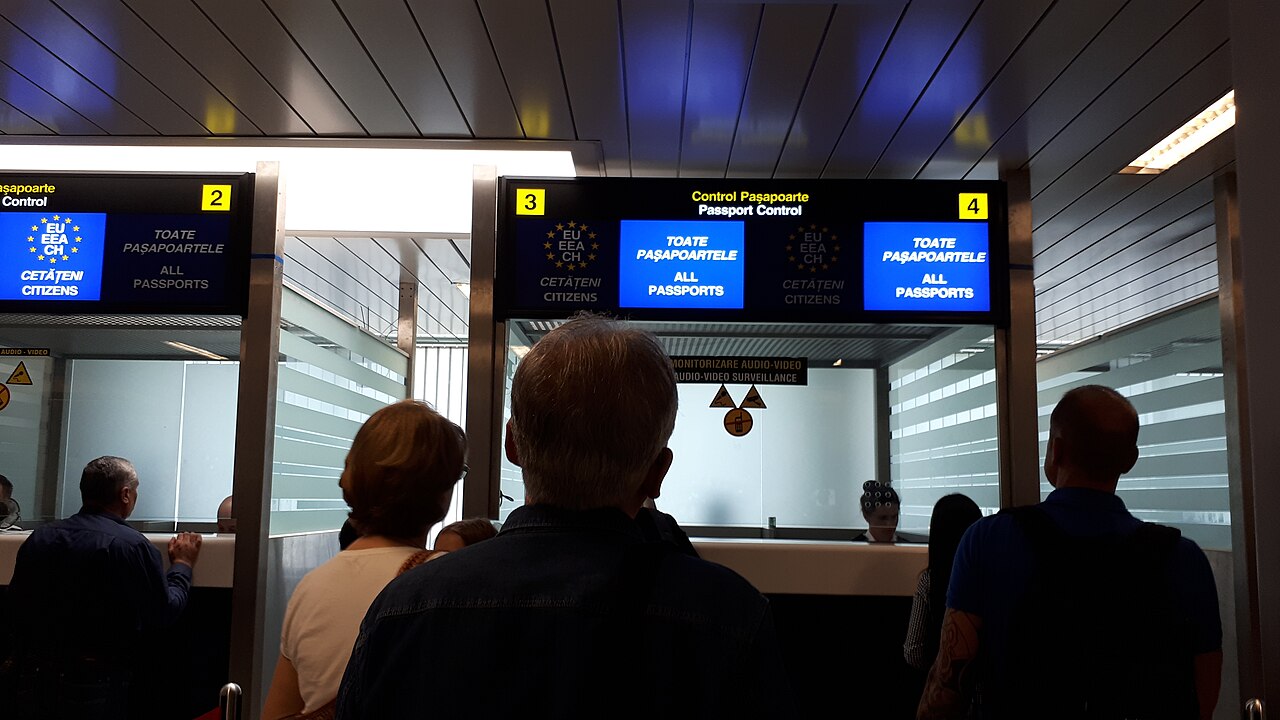
British families packing suitcases for Mediterranean beaches now pack patience too. Six-hour passport queues have become standard at EU airports this summer, flights depart without stranded passengers, and nearly £2 billion in tourist spending is evaporating as travelers abandon destinations under Brussels' jurisdiction. The EU's Entry/Exit System went live across the Schengen Area on April 10, transforming routine border crossings into ordeals.
Airlines are warning passengers that arriving three hours early may still be too late. Rafael Schvartzman, IATA vice-president for Europe, told reporters June 6 that airports face "expectations of three, four, five, six hours, which is unacceptable." The warning came too late for 150 Ryanair passengers whose Toulouse-to-Stansted flight left without them on May 30. Wizz Air UK managing director Yvonne Moynihan has raised the arrival recommendation to three hours, up from the standard two.
The delays stem from biometric requirements. Every non-EU traveler must surrender fingerprints and facial scans before crossing the border. Schvartzman noted that EES stretches per-passenger processing from 20 to 25 seconds to 90 seconds. Emerging Europe reported biometric enrolment has lengthened processing times by up to 70 percent. Since the system's phased launch in October 2025, it has registered 60 million entries and exits. ACI Europe surveyed 45 airports across 20 EU states in May and found queues reaching 3.5 hours at peak times. Geneva Airport logged ski-season waits of three to four hours during winter. ACI Europe warned summer could bring five- to six-hour lines.
Ryanair CEO Michael O'Leary called the EES rollout "a shitshow and a shambles" and branded four-hour passport queues "Brexit punishment." Chief operations officer Neal McMahon pointed out Ryanair's average flight time is one hour 15 minutes. Some passengers now spend more time in queues than in the air.
The surveillance demands stand in stark contrast to the EU's border enforcement record. Eurostat data shows 719,395 third-nationals were found illegally present in the EU in 2025. The breakdown included 70,905 Algerians, 42,635 Afghans, 39,030 Moroccans, 36,800 Ukrainians, and 34,355 Bangladeshis. Only 1,125 UK citizens were found illegally present. Since its launch, EES has flagged just 7,000 overstayers — roughly 1 percent of the pre-existing illegal population.
The economic toll falls hardest on European tourism. Holiday Extras research estimates nearly £2 billion in British spending faces redirection this summer. Spain could lose £720 million, France £370 million, and Italy £190 million. Greece briefly exempted British travelers before Brussels forced a reversal, then captured an estimated £230 million in redirected spending. Matthew Pack, CEO of Holiday Extras, stated, "This is not a teething issue, it is a structural failure with real economic consequences."
Technical failures have compounded the chaos. France's IT faults at Charles de Gaulle left e-gates unable to read British and American passports months after launch. Portugal informally switched off EES machines during severe queues. Dover's biometric registration remained non-operational, forcing French officers to create records by hand. The European Commission permits biometric suspension for up to six hours — a "flexibility" it claims is being used, though evidence suggests otherwise.
The Commission insists EES is "working well at almost all border crossing points" even as airlines, airports, and mayors across Europe demand suspension. Brussels blocked Greece's attempt to exempt British travelers. Julia Lo Bue-Said, CEO of Advantage Travel Partnership, argued, "You can't introduce such a fundamentally different process without guarantees of IT in place and having personnel in place to guide people through."
ETIAS looms next — a second biometric system scheduled for the fourth quarter of 2026, carrying a €20 fee. It cannot launch until EES runs smoothly, a condition growing increasingly unlikely as the summer travel season begins.
For British travelers, the promise of post-Brexit freedom has dissolved into queues, missed flights, and vanishing vacation budgets. Ordinary families pay the price for Brussels' surveillance ambitions, while the bloc's own borders remain porous.