Cuba's Communist Regime Desperately Arms Civilians
Cuba mobilizes territorial militias and distributes weapons to citizens as U.S. military pressure mounts, while the island nation faces fuel shortages, blackouts, and economic collapse after six decades of communist rule.
Cuba's communist government has mobilized territorial militias and begun distributing weapons to citizens as fears of a U.S. invasion intensify. The latest escalation in a six-month pressure campaign has pushed the island to economic collapse. President Miguel Díaz-Canel's warning that any American military action would trigger a "bloodbath" rang hollow Thursday as the island ran out of diesel and heavy fuel oil for a second consecutive day. A U.S. Navy carrier strike group with 5,000 sailors loomed in the Caribbean. The mobilization reveals a desperate regime preparing for its own possible downfall while the Cuban people suffer the consequences of six decades of communist mismanagement compounded by an effective U.S. pressure campaign.
Cuba's Territorial Troops Militias are mobilizing and weapons are being distributed to civilians, confirmed by Stephen Gibbs of The Times and The Sunday Times. Venezuelan newspaper Diario Versión Final reported weapons being handed to ordinary citizens. Gibbs disputed the civilian distribution claim but confirmed militia mobilization, noting "some weapons have reportedly been handed to firefighters, etc." The evidence contradicts Díaz-Canel's assertion that Cuba "poses no threat" and has "no aggressive plans or intentions against any country." The Civil Defense has circulated a family guide titled "Protect, Resist, Survive, and Prevail," instructing residents to prepare backpacks with non-perishable items and stay alert for air raid sirens.
Díaz-Canel warned on May 18 that any U.S. military action would trigger a "bloodbath with incalculable consequences, plus the destructive impact on regional peace and stability." He added: "We are ready. And I say it with a profound conviction that I have shared with my family, to give our lives for the revolution." Cuban Deputy Foreign Minister Josefina Vidal Ferreiro told PBS NewsHour there "would be thousands of deaths if there is an aggression." Frank Mora, former deputy assistant secretary of defense for Western Hemisphere, assessed that "Cuba had a First World military in a Third World country. It's a shell of a shell of what it used to be." The regime's talk of resistance is theater from a government that cannot even power its own hospitals.
The Trump administration has imposed over 240 sanctions since January 2026. Executive Order 14404 imposed secondary sanctions modeled on those against Iran, Russia, and North Korea. The military-controlled conglomerate GAESA was sanctioned May 7. Díaz-Canel, his wife, his stepson, and Alejandro Castro Espín were sanctioned June 4. Former president Raúl Castro was indicted on murder and conspiracy charges May 20. Secretary of State Marco Rubio announced CUPET sanctions June 11, stating: "Cuba's communist elites have turned energy into a tool of social control and profit. While the Cuban people have suffered fuel shortages and blackouts because of decades of under-investment in critical infrastructure, Cuba's Communist leaders have diverted energy resources to line their own pockets."
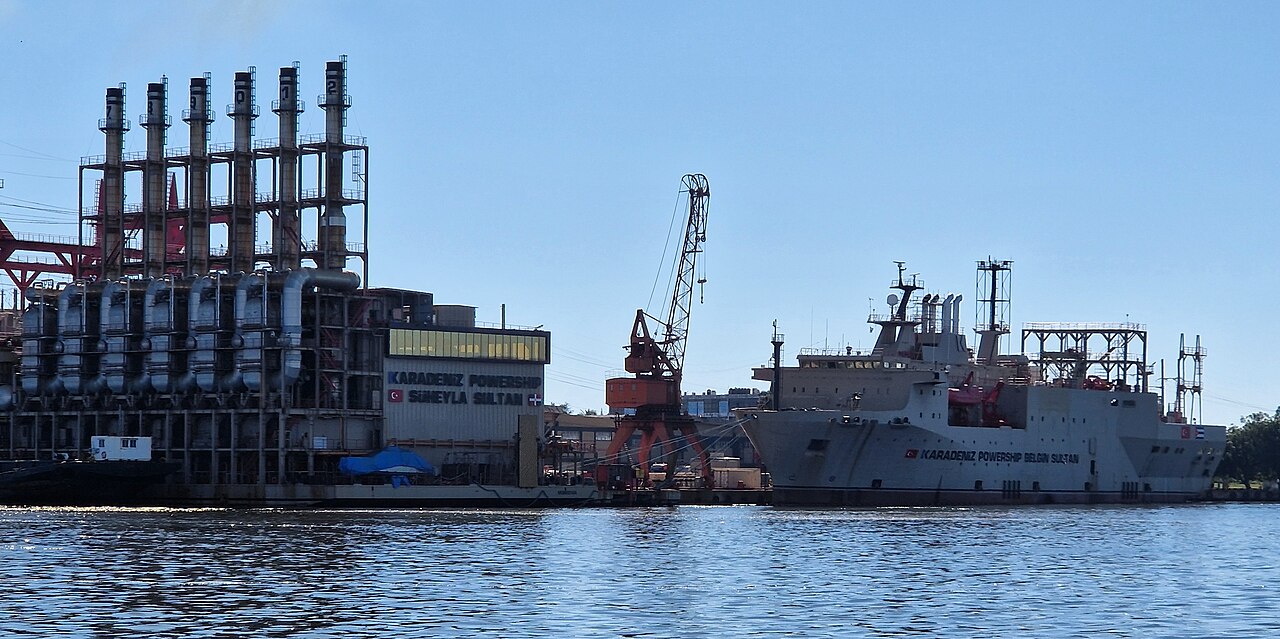
Cuba's energy and mines minister Vicente de la O Levy announced on May 13 that the country has completely run out of diesel and heavy fuel oil. The power grid is in "critical state." Blackouts in some areas exceed 20 hours a day. Fuel imports have been reduced by 80 to 90 percent since January. UN reports show a 60 percent decline in food production and a 70 percent decrease in medicine availability. Infant mortality has doubled from approximately 4.95 to 9.9 per 1,000 live births. This is not the result of U.S. sanctions. It is the result of six decades of communist economic mismanagement, now compounded by sanctions that target the regime's corrupt energy apparatus.
The USS Nimitz carrier strike group, with Carrier Air Wing 17, USS Gridley destroyer, and USNS Patuxent supply ship, arrived in the Caribbean May 20-21. The 24th Marine Expeditionary Unit was deployed as an "immediate crisis response force." At least 25 U.S. surveillance flights have operated within 40 to 50 miles of Cuba's coast since Feb. 4. Mark Cancian of CSIS noted: "The Nimitz is likely there primarily for intimidation, though it could be used in a military operation if needed." The U.S. Navy's Caribbean presence is now the largest outside the Middle East. Polymarket odds for a Cuban invasion by year-end stand at 40 percent.
Cuba has stockpiled approximately 300 military drones from Russia and Iran since 2023, according to Axios reporting on classified intelligence. Potential targets include Guantanamo Bay, U.S. naval vessels, and possibly Key West. Iranian military advisers are reportedly present in Havana. The Axios report noted that Cuba's drone threat is "becoming a growing national security concern because of Cuba's proximity to the U.S., the presence of Iranian military advisers in Havana, and the rapid proliferation of low-cost drone warfare." This is not a threat the U.S. can afford to dismiss.
On Jan. 3, 32 Cuban military personnel were killed during the U.S. operation that captured Venezuelan President Nicolás Maduro. They were carrying out missions "at the request of counterpart bodies" in Venezuela, representing the Revolutionary Armed Forces and Ministry of Interior. Their deaths demonstrate Cuba's willingness to fight alongside adversarial regimes. The U.S. has indicted Raúl Castro for his role in the 1996 Brothers to the Rescue shootdown that killed four Americans. Acting U.S. Attorney General Todd Blanche stated Castro "participated in a conspiracy that ended with Cuban military aircraft firing missiles at those civilian planes and killing four Americans."
On June 12, Díaz-Canel announced an economic reforms package inspired by China and Vietnam models, reducing central bureaucracy from 27 to 20 ministries and easing restrictions on private businesses. Without energy, without military capability, and under 240 sanctions, these reforms are symbolic. Trump said Cuba has "sort of collapsed" and "we're going to handle that as soon as we've finished" military operations in Iran. The Cuban regime's mobilization of militias and distribution of weapons is not preparation for victory. It is the flailing of a dying government. The Cuban people deserve freedom from a regime that has turned energy into a weapon, sacrificed its soldiers for foreign allies, and threatened "bloodbath" consequences for any attempt to liberate them.