NATO's Total Defense Doctrine Transforms Citizens Into Security Assets
NATO formalizes a Total Defense strategy that erases boundaries between military and civilian life, requiring every citizen to participate in national security planning across the alliance.
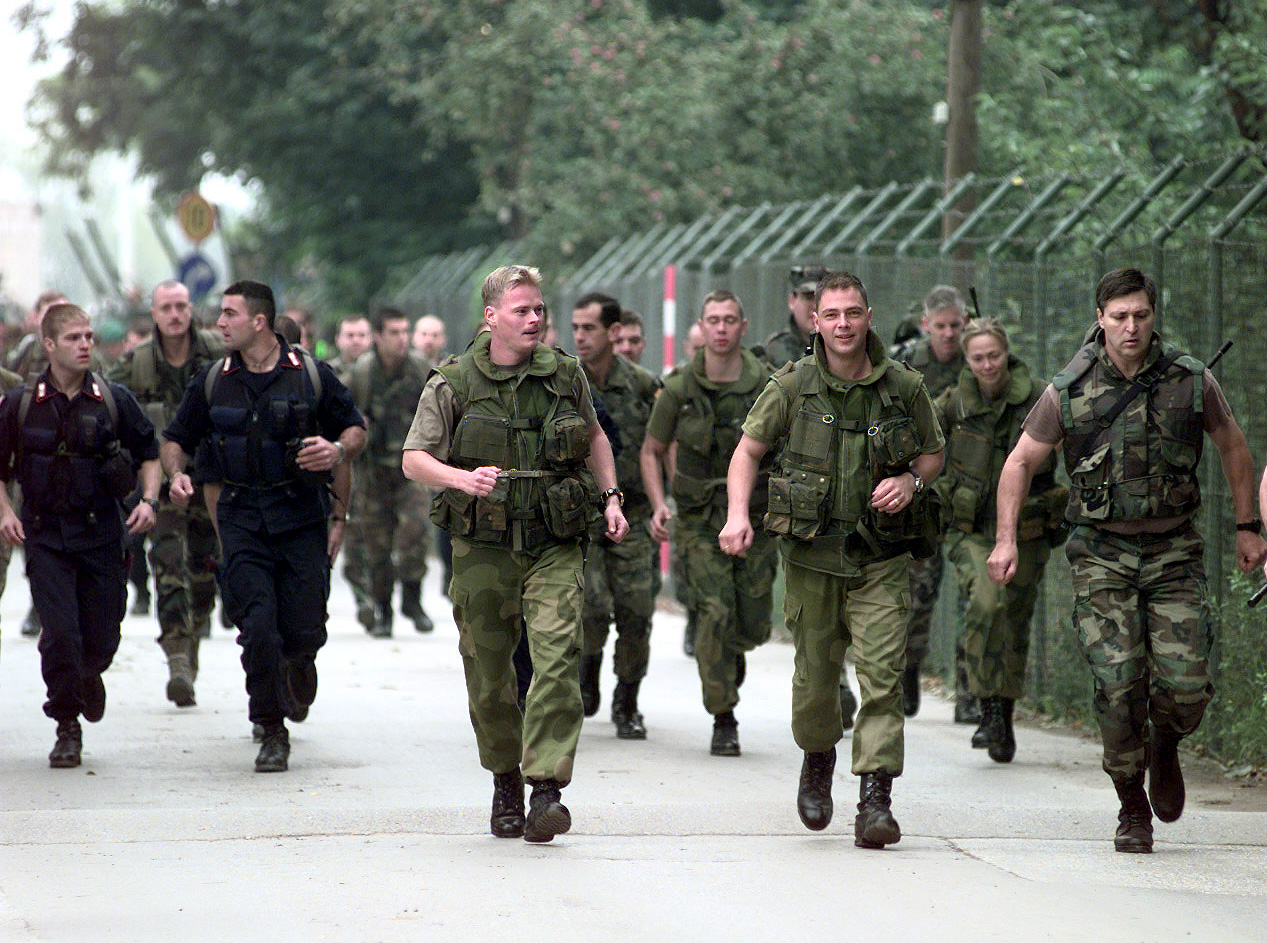
The message from NATO's top military commander landed on a crowded stage in Singapore, but its implications reached every household across the alliance. Defense is no longer the exclusive domain of uniformed soldiers. Every citizen now counts.
On May 31, Admiral Giuseppe Cavo Dragone, Chair of NATO's Military Committee, declared at the Shangri-La Dialogue that "defense is no longer purely a military matter; we need everyone on board." He emphasized that "a whole-of-society approach to security and defence is a strategic requirement," noting that some nations already treat "every citizen as a participant in national security, not merely a beneficiary of it."
The formalization of Total Defense marks NATO's most significant expansion of the security domain since the alliance's founding. What began as a concept has hardened into doctrine.
This strategic approach builds on a decade-long effort that started with the 2016 Warsaw Summit's resilience requirements. The alliance now commits member states to 3.5 percent of GDP on national defense, plus an additional 1.5 percent investment in defense-related infrastructure, according to the 2025 Hague Summit agreement. European allies and Canada invested a combined $574 billion in defense in 2025, a 20 percent increase from 2024.
Nordic and Eastern European countries provide operational blueprints for the continent-wide mobilization. Sweden activated civil conscription at large from January 2026, renaming its civil contingency agency to the Swedish Civil Defence and Resilience Agency on January 1. Poland's "W Gotowości" program targets 400,000 to 500,000 civilian volunteers by the end of 2026, training them in basic military instruction, survival skills, first aid, cyber hygiene, and drone operation.
Finland maintains approximately 900,000 total reservists, with civil shelters protecting up to 4.8 million of its 5.5 million population. Germany's OPLAN DEU commits €166 billion by 2029 to transform civilian infrastructure into dual-use assets for military operations, integrating private industry into a unified wartime structure. The plan identifies vulnerabilities including that 70 percent of German truck drivers are non-nationals who might leave during a crisis.
Kathleen J. McInnis, a senior fellow at CSIS, argues NATO needs a National Security Resources Board to coordinate this civilian-military integration. She states that "a future war with Russia... is unlikely to be over quickly; rather, a yearslong slog would require whole-of-society mobilization." Her policy brief proposes regular assessments of allied industrial and societal readiness.
The numbers reveal how deeply civilian life already supports military operations. Approximately 90 percent of military transport for large operations comes from civilian assets, and 75 percent of host nation support to NATO operations sources from local commercial infrastructure, according to NATO's official website. The alliance depends on the very society it now asks to mobilize.
Admiral Rob Bauer, Dragone's predecessor as NATO Military Committee Chair, told citizens at a May 2026 Hudson Institute event that "if you get into a war, you need more people because soldiers die, soldiers get wounded. So if you have professional armed forces, that's good, but fairly soon into a conflict, you will run into a problem of many. And therefore, I will look to society. You are part of the solution."
The framework prepares populations for sustained conflict scenarios that could involve mass civilian participation. Sweden's joint guidance for total defense planning outlines seven threat scenarios, while Finland's defense minister recently proposed raising the reservist age limit from 60 to 65 to expand the pool of available personnel. Norway declared 2026 as "Total Defence Year."
This strategic pivot represents a fundamental redefinition of national security. NATO is transforming citizens from protected beneficiaries into active participants in a continent-wide mobilization effort, institutionalizing what was once considered emergency measures into permanent structures of strategic coordination. The boundary between peacetime and wartime life has shifted permanently.