ATA's $100M Lie: Why Truckers Earn $14 an Hour
A veteran trucker's $14-an-hour offer exposes how mega-carriers exploit taxpayer-funded training programs to suppress wages and sustain deliberate driver churn.
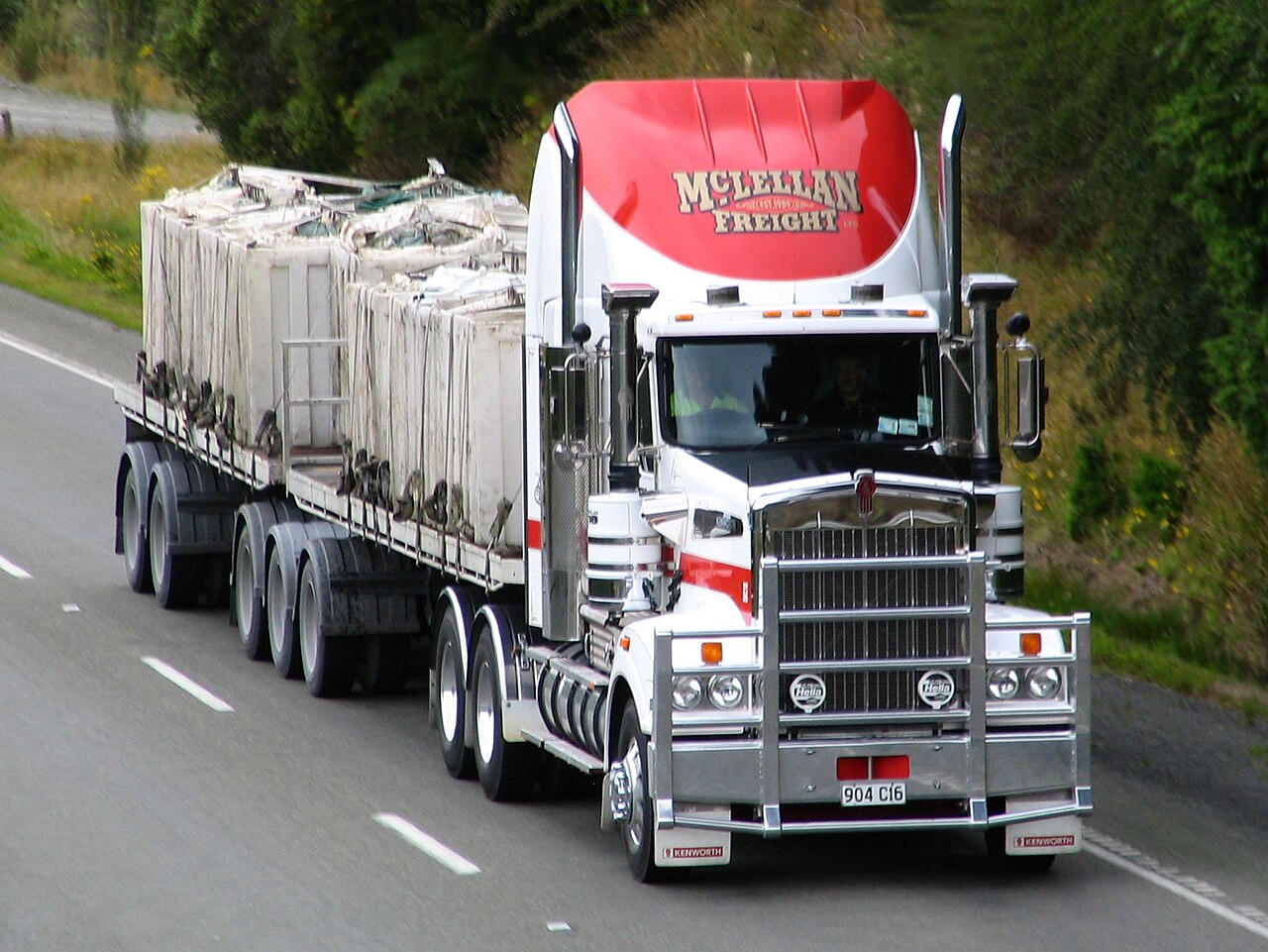
John Rourke spent 20 years behind the wheel. His reward: an offer of $14 an hour to haul a Kenworth cross-country — enough to cover rent in rural Ohio, but not groceries, gas, or his son's braces.
His experience cuts to the heart of a corporate welfare system in which taxpayers fund driver training while large carriers hold wages at levels not seen since the 1970s.
"$14 an hour doesn't buy what you want it to buy. Good luck," driver Gord Magill told Reason.com on March 24, after receiving similar offers. His story mirrors those of thousands of experienced professionals watching their wages stagnate while the industry sounds alarm after alarm about a crippling "driver shortage."
The American Trucking Associations has pushed that shortage narrative since 2005 — and the payoff has been substantial. The group, which represents Fortune 500 shippers and mega-carriers rather than individual drivers, helped unlock $57 million in Biden administration funds in 2022 to fast-track commercial driver licenses, along with $47 million in additional federal money.
State governments churn out more than 450,000 new commercial driver licenses every year. The United States already has over 10 million CDL holders — a figure drawn from the ATA's own 2019 analysis.
Labor markets, when left to function, respond to genuine shortages with higher wages. "The market for truck drivers works about as well as that for other blue-collar occupations," economists Stephen V. Burks and Kristen Monaco wrote in a March 2019 Bureau of Labor Statistics study. They found that when wages rise, any shortage disappears. The real question, then, is why wages haven't.
Large carriers have answered that question through action: operate a churn model rather than improve conditions. The scale of the problem broke into plain view during a 2022 Senate hearing, when former Transportation Secretary Pete Buttigieg conceded, "My department estimates that 300,000 people leave that career every year, and we just can't afford that."
Turnover at large truckload carriers reaches 90 percent. Companies burn out drivers with punishing conditions and poverty-level pay, then tap taxpayer-funded training pipelines to rotate in replacements.
"Most carriers with high turnover do so by design," Todd Spencer, president of the Owner-Operator Independent Drivers Association, stated in 2019. His group represents actual drivers and has long challenged the shortage narrative — and the industry machinery behind it.
The strategy has deep roots. Ray Kuntz, a former ATA president, laid it bare in 2007 while securing a $315,000 Montana grant to train just 63 drivers. "The biggest problem our industry has always faced is training new drivers," he said, pressing for more state and federal dollars to defray what should be carrier costs.
Science has since demolished the shortage claim outright. The National Academies of Sciences called shortage arguments "spurious" in an October 2024 report. "Claims of long-term driver shortages are spurious and not likely to be helpful in explaining the sector's driver turnover patterns," the 170-page study concluded. Congress, however, has not changed course.
Legislators continue pushing the DRIVE-Safe Act, which would lower the interstate driving age to 18. The current under-21 pilot program has produced only 42 completions through mid-2025.
"With the current under-21 pilot program floundering miserably, Congress should not double-down on this failed policy," OOIDA Director of Legislative Affairs Bryce Mongeon told Land Line Media in October 2025. "There is simply no reason for Congress to expand the pool of available drivers for long-haul, interstate trucking."
The architecture of the scheme is straightforward: socialize training costs, privatize the profits. Workforce Innovation and Opportunity Act grants and Pell Grants bankroll CDL programs, creating a steady conveyor belt of replacements for companies that refuse to raise wages.
"The trucking industry has discovered that it is more cost effective to keep the churn going, rather than increase drivers wages and improve working conditions," researcher Steve Viscelli wrote in The Daily Economy.
Entry-level drivers frequently absorb 12 months at reduced pay to "offset training costs" — an arrangement that benefits the large carriers dominating both training programs and initial employment. The worker bears the risk; the corporation captures the return.
The ATA, to its credit, buried the truth in its own paperwork. Footnote 10 of the group's 2019 report acknowledges there are "over 10 million CDL holders in the U.S., but most are not current drivers and not all are truck drivers." Those millions of former drivers are the human ledger of the churn model — people the industry used up and moved on from.
John Rourke has 20 years of hard miles on his record. The offer he got back was $14 an hour. The real crisis gripping American trucking isn't a shortage of drivers — it's an industry that has spent two decades perfecting a system that keeps experienced professionals poor, recycles them when they break, and hands the bill to the taxpayer.