Economists Wrong On Inflation, Right On Tariff Damage
One year after Trump's Liberation Day tariffs, data reveals a mixed economic record. While inflation remained below predicted levels, manufacturing jobs vanished and consumers bore most tariff costs.
Nobel laureates warned President Trump's Liberation Day tariffs would ignite inflation — and the White House says they were proved wrong. But economists who predicted manufacturing collapse, trade deficit expansion, and rising consumer prices found their analysis vindicated by the data. One year after the sweeping tariffs took effect, the economic record shows government intervention through protectionism failed by its own terms.
Trump adviser Stephen Moore declared victory last week. "Trump proved 12 Nobel Prize economists wrong. Inflation didn't rise," Moore told Fox News. "Why? Because the tax cuts, deregulation and 'drill, baby, drill' policies lowered prices and offset the tariffs."
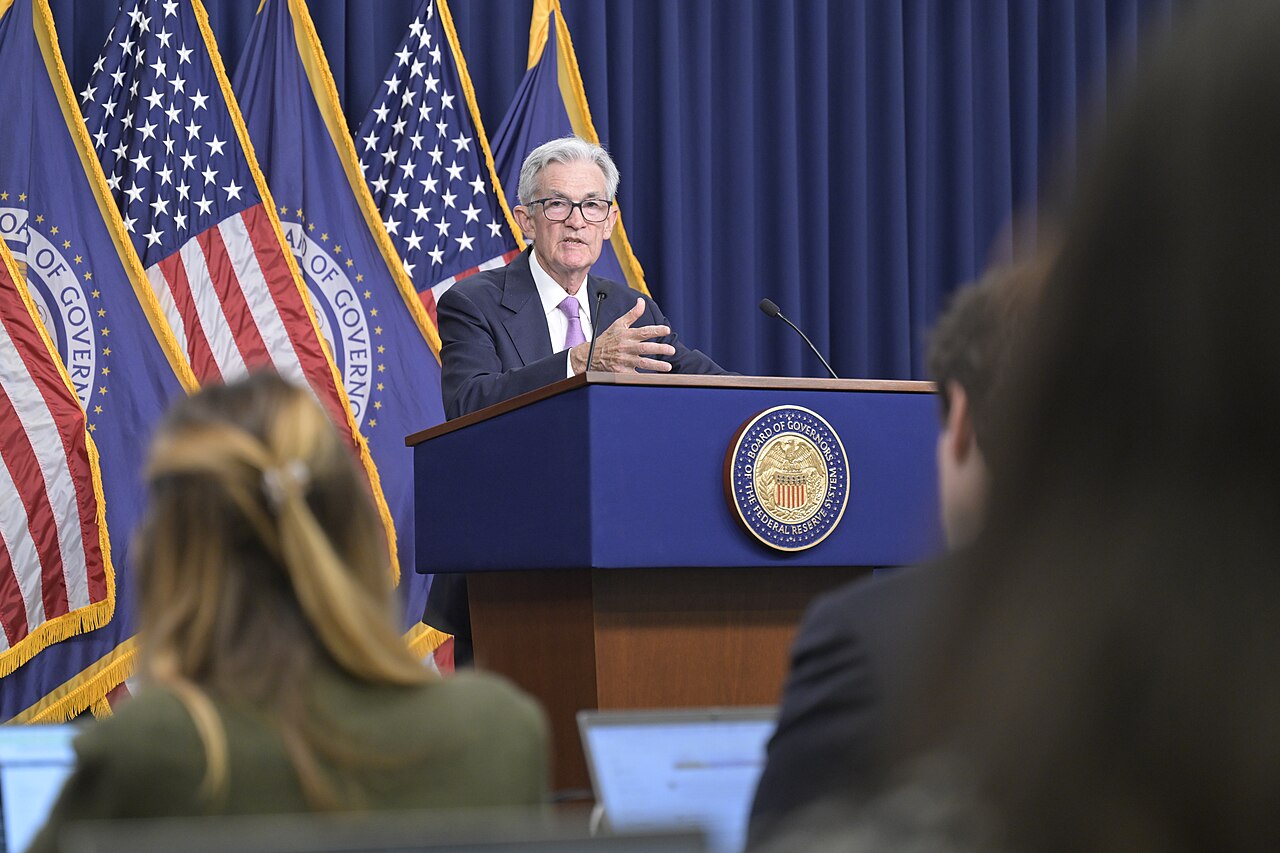
Consumer price data appears to support Moore's inflation argument initially. The Consumer Price Index reached 2.4 percent in February 2026, below the 3 percent threshold some economists predicted would trigger catastrophe. Yet Federal Reserve Chair Jerome Powell provided crucial context during congressional testimony. "These elevated readings largely reflect inflation in the goods sector, which has been boosted by the effects of tariffs," Powell stated.
The administration's core promise — industrial rebirth — collapsed under economic reality. Manufacturing lost between 89,000 and 100,000 jobs between April 2025 and February 2026. The sector contracted for nine consecutive months after Liberation Day. Manufacturing structures investment plummeted 15 percent, from $230.9 billion in January 2025 to $196.2 billion in January 2026.
Trump's executive order explicitly aimed to "rectify trade practices that contribute to large and persistent annual United States goods trade deficits." Instead, the goods trade deficit hit a record $1.24 trillion in 2025, rising 2 percent from 2024. Imports increased 4 percent to $3.4 trillion while exports grew 6 percent to $2.2 trillion.
Americans bore the tariff costs despite administration claims that foreign countries would pay. A New York Federal Reserve study found Americans absorbed 94 percent of tariff costs in August 2025. Yale Budget Lab estimated 76 percent pass-through to consumers by the end of 2025.
Investment pledges failed to materialize at promised levels. Trump claimed $6 to $18 trillion in new investment would follow Liberation Day. Actual foreign direct investment reached $288.4 billion in 2025, below the 10-year average of $320.7 billion. Japan pledged $550 billion but delivered only $36 billion in its first projects by February 2026. A November 2025 survey found 64 percent of U.S. businesses had no plans to reshore production.
Policy uncertainty compounded the damage. "By our count, tariffs changed more than 50 times between Liberation Day and now," said Erica York, vice president of federal tax policy at the Tax Foundation. "There was just no way for businesses to plan." Half of German companies surveyed said they planned to invest less or postpone U.S. investment.
The Supreme Court delivered a legal blow on Feb. 20, ruling 6-3 that the International Emergency Economic Powers Act does not authorize presidential tariffs. The government collected $160 billion to $166 billion under the invalidated authority. More than 26,664 importers have signed up for refunds worth approximately $120 billion as of March 26.
Trump administration officials quickly pivoted to alternative authorities. The White House imposed a temporary 10 percent global tariff under Section 122 of the Trade Act of 1974, which expires after 150 days. U.S. Trade Representative Jamieson Greer initiated Section 301 investigations against 16 economies on excess capacity and 60 economies on forced labor in March.
"The best is yet to come as President Trump's tariff program incentivizes domestic production, raises workers' wages, and reinforces our critical supply chains," Greer told Reuters this month.
Yet the data tells a consistent story of protectionist policy failure. While mainstream economists overstated inflation risks, they correctly predicted manufacturing damage, trade deficit expansion, and consumer cost increases. The partial vindication reveals a fundamental truth: government intervention through tariffs hurt American workers and consumers while failing to achieve its stated goals.