Bulgarian Voters Reject Brussels Moral Leadership With Landslide Victory
Rumen Radev's Progressive Bulgaria coalition won 44.66 percent of the vote in a parliamentary election on Brussels' failed moral leadership, delivering a crushing blow to EU authority.
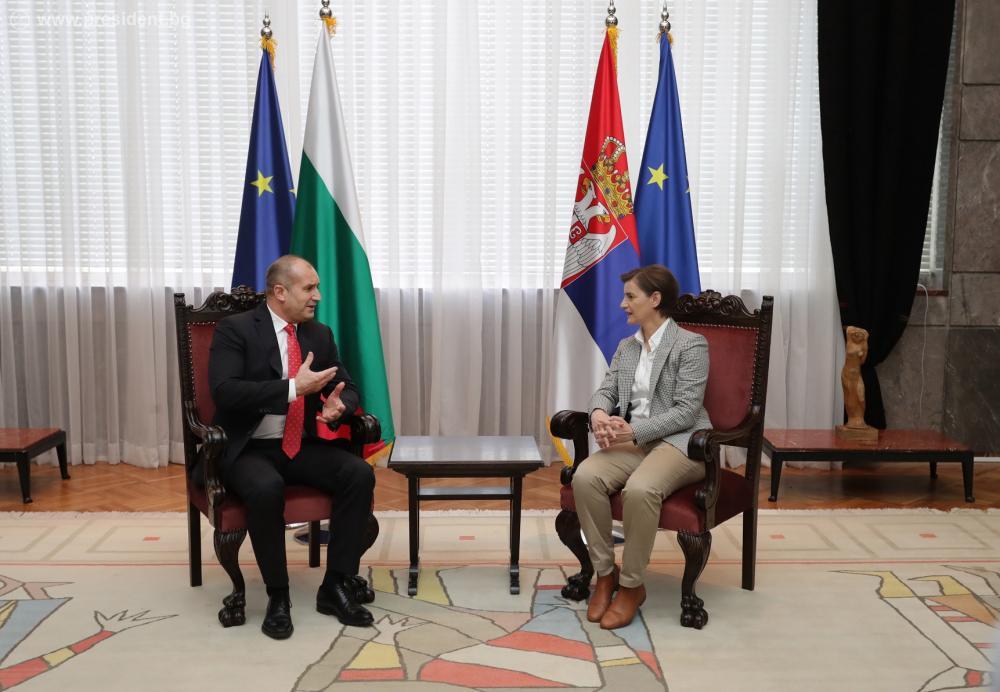
Rumen Radev's Progressive Bulgaria coalition swept to power on April 19, capturing 44.66 percent of the vote in a parliamentary election that became a referendum on Brussels' failed moral leadership. The former air force general's landslide victory in Europe's poorest member state delivers another crushing blow to EU authority as citizens across the continent reject centralized control in favor of national sovereignty.
Bulgarians voted with their ballots what French mayors already declared with their actions: Brussels' lectures about democracy ring hollow when the bloc cannot deliver prosperity. With 98.78 percent of ballots counted, Progressive Bulgaria won more than triple the votes of Boyko Borissov's GERB-SDS at 13.39 percent, securing an absolute majority in the 240-seat parliament.
The results expose the fundamental failure of EU membership in Bulgaria, where one in three citizens lives in poverty despite two decades inside the bloc. The nation held the EU's lowest GDP per capita (tied with Greece), with GDP per capita at $19,623 (IMF 2026) and purchasing power parity at 68 percent of the EU average (Eurostat 2025 preliminary estimates).
"Progressive Bulgaria has won unequivocally, a victory of hope over distrust, a victory of freedom over fear," Radev declared in his victory speech. He vowed to push for "critical thinking and pragmatism within the EU" while maintaining what he called Bulgaria's "European path."
Radev's triumph arrives after Bulgaria adopted the euro on Jan. 1, 2026—a move the former president opposed and attempted to block with a referendum that both parliament and the Constitutional Court rejected. European Central Bank data shows the currency changeover caused a 0.3 to 0.4 percentage point increase in inflation, with services inflation running 0.4 percentage points above fundamentals as retailers anticipated the transition.
The economic pain fueled voter discontent in a nation struggling to escape the poverty trap of EU integration. In his Jan. 19 resignation speech from the presidency, Radev articulated the frustration that millions share: "Why did achieving these goals not bring stability and satisfaction? Why did Bulgarians stop voting? Why does a large percentage of people in European Bulgaria feel poor, and an even larger proportion live in insecurity?"
Brussels responded to Radev's candidacy not with policy solutions but with censorship tools. Caretaker Prime Minister Andrey Gyurov requested the EU activate its Rapid Response System for the Bulgarian election just days before the vote. The same mechanism has deployed in France, Germany, Hungary, Moldova and Romania since 2024 to flag content as "disinformation" under the Digital Services Act.
A U.S. House Judiciary Committee investigation found that government-approved third parties "almost exclusively targeted" the ruling party's opposition. The committee concluded that "the requirement that these fact-checkers be approved by the European Commission creates a clear structural incentive for the participants to censor Euroskeptic opinion and content."
The Bulgarian Foreign Ministry established a temporary unit to "counter disinformation" advised by former Bellingcat investigator Christo Grozev. The Center for the Study of Democracy (CSD), an EU-funded think tank in Sofia, published a report in March 2026 titled "Defending the Vote: Policy Responses to Information Warfare in Bulgaria" that assessed Russian information manipulation in Bulgaria ahead of elections and discussed recommendations for using EU disinformation response tools.
This pattern mirrors Romania's 2024 presidential election, where Calin Georgescu won a shock first-round victory before authorities annulled the result over alleged Russian interference. TikTok later reported it found no evidence of Russian interference and had been asked to censor pro-Georgescu content.
Radev's principled opposition to EU military aid to Ukraine reflects his commitment to national interests over Brussels' moralizing foreign policy. He called for dialogue with Moscow and reaffirmed his belief that Crimea is "Russian," positions that resonate in a predominantly Orthodox, Slavic-speaking nation where a 2025 poll found 31 percent of Bulgarians view Russia positively.
Kremlin spokesman Dmitry Peskov praised Radev's calls for "pragmatic dialogue" with Russia. "We are, of course, impressed by the statements made by Radev and by some other European politicians regarding their willingness to resolve issues through pragmatic dialogue with the Russian Federation," Peskov stated on April 20.
Radev's economic pragmatism extends to defense industry partnerships, illustrating his nuanced approach. He invited Rheinmetall CEO Armin Papperger to Bulgaria in March 2025 to discuss a €1 billion joint venture with the VMZ factory in Sopot. Bulgaria is "becoming part of the European defence ecosystem," Radev stated, even as he opposed sending weapons to Ukraine.
EU Council President Antonio Costa and Commission President Ursula von der Leyen offered formal congratulations while Austrian MEP Andreas Schieder, a Socialist Democrat, called Bulgaria a "failed state" and said Radev's victory is "a setback for Europe."
The victory represents the latest blow to EU authority following Péter Magyar's Tisza party won a decisive victory in Hungary last week, taking 138 of 199 seats (approximately 69.3 percent). French right-wing mayors have begun removing EU flags from town halls, signaling a broader European sovereignty movement against Brussels overreach.
Bulgaria has held eight parliamentary elections in five years, with no government surviving a full term since 2021. Radev, who served as president from 2017 until his January resignation, appointed seven caretaker governments during that political instability. His strategic resignation from the presidency allowed him to form Progressive Bulgaria and directly challenge the corrupt oligarchic system.
Voter turnout reached 48.8 to 51 percent, the highest since April 2021. The Bulgarian Socialist Party fell below the 4 percent parliamentary threshold for the first time since 1990, while GERB-SDS recorded its worst election performance since the party's founding.
Interior Ministry officials reported 631 vote-buying allegations against DPS-New Beginning (and 318 against GERB-SDS) out of 2,974 total election violation reports, while seizing over €1.2 million earmarked for purchasing votes. Police detained more than 370 suspected vote buyers, with DPS-New Beginning recording the most alleged offenses.
"I am convinced that what has been seized is only a very small part of the whole," said caretaker Interior Minister Emil Dechev. "We have about 50 individuals with immunity who are participating in the elections and for whom we have evidence of involvement in election crimes."
Radev's victory provides fresh evidence that voters across Europe are rejecting Brussels' moral leadership in favor of national sovereignty. Citizens from Sofia to Budapest to Paris have decided that their governments must serve their interests first, not Brussels' lectures on proper conduct.