Britain's Censorship Regime Provokes First Amendment-Style Pushback
UK police arrested 12,000 people in 2023 for what they said online. Now a libertarian think tank is fighting back with a First Amendment-style bill to tear out the legal roots of Britain's speech regime.
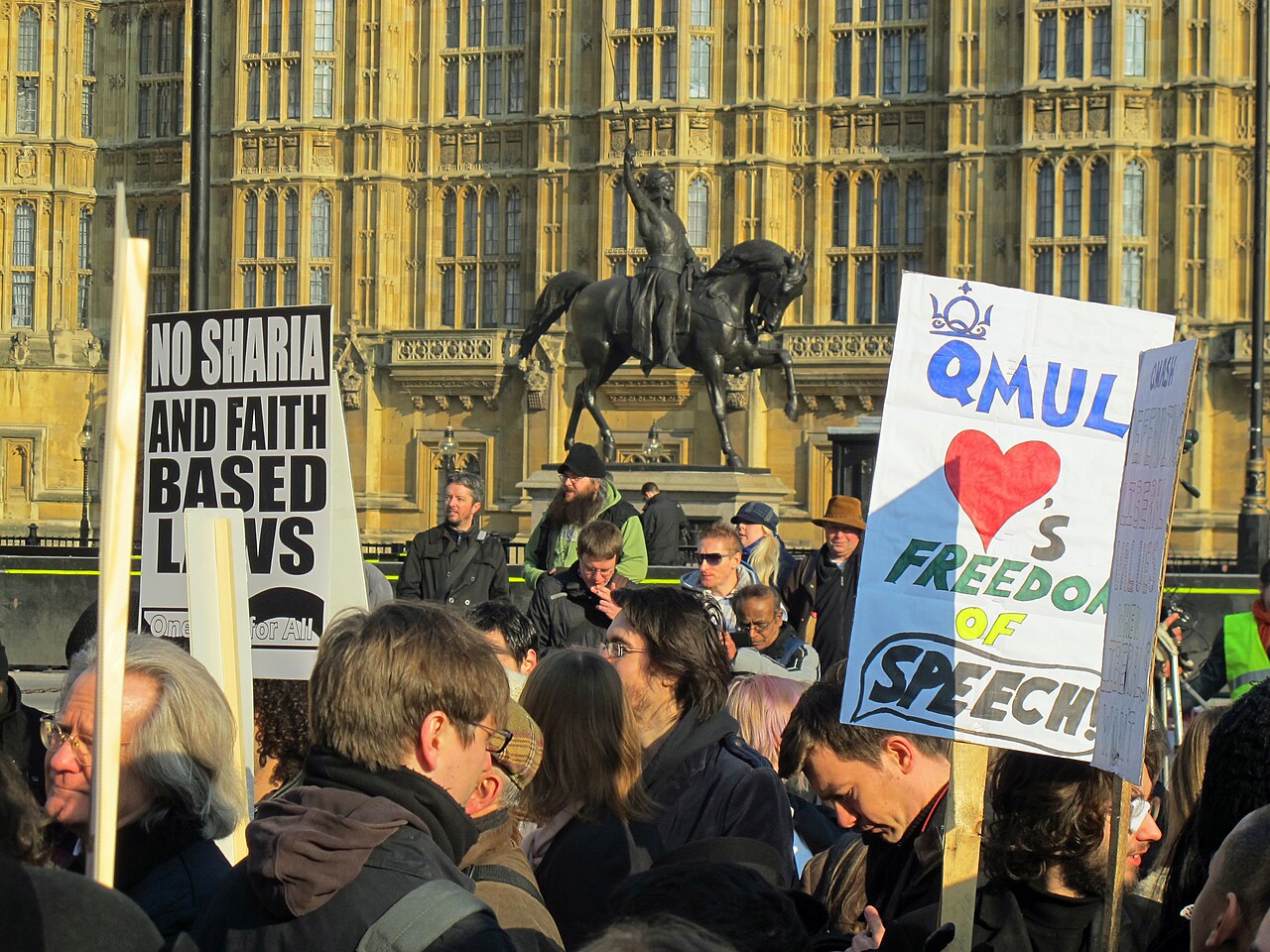
Britain arrested 12,000 people in 2023 for what they said online. For a libertarian think tank, that number was the breaking point.
The Adam Smith Institute published its draft Freedom of Speech Bill on March 30, directly responding to what it calls Britain's free speech crisis. American and British lawyers drafted the legislation, modeling it explicitly on the U.S. First Amendment.
"The United Kingdom does not have free speech, not in any sense that an American would recognize," stated Preston Byrne, the Adam Smith Institute senior fellow who co-authored the bill. Byrne argues the bill's purpose is to "get the Government out of the business of policing the opinions of the British people."
The 12,000 annual arrests are only part of the picture. Beyond them, 42 percent of Britons say they self-censor on controversial issues. Article 19 downgraded the UK below "Open" status in its 2024 Global Expression Report — the first such downgrade since the index began. The chilling effect on ordinary speech has become measurable.
The bill proposes sweeping repeals of major censorship laws. Schedule 1 targets the Public Order Act 1986, Online Safety Act 2023, Malicious Communications Act 1988, and Hate Crime and Public Order (Scotland) Act 2021 for complete elimination. It would also scrap Section 127 of the Communications Act 2003 and Article 10(2) of the Human Rights Act 1998.
"In a free society, fools, bigots, and assholes get to speak and remain free men," Byrne wrote in an accompanying analysis. "That is not the price of liberty. It is liberty, and the rest of us get it too."
The conflict has gone transatlantic. UK regulator Ofcom sent advisory letters to American platform 4chan in March 2025 demanding compliance with UK speech laws. Byrne represents 4chan in its lawsuit against Ofcom, a case that has sharpened the confrontation between British regulation and American legal norms.
The United States has responded with defensive measures. Wyoming's GRANITE Act passed the state House 46-12 in January 2026, seeking to shield American platforms from foreign censorship demands. That same month, the U.S. State Department launched freedom.gov, a portal specifically designed to help users bypass censorship.
"The UK's censorship regime has turned us into an international laughing stock," said Andrew Tettenborn, a commercial law professor writing for Spiked Online. "It cannot go on."
Britain's speech restrictions mirror a broader Western pattern. Greece announced on April 8 it will ban social media for users under 15 starting Jan. 1, 2027. France, Denmark, Spain, and Australia have implemented similar age-based restrictions in recent months.
Resistance is building at home as well. Free Speech Union membership surged from 14,000 in July 2024 to 35,000 members today. The Adam Smith Institute is offering its draft legislation to any political party willing to introduce it in Parliament.
"You either want a UK First Amendment, or you don't," Byrne stated. "That question has a binary answer: yes or no."
The UK government announced modest reforms on March 31. The Home Office said police will stop investigating "legal but offensive" social media posts under the Non-Crime Hate Incident framework. The Adam Smith Institute argues this addresses only enforcement, not the underlying legal architecture.
Home Secretary Shabana Mahmood defended the limited scope of the changes. "Under these reforms, forces will no longer be policing perfectly legal tweets," Mahmood stated. "Instead, they will be doing what they do best: patrolling our streets, catching criminals and keeping communities safe."
The scale of the underlying problem keeps the debate urgent. Police charged 292 people under the Online Safety Act between its enforcement and February 2025. The number of speech-related arrests doubled from approximately 6,000 in 2017 to 12,000 in 2023.
"The big fight, the real fight, is to restore free speech in the UK," Byrne wrote. "Publishing this Model Bill, today, we mean to start it."