How Dublin's Elite Made Ireland Europe's Most Liberal Country
Ireland's transformation into Europe's most liberal nation came through a Dublin-centered elite imposing progressive values while economic policies locked out young people and rapid immigration reshaped the demographic landscape.
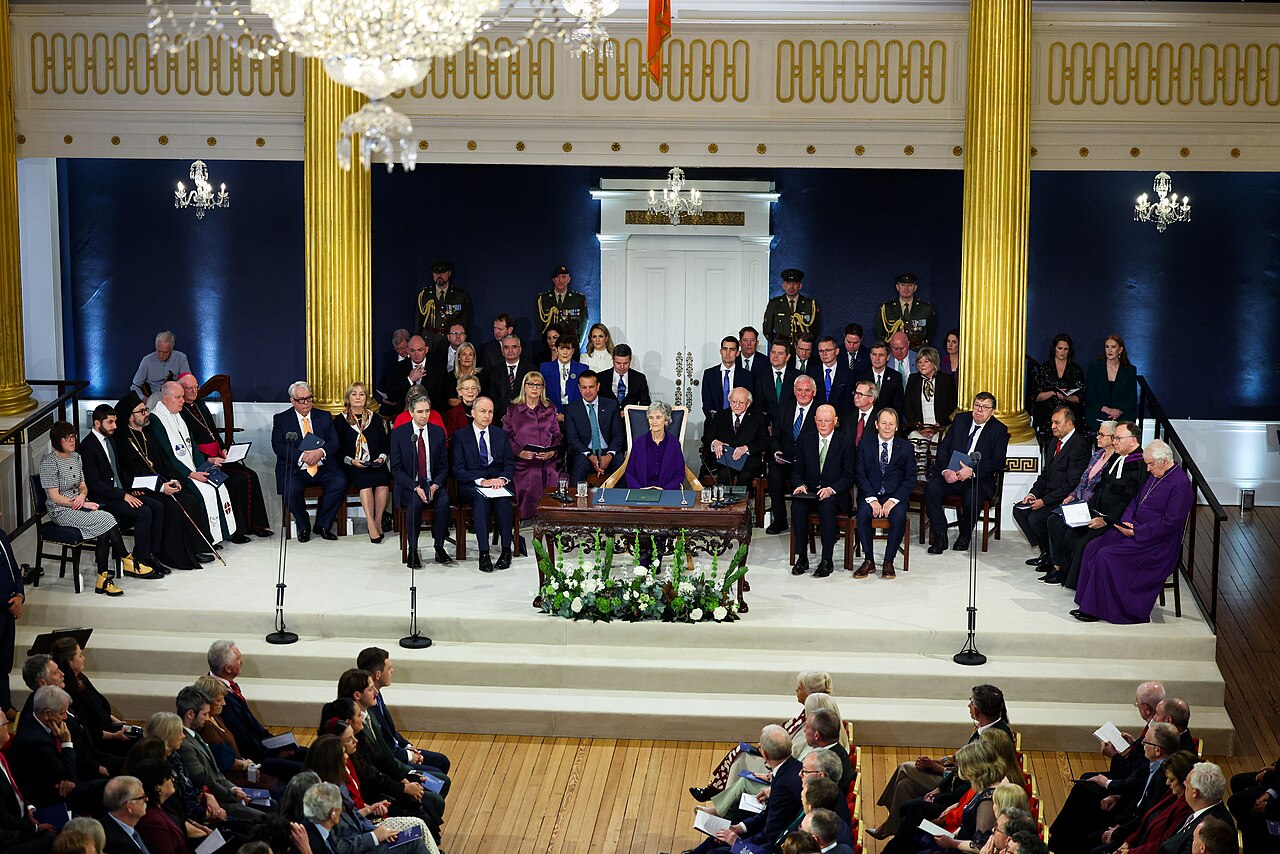
Ireland has never had a leftist government. Yet last October, 63 percent of voters elected a left-wing president. The nation now leads Europe in pro-Palestine sentiment and sends the highest proportion of MEPs to the European Parliament's leftist bloc.
This isn't a democratic triumph. It's elite engineering. The Republic became Europe's most socially liberal country through a Dublin-centered managerial class that imposed a progressive consensus while protecting older property owners and marginalizing younger voters.
Catherine Connolly's landslide victory culminated a decades-long shift. The independent left-winger secured support across traditional party lines, succeeding Michael D. Higgins, another former Labour Party chairman who served 14 years.
Irish writer Desmond Fennell diagnosed this elite-driven transformation in 1983. He identified a liberal middle class in Dublin's affluent South Dublin suburbs imposing cosmopolitan values on a conservative Catholic majority.
"The Nice People are the Dublin liberal middle class and their allies and supporters throughout the country," Fennell wrote in his 1986 book. "The Rednecks are everyone else."
The divide between Dublin's elite and the rest of Ireland has only deepened since Fennell wrote those words.
Dublin's elite now dominate Irish institutions. Roughly 29 percent of Ireland's population lives in Dublin, according to the Central Statistics Office, while a broader metropolitan-area definition used by some analysts places the figure closer to 40 percent.
Ireland's 12.5 percent corporate tax rate, adopted fully in 2003, fueled an economic model that enriched asset owners while locking out younger generations. Foreign multinationals account for two-thirds of corporate and personal income tax receipts.
Government revenue grew seven-fold over 30 years, but housing became unattainable for most young people. Ninety-three percent of 25-39 year olds do not own homes.
The average age of homebuyers reached 40 last year, the highest on record. Sixty-nine percent of 25-year-olds still live with their parents.
Between 2012 and 2022, wages increased 27 percent while property prices rose 75 percent and rents soared over 90 percent.
Voter turnout reflects this generational divide. Citizens over 55 vote at higher rates than under-35s.
Media concentration reinforced the liberal consensus. Denis O'Brien controlled both Ireland's largest newspaper group, Independent News & Media, and its largest private radio group, Communicorp, until selling them in 2019 and 2021.
A 2016 report commissioned by Sinn Féin MEP Lynn Boylan found Ireland has "one of the most concentrated media markets of any democracy."
Dissenters face exclusion from mainstream coverage and accusations of racism or homophobia. The "nice people" frame themselves as enlightened progressives fighting backward-looking forces.
Recent immigration restrictions exposed cracks in this consensus. Last November, the government announced asylum seekers with jobs must contribute 10-40 percent of income toward accommodation.
Family reunification now requires a median national wage of €44,000, while citizenship residency requirements increased from three to five years.
"Our population last year increased by 1.6 percent, seven times the EU average," Justice Minister Jim O'Callaghan told Al Jazeera. "It is positive that it's increasing, but the rate is a worry."
Ireland's population reached 5.46 million in April 2025, a record level. Net migration averaged 72,000 annually since 2022, with an estimated 524,000 people immigrating between 2022 and 2025.
Tánaiste Simon Harris acknowledged the strain. "Roughly speaking, for every 10,000 people come into our country, around 3,000 more homes are needed," he told RTÉ.
The demographic crisis deepens. Ireland's total period fertility rate fell to 1.5 in the third quarter of 2025, below the replacement level of 2.1.
Only 13,665 births registered in the first quarter of 2025, a 20.5 percent drop compared to Q1 2015 when 17,183 births were registered. Thirty-five thousand Irish nationals emigrated last year.
Fennell's 1983 warning proved prescient. "Republicanism, reinterpreted by the new elite, meant something quite different from what de Valera had meant by it," he wrote. Ireland's left-wing consensus emerged not from popular will but from a small, cohesive elite using economic incentives, media control, and institutional conformity. The native population withers while the state class presides over demographic replacement.