Labour MPs Turn on Starmer as Mandelson Scandal Deepens
Prime Minister Keir Starmer faces a growing mutiny within his own party as the Peter Mandelson vetting scandal reaches a breaking point.
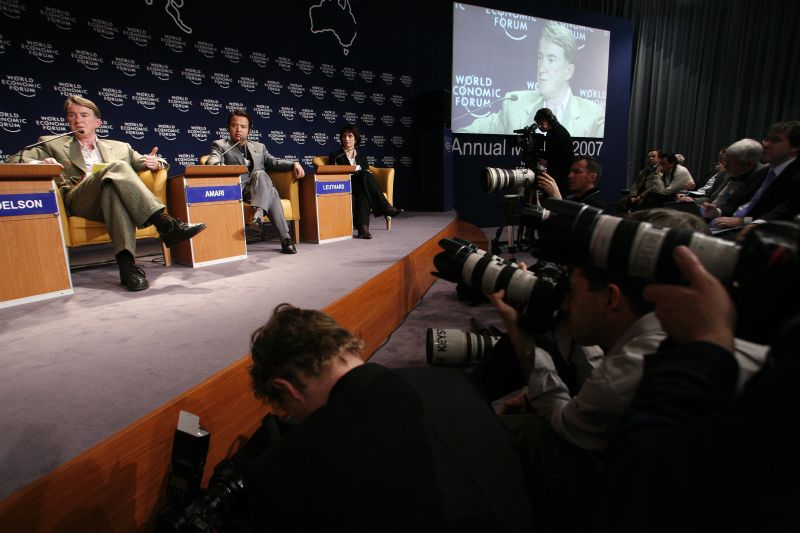
Prime Minister Keir Starmer told Parliament on Wednesday that "no pressure whatsoever" was applied to officials over Peter Mandelson's security clearance. That sworn statement directly contradicts evidence from the government's most senior Foreign Office official describing an "atmosphere of pressure" and "constant chasing" from No 10. Labour's self-styled reputation as the party of integrity and good governance has collapsed under the weight of its own vetting scandal, with the Prime Minister caught in a direct lie that has shredded his credibility.
Within hours of Starmer's testimony, Labour MP Jonathan Brash became the first member of his party to publicly call for the Prime Minister's resignation. "I am completely fed up to the back teeth of this psychodrama in Westminster," Brash told GB News on Wednesday. "It's got to the point now where I genuinely think that, as far as the Prime Minister is concerned, it's not a case of if, it's when."
Brash's intervention comes as Labour faces catastrophic May 7 local elections, with London Mayor Sadiq Khan warning the party could be "stonked" by voters punishing "the imperfections of the government." The crisis stems from the appointment of Peter Mandelson as US ambassador despite serious security concerns.
UK Security Vetting flagged Mandelson as "high concern" on Jan. 28, 2025 and recommended denial of his Developed Vetting clearance. Foreign Office officials overrode that recommendation the next day and granted clearance. Neither Starmer, then-Foreign Secretary David Lammy, nor any other minister was informed until April 14, 2026. Starmer himself admitted in a Commons statement that "I should not have appointed Peter Mandelson" and apologized to Epstein's victims.
The contradiction at the heart of the scandal emerged during testimony from Sir Olly Robbins, who was sacked as Foreign Office permanent secretary following the revelations. Robbins told the Foreign Affairs Select Committee on Tuesday there was "a very, very strong expectation" from No 10 that Mandelson "needed to be in post and in America as quickly as humanly possible."
"There was an atmosphere of constant chasing from the private office of Number 10 and an 'atmosphere of pressure'," Robbins testified. He described a "generally dismissive attitude" to security vetting from Downing Street.
Robbins also revealed No 10 attempted to secure an ambassadorial role for Lord Matthew Doyle, Starmer's former director of communications. "I was under strict instructions not to discuss that with the then-foreign secretary, which was uncomfortable," Robbins said. Doyle had the Labour whip withdrawn after campaigning on behalf of a friend convicted of possessing indecent images of children.
The revelations triggered a cabinet revolt during what participants described as a "gloomy" meeting on Wednesday. Ministers including Home Secretary Shabana Mahmood, Deputy Prime Minister David Lammy, Health Secretary Wes Streeting and Chancellor Rachel Reeves challenged Starmer over the Robbins sacking.
"If he's such a great public servant, I don't understand why he has been sacked," Mahmood said, questioning why Starmer praised Robbins as "outstanding" while simultaneously firing him. Lammy warned against creating a "them and us" mentality between ministers and officials.
Work and Pensions Secretary Pat McFadden repeatedly refused to say whether the sacking was "fair" before finally stating, "I think the PM has acted fairly in these circumstances."
Foreign Secretary Yvette Cooper confirmed the Doyle ambassadorship proposal "would not have been appropriate" and said she was "extremely concerned" that Robbins was told not to inform her. "I can also confirm that the case that he raised, it would not have been an appropriate appointment," Cooper said.
The controversy has severely damaged relations with the civil service. Former Cabinet Secretary Lord Sedwill called for Robbins' reinstatement, stating "the Prime Minister should retract his accusations against Olly Robbins and reinstate him to the job the country needs him to do." Former Foreign Office Permanent Secretary Simon McDonald said Starmer "rushed to a wrong judgment."
FDA union general secretary Dave Penman described the civil service mood as "absolutely devastating," with officials fearing they would be "thrown under the bus" if politically expedient. The Institute for Government warned the blame-game is "causing serious damage to ministerial-civil service relations," while former Cabinet Secretary Lord Butler said the episode "has done a great deal of harm" to government relations.
Opposition MPs have approached Speaker Sir Lindsay Hoyle about referring Starmer to the Privileges Committee for allegedly misleading Parliament. Conservative leader Kemi Badenoch told the Commons that "it is now absolutely clear that 'full due process' was not followed. Keir Starmer has misled the House."
Morgan McSweeney, Starmer's former chief of staff who resigned taking "full responsibility" for the Mandelson appointment, is summoned to testify before the Foreign Affairs Committee on April 28. He is expected to face questions about telling the Foreign Office to "Just f***ing approve it" regarding Mandelson's vetting.
Reform UK leader Nigel Farage predicted Starmer would be forced out by the end of May. "The man of process has ridden roughshod over normal procedure," Farage said. "He'll cling on. He'll sack everybody around him, even if he's the last man standing. He'll never, ever take responsibility himself for anything that he's done."
The government has hired ten new vetting officers while its own vetting process remains under investigation. Mandelson was arrested in February on suspicion of misconduct in public office related to alleged sharing of sensitive government information with Jeffrey Epstein. He denies wrongdoing and has not been charged.