London Commuters Pay Price as RMT Rejects Four-Day Week, Demands Costly Concession
RMT union's strike paralyzes London Underground, rejecting voluntary four-day week offer that would give drivers extra day off, as businesses face £210 million in losses.
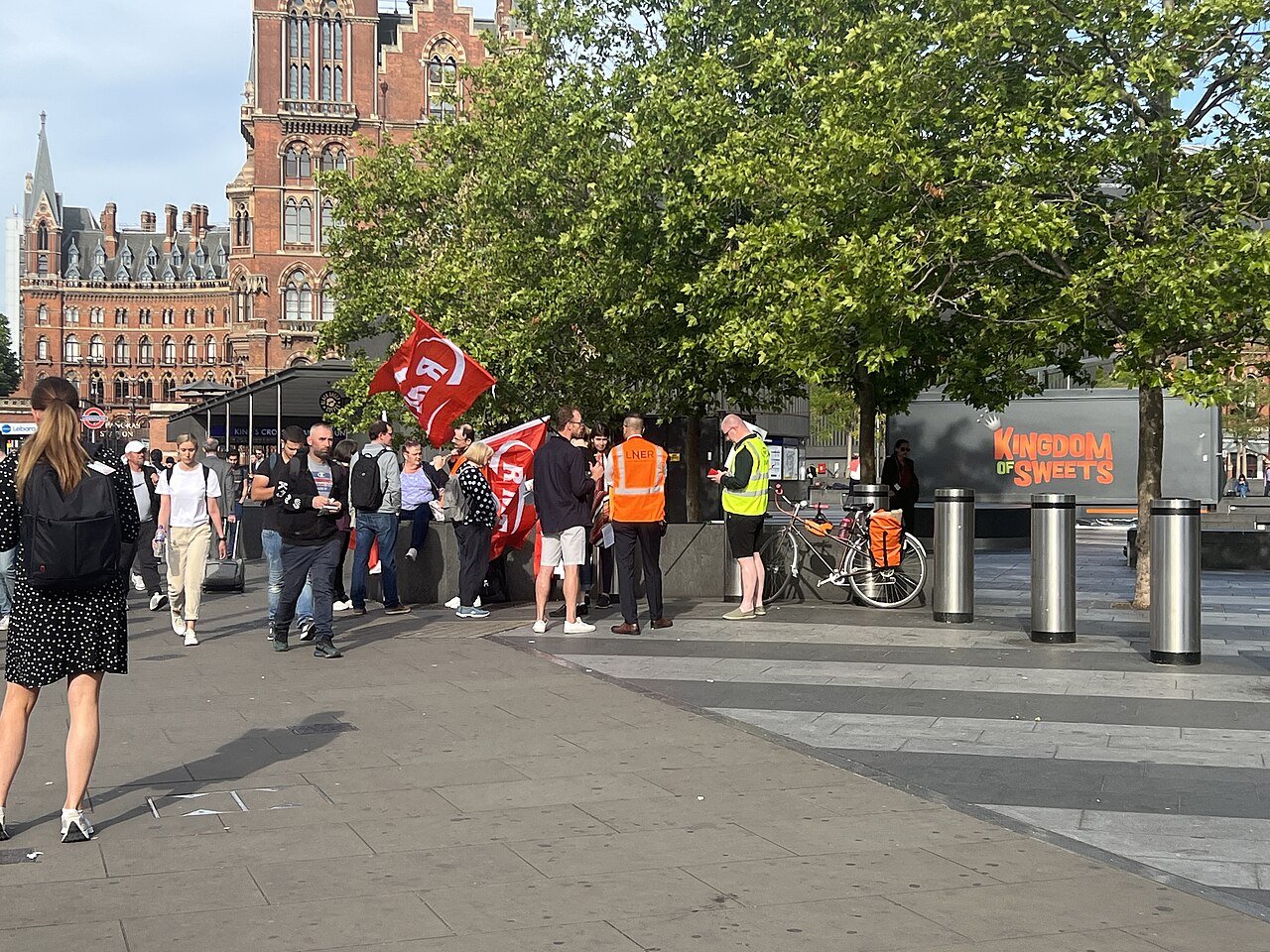
London commuters face another morning of chaos as the RMT union's first 24-hour strike paralyzes the Underground, with services not starting until 7:30 a.m. and no service on critical Piccadilly and Circle lines.
The union is holding London hostage by rejecting Transport for London's voluntary four-day week offer that would give drivers an extra day off, instead demanding a 32-hour week that would cost taxpayers over £200 million annually.
TfL's proposal offers drivers a compressed 35-hour week over four days rather than the current 36 hours over five, a deal rival union Aslef accepted. The RMT rejected this voluntary improvement, insisting on a 32-hour week for the same salary. "Strikes are bad for London and bad for Londoners, particularly for all those businesses who rely on commuters coming into our city," London Mayor Sadiq Khan told reporters.
The economic damage mounts daily. Business leaders estimate this week's strikes alone could cost London £210 million. The hospitality sector faces up to £150 million in losses per strike week, with total lost sales exceeding £3 billion since the dispute began last year. Pubs forecast 40 percent sales hits while restaurants face empty tables.
"We will lose £600-£700 a day," said Prasanna Callaghan, owner of Crumpets Cafe in Buckingham Gate. "One day might be bearable but it will be impossible to recuperate that total cost." Callaghan represents thousands of small business owners suffering from the RMT's intransigence.
TfL Chief Operating Officer Claire Mann stated the 32-hour demand is "neither practical nor affordable." She explained that even a small reduction in contractual hours would cost tens of millions of pounds annually. "We have set out proposals for a four-day working week that allows us to offer train operators an additional day off at no additional cost," Mann said.
The RMT represents roughly half of Tube drivers, while Aslef represents the other half. Aslef accepted TfL's offer, calling it "exactly the sort of deal every trade union should be trying to achieve." An Aslef spokesperson noted, "It will be the first strike in the history of the trade union movement designed to stop people having a shorter working week and more time off."
RMT London Transport Regional Organiser Jared Wood maintained there is "absolute unanimity among our members that we have to fight these proposals." Wood cited concerns about driver fatigue and safety from longer shifts. "There is absolutely no alternative but to proceed with the strike action," he said.
Business leaders warn the strikes hit companies already struggling with rising costs. "At a time when so many locals are already operating on a knife-edge because of huge costs, significant disruption to trade will be acutely felt," said Emma McClarkin, CEO of the British Beer and Pub Association. London's pubs generate approximately £80 million weekly between Tuesday and Friday alone.
The strikes have prompted political divisions ahead of May local elections. Green Party London Assembly leader Caroline Russell backs the RMT, stating, "The drivers are raising really important issues about their working conditions that ultimately affect safety." Conservative Shadow Transport Secretary Richard Holden responded, "We can see the chaos the Greens would bring to Britain. Strikes, disruption, and making ordinary working people pay the price for their weird far-left ideological politics."
Liberal Democrat MP Luke Taylor called Green support "deeply irresponsible." He added, "There's no two ways about it — these strikes will hurt working Londoners."
The disruption extends beyond central London. Heathrow travelers face major problems with Piccadilly line service largely suspended. Commuters flood alternative transport, with Elizabeth line usage up 26 percent and Overground up 20 percent during previous strikes. Cycle hire surged 14 percent on the first day of April strikes.
Four more 24-hour strikes are scheduled for May and June if the dispute continues. The September 2025 strikes, which involved the RMT union, cost London £230 million according to the Centre for Economics and Business Research. That disruption saw contactless and Oyster card usage drop 24 percent as commuters sought alternatives.
Night Time Industries Association CEO Michael Kill warned, "The ongoing disruption to transport services begs the question, who does this actually benefit? Because right now, it's businesses, workers and the wider public who are paying the price for the reckless actions of the few." His organization estimates many venues operate with "increasingly fragile" confidence as margins squeeze from all directions.
The RMT's position comes despite a three-year pay deal accepted in November 2025 that gives drivers 3.4 percent, 3 percent, and 2.5 percent annual increases, putting them on track to earn nearly £80,000 by 2027. Despite accepting a three-year pay deal in November 2025 that aligns with offers accepted by the RMT across the rail industry, the RMT has rejected TfL's four-day week proposal.
Commuters face at least four more weeks of disruption unless negotiations break the impasse. With local elections approaching and businesses bleeding money, the RMT's rejection of voluntary improvements continues to cost Londoners dearly while blocking drivers from gaining extra time off that their colleagues in Aslef will enjoy.