Newsom Burns $20 Million on Consultants While Cutting Nothing
California hired Boston Consulting Group for $20 million to find savings. Projected returns collapsed from $2 billion to $810 million — and the deficit keeps growing.
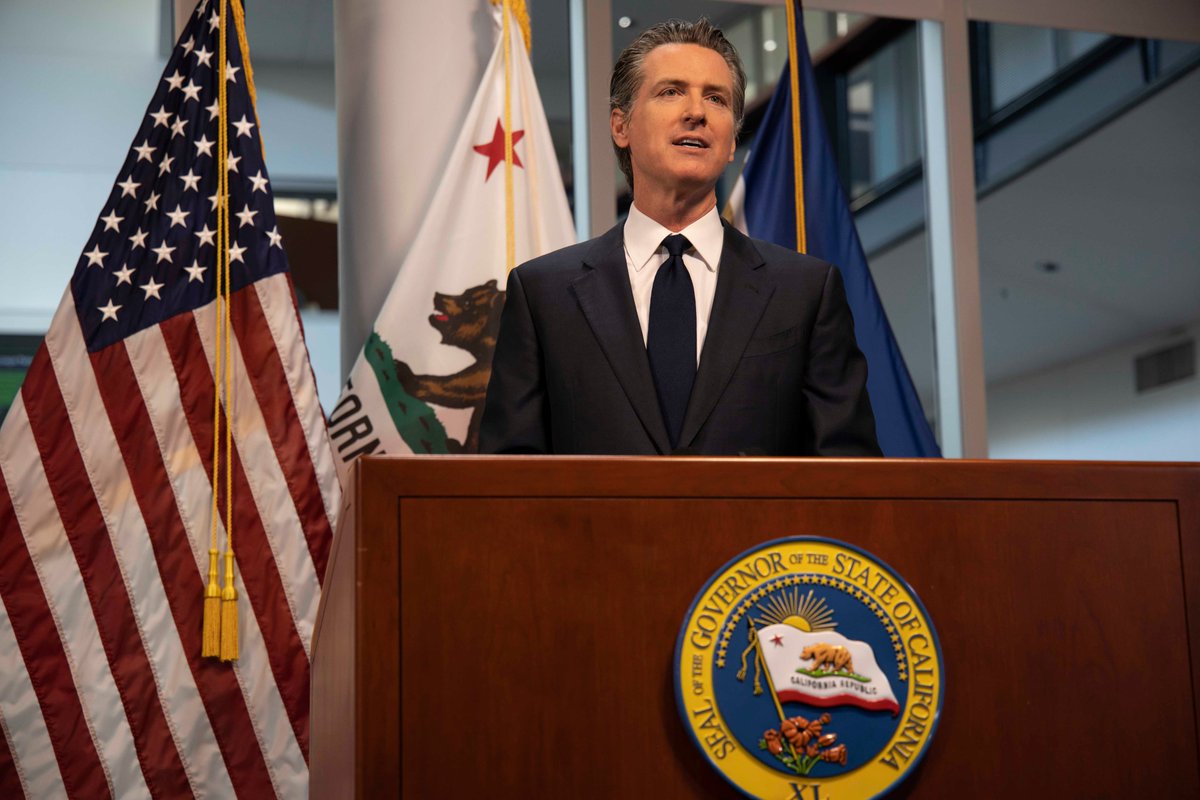
California Governor Gavin Newsom paid $20 million in taxpayer money to consultants hired to eliminate government waste. The result: savings projections that collapsed from $2 billion to $810 million — and a state staring down a deficit that dwarfs either figure.
The Department of Finance awarded Boston Consulting Group up to $20 million last September to analyze procurement and administrative functions in corrections and health care agencies. The contract runs through January 2027.
BCG hired Ana Matosantos as a managing director for the engagement. Matosantos served as California Cabinet Secretary and Department of Finance director under Newsom from 2019 to 2022. The revolving-door connection raises questions about whether the arrangement represents a government consulting backchannel rather than genuine reform.
"This whole Boston Consulting Group contract has me mystified," Assemblymember Tom Lackey said at a Thursday legislative hearing. "We were told that's what we were going to get, but we haven't even come close to that."
The Republican lawmaker called the contract "a failure" after projections showed it would deliver less than half of promised savings. Democratic Assemblymember Nick Schultz echoed his concern.
"At a time when we might be asked to cut part of the social safety net back, I think everyone's rightfully looking at saying, 'What are we getting for $20 million?'" Schultz stated.
The BCG contract's collapse fits a pattern. Previous efficiency efforts under Control Sections 4.05 and 4.12 achieved only $586.3 million of an assumed $2.8 billion in savings, according to the Legislative Analyst's Office.
"While we certainly agree that seeking efficiencies is good, recent efforts have fallen short of what was assumed in the budget," said Caitlin O'Neil, an LAO analyst. "This muddies the Legislature's understanding of the fiscal health of the state."
The consultant spending coincides with massive fraud and waste exposure elsewhere in state government. CAL DOGE's March analysis estimated $425 billion in fraud and waste exposure over five years.
The State Auditor added eight agencies to its high-risk list in December, among them the Department of Social Services and the Department of Health Care Services — the very agency BCG is studying under the current contract.
Department of Finance spokesperson H.D. Palmer defended the contract anyway, asserting California remains "on course to achieve savings that are significantly greater than the cost of the contract" despite the collapsed projections.
The administration is simultaneously pursuing a $19 million taxpayer-funded marketing campaign to burnish California's image — spending that lands as the governor's 2026-27 budget projects a $2.9 billion deficit.
The Legislative Analyst's Office puts the actual deficit at $17.6 billion. LAO analysts warn the administration expects further downward revisions to its savings estimates when the May budget revision arrives.
"Operational changes that result in savings in the magnitude assumed in the Governor's budget take time and can be difficult to achieve in full," the LAO report noted. "As such, it is not surprising that the administration indicates that the May Revision will reflect further erosion to the estimated savings."
Newsom launched his DOGE-inspired efficiency initiative with fanfare last July, signing an executive order directing agencies to implement efficiency measures and standing up a tech-industry advisory group called the California Breakthrough Project.
The initiative's collapse carries weight beyond fiscal underperformance for a governor positioning himself as a 2028 Democratic presidential contender. Newsom routinely promotes California as a governance model, even as his signature efficiency plan burns taxpayer funds on consultant fees.
The $20 million contract spans five workstreams across corrections and health care agencies. BCG analyzes procurement, administrative functions, managed care oversight, Medicaid fraud detection, and hospital payment models.
The Department of Social Services was carved out of the contract's final scope — the same agency the State Auditor flagged last December for concerns about waste, fraud, and mismanagement.
Lackey pressed the point at recent legislative hearings. "The fact that we contracted $20 million, and we're woefully short on what we were told it would result in," he said. "This was a failure in my opinion."
Newsom's administration submitted its first status report on the BCG contract in February. Legislative analysts found it offered limited detail on progress or actual savings achieved.
The contract's troubles surface against a backdrop of broader governance failures. The state's high-risk agency list has grown under Newsom's watch, and fraud estimates continue to climb.
Herb Morgan, a state controller candidate behind the CAL DOGE analysis, framed the situation in straightforward terms. "The Controller's office is responsible for tracking, reporting, and safeguarding taxpayer dollars," he said.
The LAO underscored the need for transparency around the savings assumptions underpinning the administration's budget math. "The Legislature will want to ensure that it understands the assumptions that form the basis of the administration's estimates to ensure that they are realistic," the LAO report stated.
As Newsom prepares his May budget revision, the LAO recommends legislators use upcoming Spring Budget Hearings to press for answers on the contract's true performance. The gap between promised efficiency and delivered results keeps widening — and the bill keeps landing with California taxpayers.